Dive Brief:
- A federal court has temporarily blocked a New Mexico regulation that requires manufacturers with operations in the state to use a label for products containing intentionally added PFAS, according to court documents filed Sept. 16.
- The mandate of the “consumer awareness label” does not connect to the state’s interests in protecting consumer and environmental health, U.S. District Judge Margaret Strickland said in the filing.
- The labeling mandate was designed to fall under New Mexico’s PFAS Protection Act, a law to phase out the use, sale and distribution of products laced with perfluoroalkyl and polyfluoroalkyl substances. The label requirement would have begun Jan. 1, 2027.
Dive Insight:
The ruling is a victory for the American Chemistry Council, the National Association of Manufacturers and other trade groups.
“Manufacturers welcome the District of New Mexico’s decision blocking this unlawful labeling mandate from taking effect,” Linda Kelly, NAM chief legal officer and corporate secretary, said in a statement. “The NAM is committed to securing permanent relief to ensure manufacturers aren’t forced to redesign products, packaging and manufacturing lines to accommodate an unconstitutional labeling requirement that imposes tremendous costs on both businesses and consumers.”
The ACC led a lawsuit filed July 1 against New Mexico Environment Department Secretary James Kenney and Attorney General Raúl Torrez, challenging the state’s PFAS label regulation.
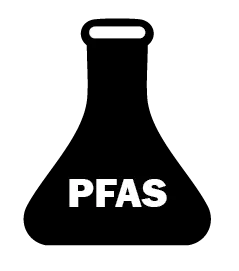
The trade groups argued that the label, which is an image of an Erlenmeyer flask with the word “PFAS” inside the container, was designed to “trigger an emotional reaction in consumers and customers with the intent of causing them not to purchase the labeled products,” according to the complaint. This could hurt trade group company members in New Mexico as it will be “extraordinarily expensive, disruptive and time-consuming to comply with the Regulation’s labeling mandate.”
“The burden the Regulation imposes on manufacturers is compounded by the fact that many manufacturers operate with national and international supply chains,” the trade groups said in the initial lawsuit. “A manufacturer may make products not knowing whether it will be shipped to Santa Fe, New Mexico; Rancho Santa Fe, California; or the Sante Fe business district in Mexico City, Mexico. For such manufacturers, the only way to avoid the costly fines imposed under the Regulation is to label all their products in compliance with the Regulation.”
They also argued that the label mandate was a violation of the First Amendment right to free speech, particularly commercial speech, as the flask label is not required for products laced with other toxic substances.
Trade groups also said the image does not convey a “purely factual” message, therefore it did not “qualify for the Zauderer exception.” The Zauderer v. Office of Disciplinary Counsel is a 1985 Supreme Court case that broadens commercial speech protections so long as it meets the state’s requirement of not deceiving consumers and is “purely factual and uncontroversial.”
“There is no universal definition of a PFAS and thus no consensus about the substances that fall within the category,” according to the lawsuit.
The flask image comes across as a “sense of chemical danger,” which “is no accident,” the trade groups said in the lawsuit.
Strickland also said the label mandate did not meet the Zauderer requirements and that the “heightened scrutiny under the First Amendment applies.”
“Courts reviewing other warning label mandates, such as those imposed under California’s Proposition 65, regularly hold that mandates falling outside the Zauderer exception are not narrowly tailored because the government can convey its message itself, using government websites, public service announcements, or other media,” Strickland said.
New Mexico has the opportunity to file an appeal to the Tenth Circuit Court of Appeals, according to a Sept. 17 post by law firm Beveridge and Diamond. The state could also allow the District Court case to proceed to the finish line or abandon its labeling defense, the law firm added.
“Under any of these scenarios, the labeling program is unlikely to take effect as scheduled,” Beveridge and Diamond said.
A separate lawsuit challenging the mandate has been filed in the New Mexico state court system, but a ruling in that case has yet to be made.
While the label mandate is currently on pause, manufacturers in New Mexico will still have to follow other PFAS Protection Act regulations that are set to begin Jan. 1, 2027. The first product group to be banned includes cookware, food packaging, dental floss, juvenile products, and firefighting foam. The state is targeting to ban all non-exempt products containing PFAS by 2032.
Manufacturers must also begin reporting about the PFAS content in their products by next year. However, the law includes exemptions for essential products, such as medical devices and electronics.