Baker Industries began as a tiny operation out of Charlie Baker’s garage. Forty-six years later, the organization is preparing to open a new warehouse outside of Philadelphia and Baker recently celebrated his 101st birthday.
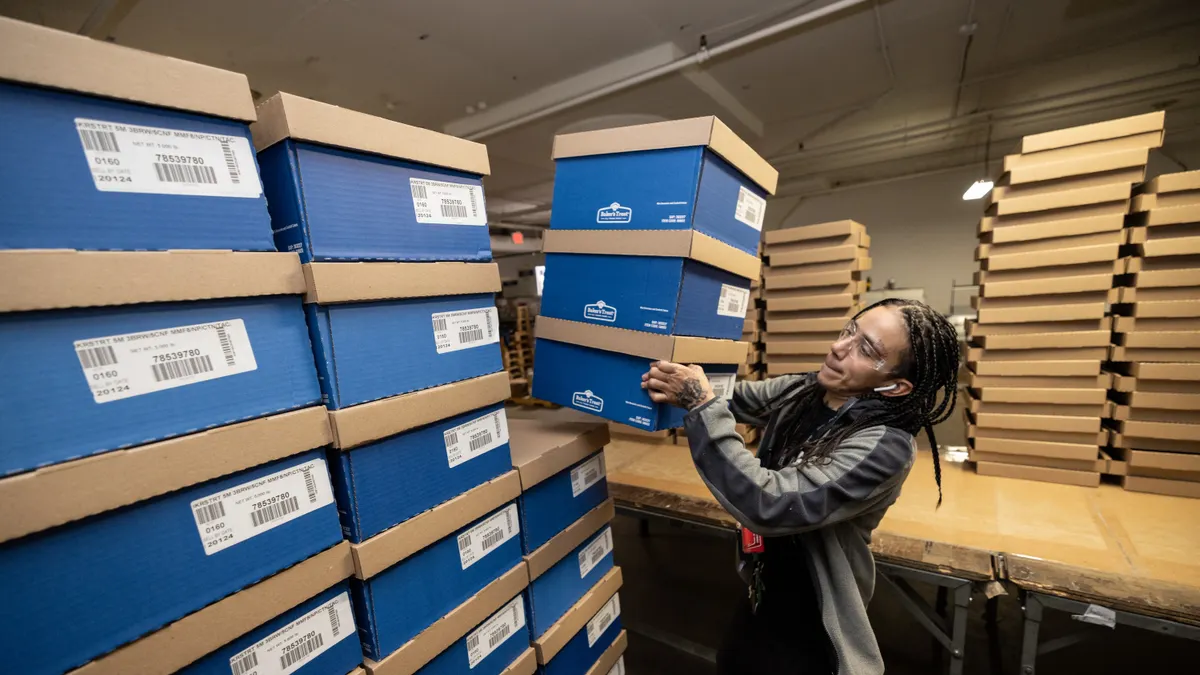
Baker Industries, with two locations in Pennsylvania, provides packaging, shrinkwrapping, kitting, fulfillment, assembly and other light-industrial services for manufacturers such as snackmaker Tastykake and Crazy Aaron's putty.
The nonprofit organization also is filling an industry gap: skilled labor. There were 481,000 job openings in the manufacturing industry as of June, with a projected shortage of 3.8 million workers by 2033.
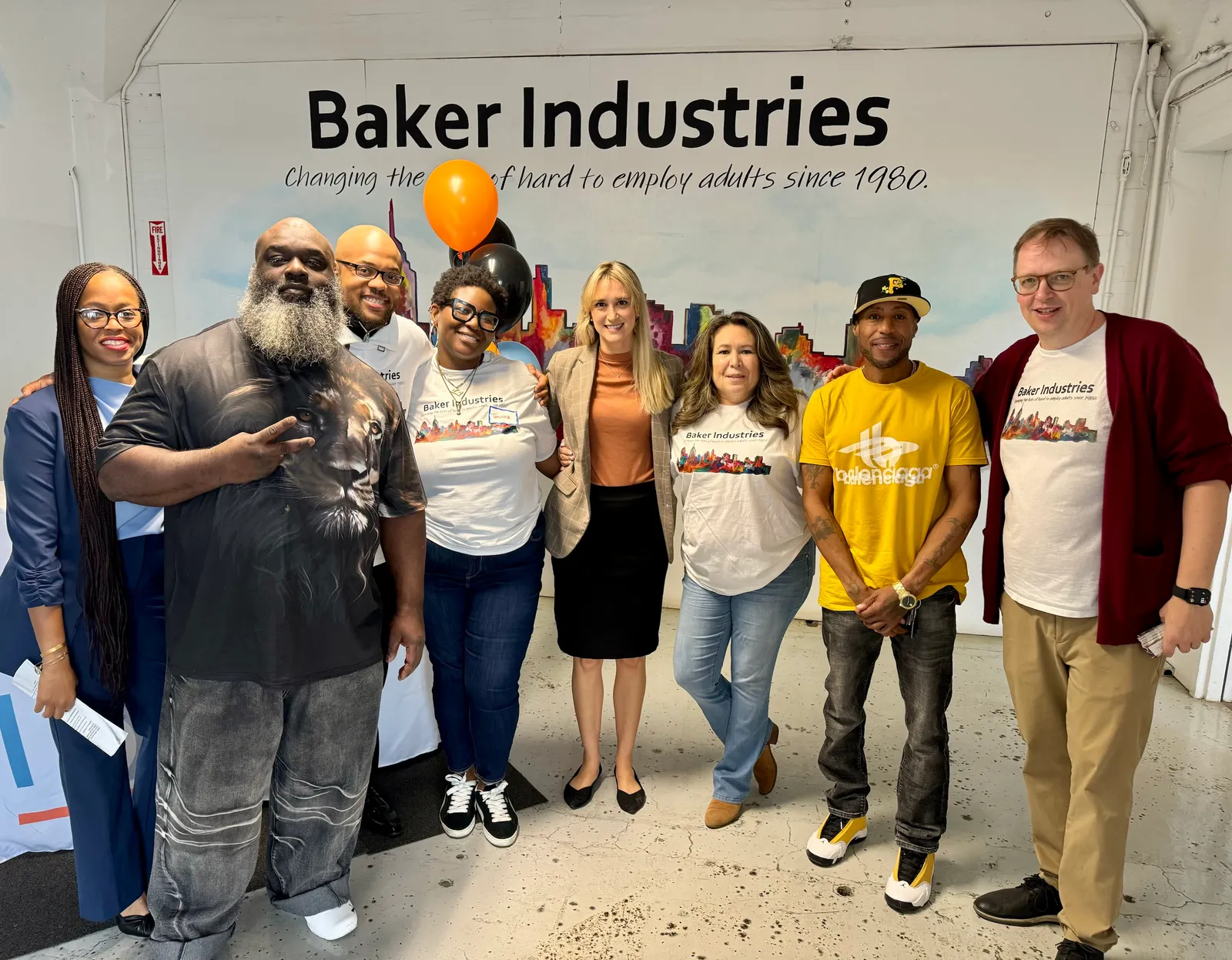
Baker Industries is fueling the talent pipeline by hiring and training workers from often overlooked pools including people with disabilities as well as those who were formerly in alcohol or drug rehabilitation, incarcerated, or experiencing homelessness. After their time with Baker Industries, many people move on to full-time jobs with the company’s customers.
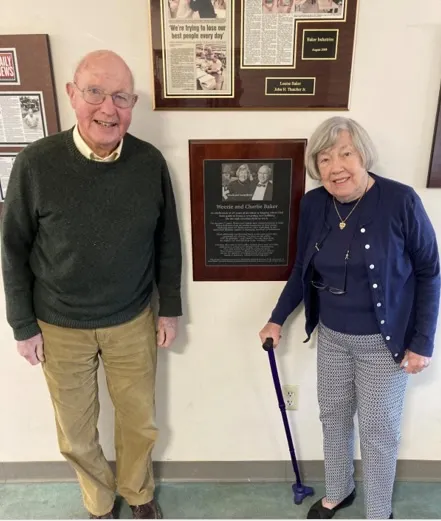
The idea for Baker Industries stemmed from Charlie Baker’s youngest son, who was diagnosed with severe epilepsy and had difficulty getting a job. Baker had a chemical business that he sold, but he retained one product called Nonequal Furniture Polish. Baker and his wife started an operation filling polish containers in their garage, employing their son and one other person.
Word of mouth brought more employees, and along the way, a staff member suggested hiring people coming out of prison and rehab, often referred to as second-chance hiring. While Baker wasn’t initially looking to expand, he quickly realized “companies were anxious to find employees who would do manual work ... And that’s what we were doing.”
Nic Watson, who now leads Baker Industries as president, said employees still do shrinkwrapping, sealing and palletizing production work for real customers and earn a salary from day one. That imposes discipline by requiring workers to show up, meet standards and hit deadlines like any other manufacturer, he said. Watson hopes the organization’s work and mission shine a light on the large pool of talent that many manufacturers have yet to tap into.
“The available workforce is bigger than they think,” Watson said. By hiring workers like the ones at Baker Industries, “you get to help your community, and you also get to access people you're probably not noticing.”
Building technical and soft skills
The organization is not alone in training second-chance workers on manufacturing skills. Overall, manufacturers tend to be more open-minded than degree-focused industries about developing new recruits’ skills, according to the Manufacturing Institute. Many people also receive manufacturing training while in correctional facilities.
The U.S. Department of Labor recently earmarked $81 million in grants to train formerly incarcerated workers as part of ongoing efforts to address chronic manufacturing labor shortages.
And more than 50 large employers — including manufacturers such as General Motors, Koch Industries, Micron and Procter & Gamble — have joined the Second Chance Business Coalition. The group focuses “on the entire employment life cycle” of recruitment, hiring, onboarding and long-term career advancement, said Dane Linn, senior vice president of corporate initiatives at Business Roundtable, a founding partner of the Second Chance Business Coalition.
The coalition offers resources for employers to build a second-chance strategy, including focusing on relevant skills during the interview process; investing in specialized training, skill-building and apprenticeship programs that recruit second-chance candidates; and partnering with community colleges and vocational programs.
“Our coalition member companies have proven without any doubt that second-chance employment is a highly effective path to alleviate talent shortages,” Linn said.
While some employees stay at Baker Industries for their entire careers, others use it as a launchpad to work for partner companies.
James Haldeman learned about Baker Industries through a friend and began working there in September 2024 while he was on parole. He learned skills such as boxing, palletizing, shipping and receiving. But he said the biggest lesson learned was how to work with others.
“A lot of people come to work with an attitude. I've learned to not pay attention to their attitude and just keep on going with my day,” said Haldeman. He moved on in June of this year and now works at Stockwell Elastomerics as a press machine operator.
Many employees joining Baker Industries after prison don’t understand workplace basics, Baker said, so the organization teaches them soft skills. Those include showing up on time, being reliable and notifying their manager if they will be out, and “that you don't mouth off to your supervisor or try to slug him,” he said.
The organization also offers a job readiness program to prepare employees for their next jobs after Baker Industries, where they learn about conflict resolution and working around people with varied backgrounds.
It doesn’t coddle employees, nor look down upon them, Baker said. “We treat them like regular employees.”
Watson said that attitude toward employees is “healing,” especially for workers who’ve been incarcerated or homeless for a long time and may have been treated differently. “Getting the chance to prove yourself on a level playing field at Baker is a benefit,” Watson said.
Getting more employers on board
Even as organizations aim to spread the word about the benefits of second-chance hiring, many employers still hesitate to hire formerly incarcerated individuals.
“A lot of places, they'll look at your background and say ‘no,’” Haldeman said.
Some companies are worried about negligent hiring risk, sources say. For instance, an employer could be held liable in a civil suit if the company hired someone likely to harm others. Some have expressed concerns over safety and workplace violence or theft. However, data shows liability is minimal and second-chance hires are no more likely to cause an incident than any other employers.
There’s also a stigma associated with second-chance employment.
“When we started, a lot of people were loath to take employees of the type that we were going to give them,” said Baker.
Trust strengthened once manufacturers hired workers from Baker Industries with positive results and “they were much more willing to take other employees that we brought along,” Baker said.
Employees joining Baker are “a self-selecting group of people that are trying to get better,” Watson added. Last year, 73 people graduated from the company to other employers, and all of them are still employed.
That’s a stark contrast to overall recidivism rates in the Philadelphia area, where Baker Industries operates. According to a 2022 report from the Pennsylvania Department of Corrections, 72% of parolees who were unemployed for a year following release were re-arrested or re-incarcerated. For those who remain employed, the recidivism rate dropped to 57%.
Haldeman is still in contact with Baker Industries, describing its leaders as a “support system,” and he’s referred people for jobs. He hopes more warehouses and manufacturers will hire justice-impacted individuals and offer them a second chance.
“I did my wrong, but everybody tries to change in a positive way,” Haldeman said.