Brian Coppenrath, 32, of North Falmouth, Massachusetts, has no degree but always liked working with his hands.
At one point he took culinary classes and even considered joining the U.S. military or a police academy as a teenager. Coppenrath said he ended up taking an automotive program — “no math, no science” — at the Universal Technical Institute in Norwood, which has since closed.
“Everyone learns at a different rate,” he said. “I work, I learn with my hands. I don't learn with a book.”
He went on to work as a mechanic for 10 years at nearby Subaru and Toyota dealerships. Although the income allowed him to buy a house and care for his family, eventually he wanted a more stable income.
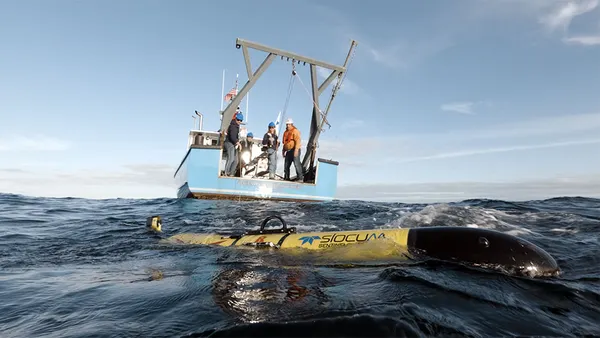
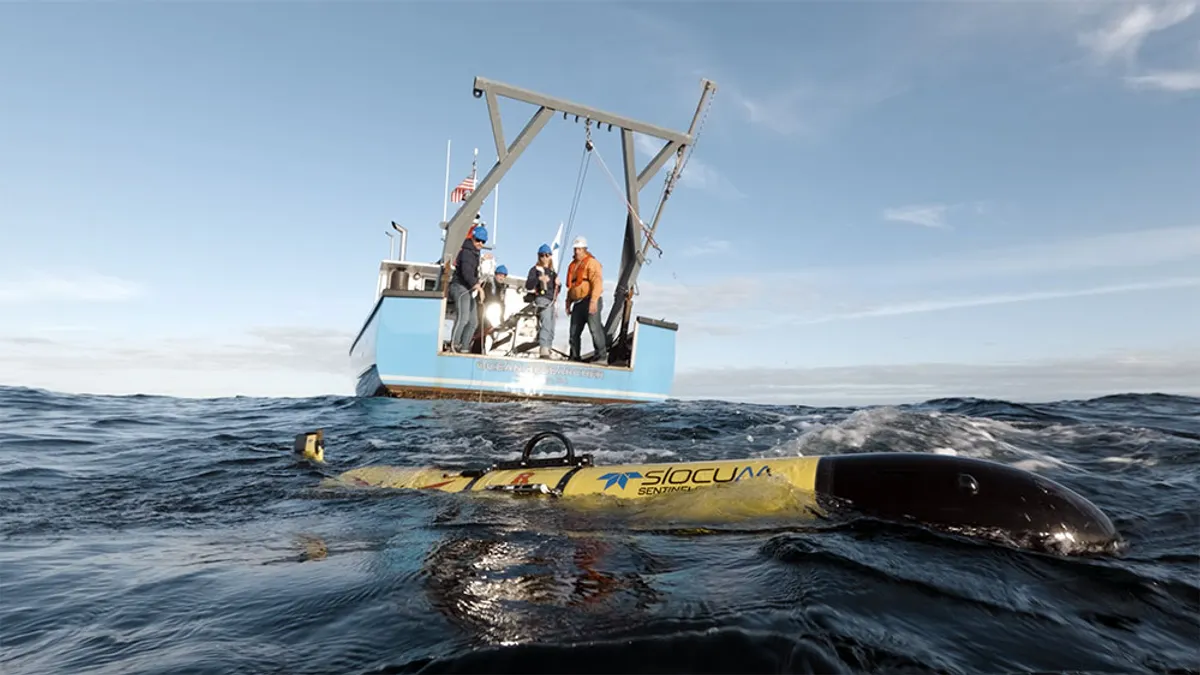
By 2023, Coppenrath joined Teledyne Marine as a technician assembling fins for underwater vehicles. A few months in, he said the company moved him to final assembly for its autonomous underwater gliders.
Last year, Teledyne promoted him to be an engineering technician for its sentinel glider, which is about double the length of its standard models. At one point, Coppenrath’s operations manager suggested applying for a technical program led by the Massachusetts Institute of Technology.
MIT had identified a gap in the manufacturing workforce and sought to address it through the Technologist Advanced Manufacturing Program. Typically, engineers design the floor processes and systems, managers oversee operations and technicians work on the front lines making the parts and products.
Under that arrangement, technicians usually are tied to one piece of equipment, said John Liu, principal research scientist at MIT’s Department of Mechanical Engineering and TechAMP organizer. “They know their mill, they know their lathe and all they do is troubleshoot and make sure it’s up and running.”
By contrast, engineers often have a wealth of knowledge but can lack technical experience. Liu said he wanted to create a program tailored to a new worker class that could bridge both worlds and tackle issues around productivity. He called it a technologist role, or someone with a combination of technical skills and high-level systems thinking.
“We just don’t normally have any worker[s] with both in mind,” Liu said.
To address this gap and upskill workers to become technologists, he led the development of TechAMP, a 12-month certificate program that combines MIT’s online instruction with hands-on lab work at participating schools and community colleges. The program is part of MIT’s Initiative for New Manufacturing launched last year to bolster U.S. industry with a focus on technology and workforce development.
Coppenrath said he interviewed with Liu, along with a few of the professors at the participating Cape Cod Community College, and got a better understanding of what they were doing.
“You're still doing stuff with your hands. You're doing labs in person,” Coppenrath said. “That's the type of learning that I know that I can do. I can't just read a book and understand something. I have to do it to understand.”
Students gain foundational leadership, process control and systems thinking skills, according to the program’s website. They also follow custom tracks that employers help select, such as robotics, machining or digital manufacturing depending on the location.
The first classes were held at five partner sites across Massachusetts, Rhode Island and Connecticut last year.
Coppenrath went to classes at Cape Cod Community College at West Barnstable, Massachusetts. His employer, Teledyne, agreed to pay for the program as long as he continued to work full time. Coppenrath said the school was about a 30-minute drive from his job and a 45-minute drive from his house.
“I have a family to support, so I was nervous about that. But [Teledyne] took care of everything,” he said, adding that the program also worked with his schedule. “If I had to drop the kids off at school, I could drop them off.”
Overall, Coppenrath said TechAMP was an “eye-opener” that allowed him to see and better understand how quality control, forecasting and other functions work with the production side to make everything come together.
When on the production floor, he said it’s easy to point out problems and miss what’s happening in the background. Now, Coppenrath said he has a better understanding of his operations manager’s needs and what his bosses and engineers are asking for. He also has developed valuable production expertise through the program.
“It’s really shown me how to communicate more, communicate problems more, communicate solutions more,” he said.
Initial impacts of the program
Bob Chenal, vice president at Proterial Cable America’s defense solutions division, sent four of his machinists to TechAMP last year through the Community College of Rhode Island and has seen all of them advance in their careers.
One of the participants went from becoming a machinist to a master planner that uses Palantir AI tools to create special dashboards for scheduling jobs and resolving certain line items, Chenal said. In the few months behind the desk, he said the former machinist has reviewed old jobs that “we haven’t thought about in years” and “found tons of orders that we could ship that weren’t even on our radar.”
“We found a $50,000 line item that wasn’t billed for non-recurring engineering fees from four years ago,” said Chenal, who serves on TechAMP’s advisory board and as president of the Naval Maritime Consortium. “It never would have come up had we not put him into this position.”
Chenal’s group attended classes at Westerly Education Center, about a 10-minute drive from Proterial’s shop in Ashaway, Rhode Island. Through TechAMP, the center offered machining- and maritime-focused training to support nearby General Dynamics Electric Boat and shipyards.
Chenal said Proterial paid for work time missed, but not for the classes in full, so he would ask the participating employees to leave early once or twice a week. He sent three more employees to the second cohort, which started last month.
“They’re opening their eyes to a bigger picture that is incredibly valuable to the business,” he said. “Having that level of thinking in this business is the only way that we’re going to fix the labor shortage.”
Changes in the culture
Michael Trotta, president and CEO of Crystal Engineering, a precision metal fabrication and manufacturing company in Newburyport, Massachusetts, has been involved with TechAMP since its development. What drew him to the program was its potential to remove layers between workers and improve operations from a culture standpoint.
“We have engineers out of college that think they’re fancy because they went to a four-year school,” Trotta said. “There’s this air around them that they don’t want to go on the floor, don’t want to communicate on the floor and they design for theory not for manufacturing.”
“Looking at this ecosystem, there’s a middle path here,” he added. “Having an engineer, then you have a floor foreman who relays all that information to the guys on the floor — that to me is waste.”
While none of the workers at Crystal Engineering participated in the program, Trotta said they still saw benefits from helping shape the curriculum.
One of his workers visited MIT in Cambridge multiple times to help with the program. Afterwards, a production issue cropped up at a plant in Addison, Illinois, and Trotta said that the experience helped his worker gain “a lot more confidence to look at a problem in manufacturing more holistically.”
As part of the program, Coppenrath and other students worked on capstone projects toward the end of the year. He created a “sentinel wiggle box,” which is essentially an Arduino programming kit outfitted with an LCD screen that allows users to get air out of Teledyne’s hydraulics system. Otherwise, air in the hydraulics can yield faulty electronics readings.
With the tool, Coppenrath said he can now control the motor and positioning of valves to allow oil to flow through and push air out of the system. That means no more lifting of a 50-pound unit off the ground multiple times, he said. It also speeds up production, allowing for more deliveries and capacity.
So far MIT has limited TechAMP’s geographic scope to the New England area. Liu said the program could expand to 15 other states.
He said MIT is also in talks with manufacturers looking to upskill their workers in the semiconductor and biopharmaceutical sectors. Initially, the program focused on aerospace, defense and the maritime industrial base.
Coppenrath said a bunch of small things have come together for him since completing the first TechAMP, giving him a boost of confidence at work. He confirmed last week that Teledyne is changing his title to be a lead technician for its sentinel gliders.
“TechAMP is like my first true college class per se,” he said. “But it’s inspired me to continue my education.”
Coppenrath plans to sign up for online classes at Southern New Hampshire University in the winter and slowly work toward getting a degree.