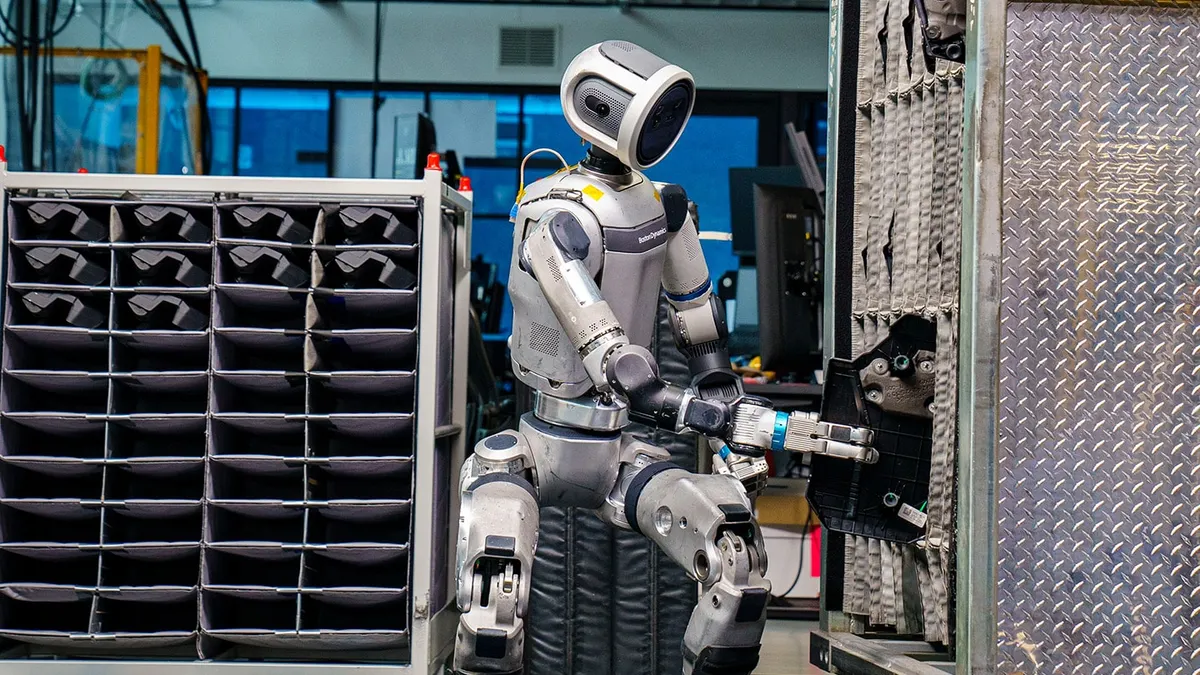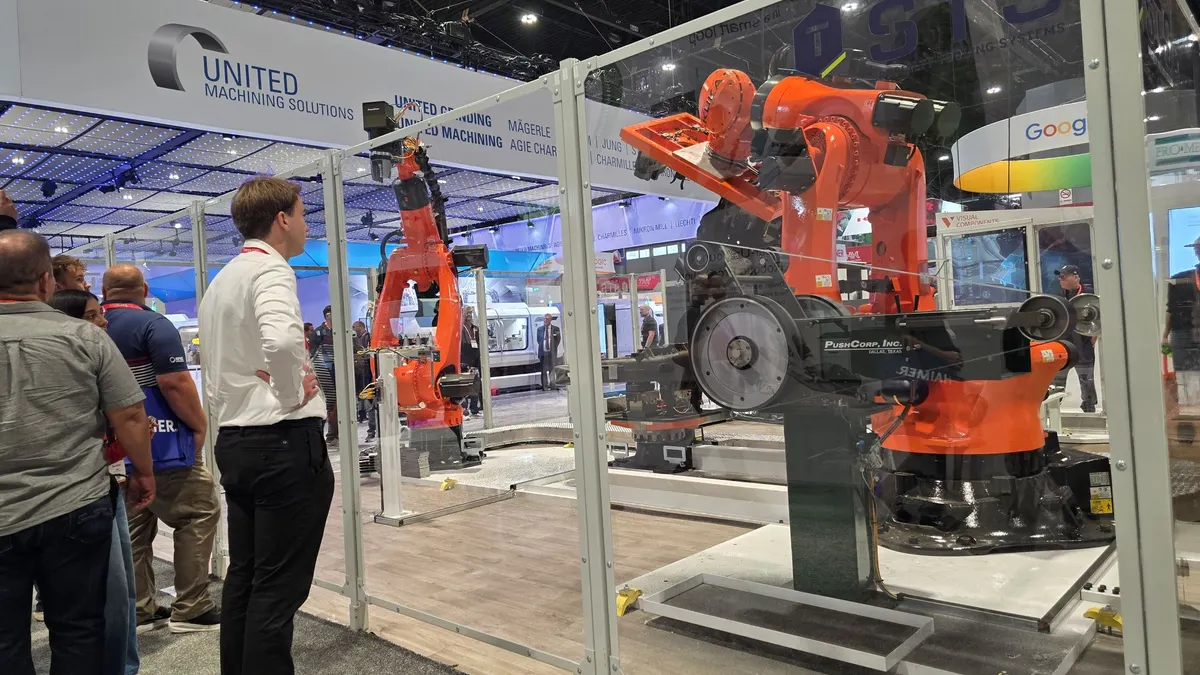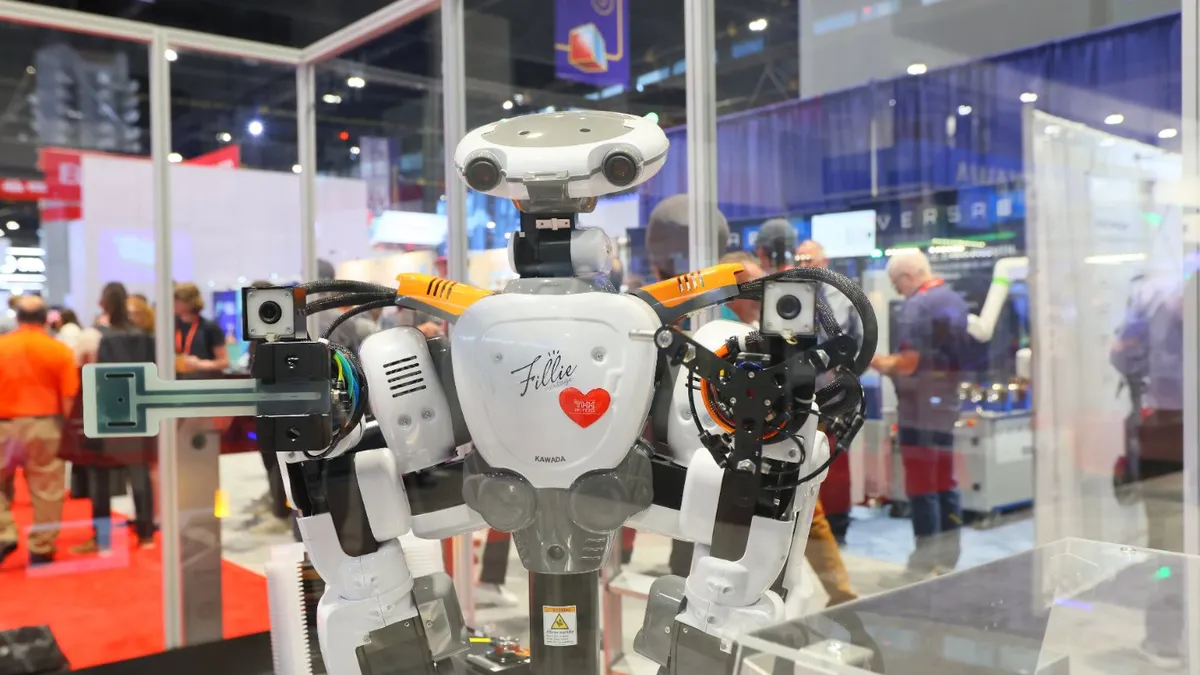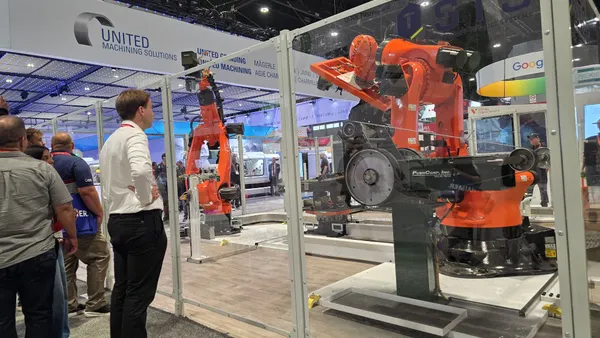
As manufacturing companies across the U.S. increasingly adopt artificial intelligence, the workflow is shifting from text-generating models to physical systems that use robots, sensors and processing capabilities. Despite the potential this presents, there’s a huge gap between experimenting with AI tools and wide-scale implementation of fully automated systems.
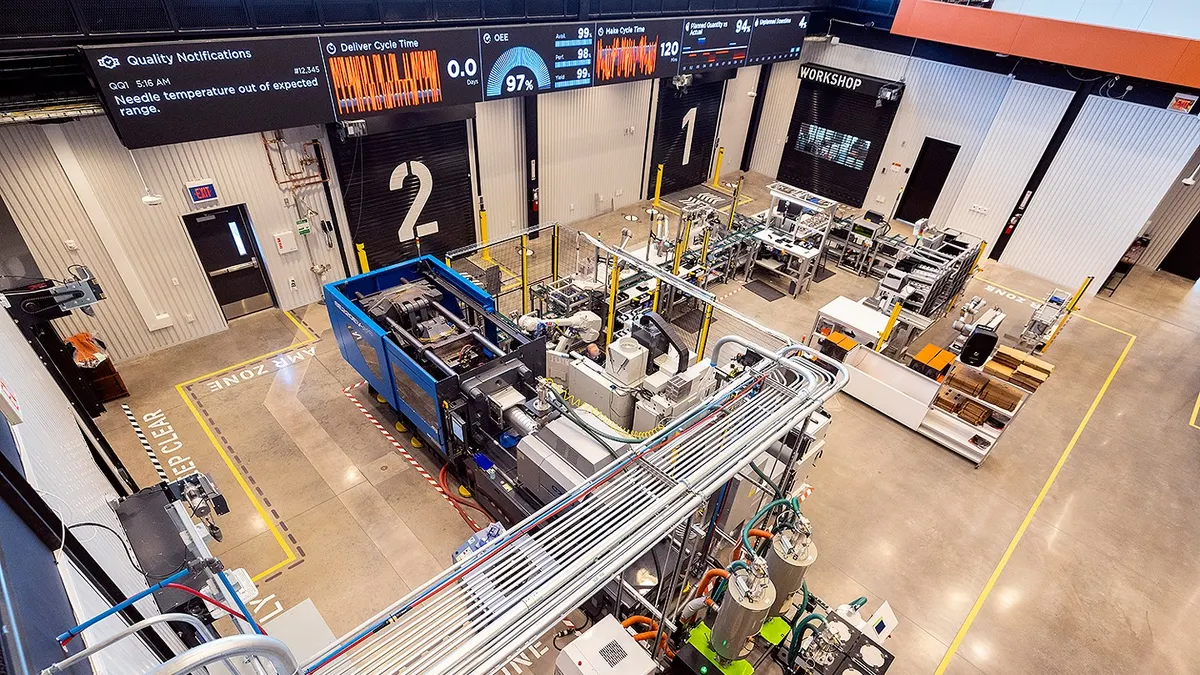
One way companies are starting to bridge this divide is through testing sites. Notable examples launched in the last few years include Tata Consultancy Services’ partnership with Google Cloud on seven Gemini Experience Centers, Microsoft’s AI Co-Innovation Lab in Wisconsin and Deloitte’s Smart Factory in Kansas. These sites allow manufacturing companies to test physical AI and explore use cases before making any major shifts.
The models differ based on what the manufacturing company is looking for and what the testing center can provide. Most of these collaborations tend to be project-based, focused on exploring new technological possibilities and solving specific operational challenges.
The centers offer an immersive learning environment by connecting digital, physical and experimental elements on a fully operational production line, said Rohini Prasad, a principal at Deloitte’s Smart Manufacturing Business, via email.
“Manufacturers get to experience firsthand how cutting-edge solutions can be integrated and deployed with their own operations,” said Prasad. “Organizations can explore use cases, test integrations and develop road maps for scaling AI and digital transformation in a way that goes beyond pilots and into real operational impact.”
This step is necessary to ensure the process works before making a major investment.
These are probabilistic systems likely to make mistakes. So they need to be tested and safeguards must be put in place to understand and mitigate the risks, said John Harrington, chief product officer at HighByte, an industrial dataops software company working with manufacturers to contextualize plant floor data.
“There is a lot of variability across manufacturing plants, including the products they produce, the production lines, and the individual cells within those lines,” he added. “AI offers a way to manage this variability more effectively than rules-based systems, which require extensive custom programming to account for each difference.”
While AI tools seem better equipped to deal with variability, they also complicate training and testing the automation models.
“Production conditions change constantly, from machine performance to material differences to operator inputs, and models need to perform consistently despite that variability,” said Tim Beatty, president of Bullen Ultrasonics, via email.
Bullen is an Ohio-based precision machining provider working on specialty material components for industries such as aerospace, medical, automotive, defense and semiconductors. The company is working with an external partner to test data-driven AI models to increase machine precision and performance.
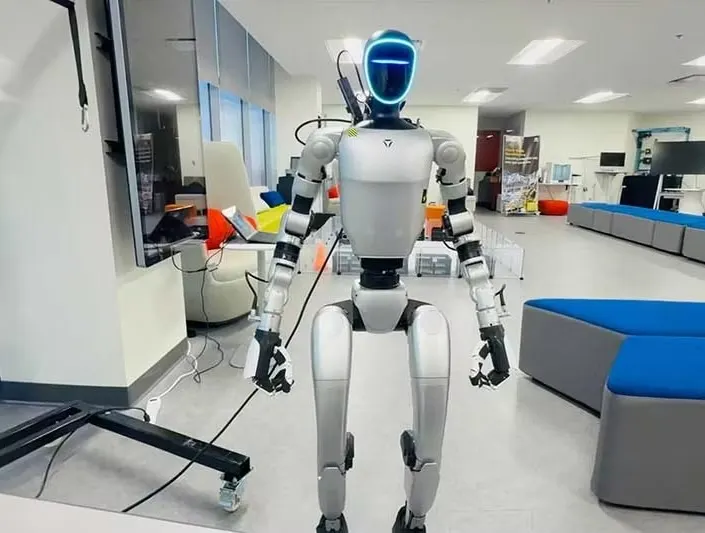
The testing lab environments are designed for experimentation and early-stage learning, which makes it possible to move faster, reduce upfront investment and access specialized expertise, he said. But this can be a double-edged sword.
“Those environments can reduce risk, but they don’t always reflect the complexity of day-to-day operations and may not work well when deployed in a real workflow,” said Assaf Melochna, president and co-founder of Aquant, an agentic AI platform for asset-centric manufacturers.
“Manufacturers are looking at things like safety, accuracy and reliability, and testing centers can be useful for evaluating those in a controlled environment,” he said. “But the real question is how well the system performs in actual workflows, where conditions are less predictable and the cost of getting it wrong can be high.”
Some manufacturers, like Bullen Ultrasonics, have found a solution to this by testing AI in their own machining environment using real data and customized goals.
“This ensures what’s being tested is directly relevant to how our business actually runs,” Beatty said.
Another concern is how data gets collected, managed, shared and integrated with the physical AI systems to execute tasks.
“AI is only as good as the data behind it, and in most factories, data isn’t perfectly clean or consistent across every machine, line, or department,” Beatty said. “If the data isn’t reliable, the outputs won’t be either.”
That’s why he warns manufacturers against overhauling the entire process with automation too fast.
“A better approach is to focus on a single use case, such as reducing scrap on a single line or improving cycle time on a specific machine, and test AI there first.”
Due to this, Beatty sees the quickest wins coming from areas such as machining that already have a large amount of structured data available. This makes it easier to solve specific problems, like identifying patterns that lead to defects.
Aquant is already seeing such results with Makino, a global CNC manufacturer that is using the company’s platform to help technicians troubleshoot equipment issues faster. That’s why Melochna sees predictive maintenance as a strong use case.
Such predictive maintenance systems can be used with agentic AI models that companies like Aquant are building to create automated bots that track operation patterns, identify issues and fix them with minimal human intervention.
Demand for testing such use cases is growing as manufacturers move beyond experimentation and toward operationalizing smart manufacturing capabilities.
“The critical questions they are now trying to answer are less about whether an AI solution exists and more about how it fits into their organization,” said Prasad.
Prasad said industries with complex production environments and high automation potential — such as aerospace, advanced industrial equipment, energy and life sciences — have been early adopters seeing value from real-world testing centers, but organizations across all industries are exploring.
No matter which area manufacturing companies choose to work with, she added, “the fastest evolution will happen in capabilities that deliver near-term ROI and can be scaled with existing infrastructure.”