A Department of Defense’s multimillion-dollar contract has brought a metal casting competition to the worldwide stage as reality show competition in an effort to spread awareness of the skill trade and inspire a new workforce.
Six teams from schools across the United States will be competing for a $25,000 cash prize on the season one finale of the metal casting reality show, Cast in Steel, airing Thursday on YouTube.
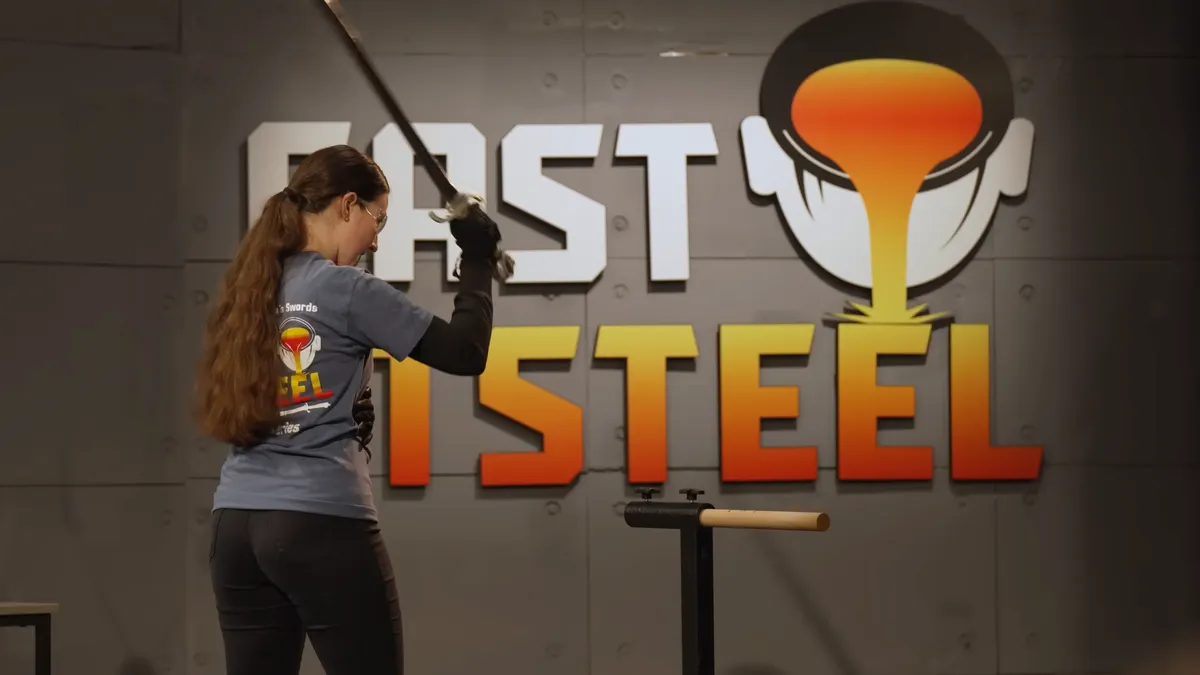
The competition challenges teams to design, cast and test a metal tool or weapon that they crafted, according to Cast in Steel’s website.
For the first season, students had to craft a replica of or inspired by a sword President George Washington might have carried. Judges then evaluated the crafting and design, while also putting the sword to the test, such as by cutting a coconut.
While the inaugural season of Cast in Steel, the reality show, ends Thursday, it’s actually not the first competition, Robert Monroe, owner of social media consulting firm Social Experiment, said in an interview with Manufacturing Dive. It’s only Cast in Steel’s first season on YouTube.
The competition actually began in 2019. His father, Raymond Monroe, is the executive vice president of the Steel Founders’ Society of America, the trade group behind Cast in Steel. Viewers will also see the elder Monroe on the show, discussing the metal casting process.
SFSA started the contest as an industry competition in an effort to drive college students to pick a senior design project involving metal casting, Robert Monroe said. Then everyone involved, including professors, would get together and “test what we made in a fun way.”
SFSA is focused on the steel casting industry and has been active for more than 124 years. During that time, the trade group has witnessed myriad industry changes, such as companies moving their operations overseas.
The key problem is getting people interested in and joining the metal casting workforce and understanding how critical the trade is, Monroe said. Moreover, “the meaning that is derived from having a part in building the country and the infrastructure of the country.”
Over the last 20 years, SFSA has begun to concentrate more on workforce development as the demand for American-made parts has increased. The U.S.’ casting and forging sectors are facing a pressing workforce shortage that could destabilize various industries’ supply chains, according to education and workforce development nonprofit Jobs for the Future.
Additionally, advanced metal castings are used to make 90% of manufactured durable goods and most manufacturing machinery, making it critical to many industries, including automotive, construction, infrastructure, aerospace and energy, according to the trade group American Foundry Society
“All major metals can be cast,” according to AFS’ website. “The most common are iron, steel, aluminum, magnesium, zinc, titanium, and copper-based alloys.”
Cast and forged products are especially critical to the defense industry and are used in almost all platforms, most subcomponents and machine tools and other production equipment, according to a 2022 National Defense Industrial Association presentation. Between 1984 and 2018, the U.S. lost 1,600 foundries and more than 4,400 metal casting facilities, displacing more than 324,000 workers.
Mike Kubacki, program director at Metallurgical Engineering Trades Apprenticeships and Learning, or METAL, said a lot of the foundries that closed were small shops supporting DOD.
A big concern, however, is the aging workforce, which Kubacki said the average age is between 40 and 47.
“So in the foundry industry, it's even a greater problem, and it's not so much just that they're retiring; it's the transfer of knowledge we're really concerned about,” Kubacki said. “It’s not just replacing one body into another. It's the ability to transfer 30-plus years of knowledge.”
‘Casting’ students in the industry and competition
The first contest involved casting a Viking axe, which Monroe said isn’t something that would be “traditionally cast.”
“You would typically forge or fabricate [it], and in many ways, that’s kind of the clever part of it because it’s modern times,” Monroe said. “We have the technology. You can cast many things that you don’t think you can.”
Student teams have also forged other weapons such as a Bowie knife, a Thor’s hammer, a Celtic leaf sword, an African spear and a halligan bar.
Ashley Lacy, who recently graduated from Virginia Tech, said in an email that her school’s Iron Maidens team used MAGMA simulation software to model solidification and predict defects while planning their sword in an effort to save time, energy and materials.
Virginia Tech’s Iron Maidens was one of 38 teams that competed in the inaugural series. The team consisted of five materials science majors who worked closely with their engineering professor, Alan Druschitz, who oversaw their coursework and foundry projects, Lacy said in an email.
Lacy led the Iron Maidens, which she said was formed specifically for the George Washington sword competition. Moreover, Lacy was the only team member who was involved in Cast in Steel’s competition the year before. The Virginia Tech Halli McHalligan Face team won second place for best performance and first place for most authentic for their Halligan bar.
When Lacy began her studies at Virginia Tech, she was pursuing a business degree because she thought business acumen ran in her family.
Her parents are accountants, and her sister has a business degree. However, after her first semester, she was proven wrong, she joked during the first episode of Cast in Steel.
She started college as a business major, “mainly because engineering wasn't something introduced to me in my high school,” Lacy said in her email. “Once I got to college and saw what my engineering peers were doing, I realized I learn best by solving tangible, real-world problems.”
Lacy was in her senior year when she competed with the Iron Maidens on Cast in Steel. She graduated with a bachelor’s in material sciences engineering, with a minor in green engineering in 2025 and said her coursework gave her a “strong foundation in physical metallurgy, gating designs, and metals and alloys.”
She added that designing a cast tool for a product that’s customarily forged was a “major engineering hurdle.”
“However, beyond textbook knowledge, our program was guided by Dr. [Alan] Druschitz, whose PhD and 25 years of industry experience gave us practical insights and direct connections whenever we faced complex technical challenges,” Lacy said.
Kubacki attended the taping to speak with students about opportunities in the industry. He also met with some professors to garner interest in posting the METAL program at their schools.
METAL is one of two workforce development programs at The Institute for Advanced Composites Manufacturing Innovation and focuses on metallurgy casting and forging training. Recently, IACMI received funding from the Department of Defense’s Office of Industrial Base Policy to expand METAL and America’s Cutting Edge, or ACE, a computer numerical control machine training program.
IACMI’s expansion plans for the METAL program include metallurgy forging bootcamps at other sites and increasing the number of apprenticeships and internships to more than 75 and 350, respectively.
The Manufacturing USA institute will also deploy two METAL mobile training units, with one focused on K-12 and the other bringing the METAL bootcamp and learning opportunities to rural areas.
However, Cast in Steel gives college engineering students an opportunity to compete and really understand what the whole casting process looks like,” as well as helps spread awareness, Kubacki said in an interview.
“[The teams] don’t cast just one sword — they might cast four, because you go through the whole understanding of the design process, the actual casting process, looking at defects quality, and then of course we have post processing,” he said. “You can't just take a cast sword and go use it. You need to sharpen the edge. You need to put a handle on it.”
Bringing Cast in Steel to the masses
The competition was a success, but only at the metal casting industry level, Monroe said. Outside of that, it had “almost zero visibility.”
In 2023, Monroe’s Social Experiment began taking steps to bring the competition to a wider audience.
“My whole angle with getting media attention is ... instead of going straight to your audience, you talk to the platform first,” Monroe said. “So, like Facebook, LinkedIn, all of those platforms, you need to adapt your message to the shape they want it to be in, and then that allows the platform then to send it organically and push it.”
Fortunately for Monroe, SFSA had a documentary film crew for every competition since it began. He used the footage and edited it into 10- to 15-second clips, which he said has done well, garnering about 76 million views on all platforms.
In 2024, DOD awarded SFSA a $16.3 million contract through its Industrial Base Analysis and Sustainment program. The funds from the five-year agreement are going toward the trade group’s planning and operations behind Cast in Steel, which DOD said is a “key platform for the IBAS program's mission to strengthen the defense industrial base's workforce by investing in future generations.”
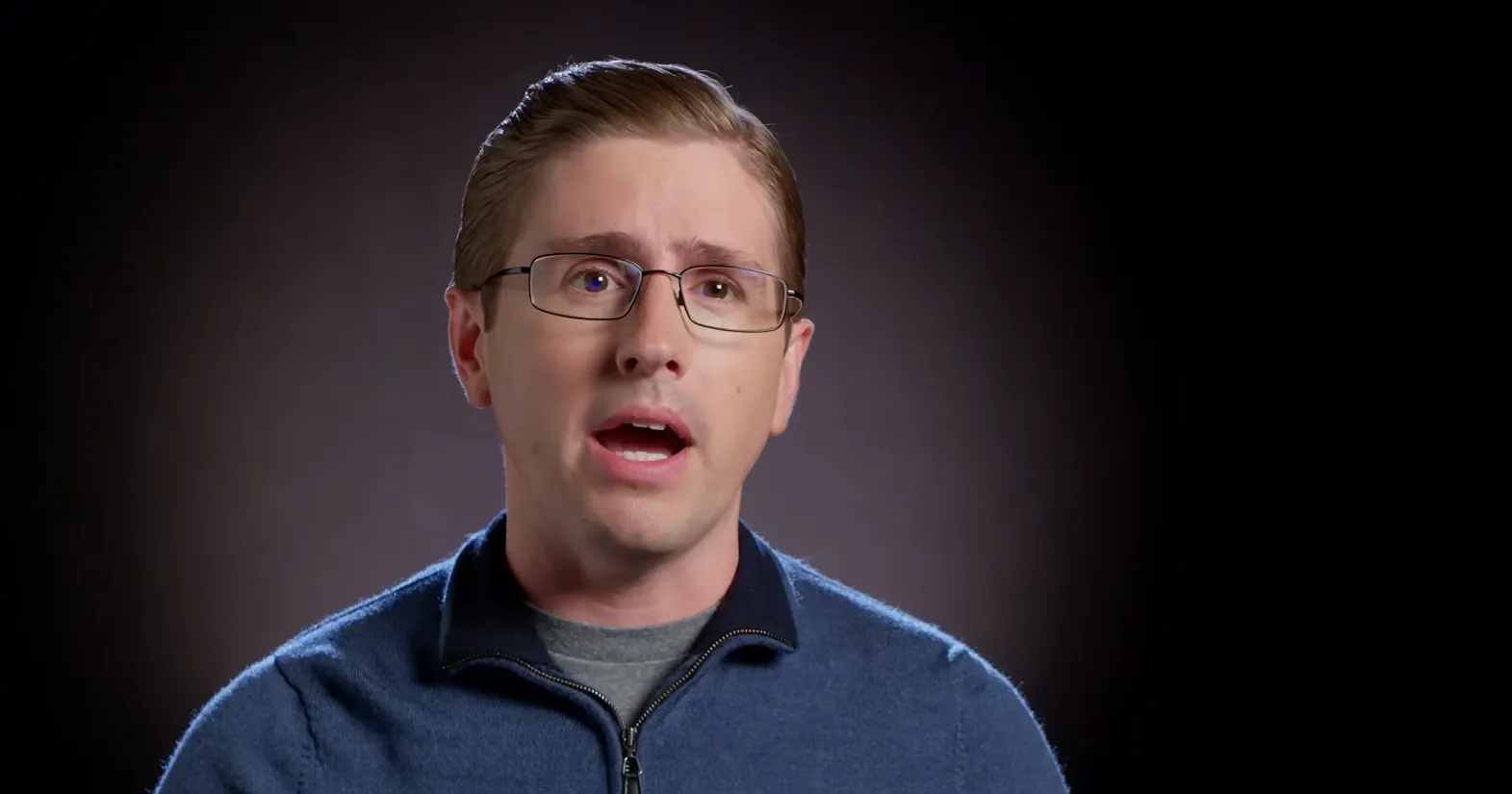
Matt Draper, deputy director at DOD’s Industrial Base Analysis and Sustainment program, also serves as the competition’s host.
“The competition pushes students to embrace resilience and teamwork, providing them with hands-on experience that mirrors the demands of careers in the defense sector,” Carla Zeppieri, then-deputy assistant Defense secretary for the agency’s Industrial Base Resilience, said in a 2024 statement. “Participants use cutting-edge casting techniques that blend innovation with history—skills they will carry forward as future contributors to the defense industrial base.”
SFSA hired a producer experienced in Discovery Channel shows, leading the trade association to turn it into a TV series.
They shopped the show around to various media companies, such as Netflix and Amazon Prime, but decided instead to air it on YouTube.
“Our main hope is this reaches a younger audience,” Monroe said. “Could it get on Discovery and or History Channel or any of those? The answer is probably yes, but then accessibility would go down because you'd have to subscribe to their service or watch it there.”
Moreover, Cast in Steel is not a for-profit enterprise, he added.
“This is a project meant to drive interest and and effectively showcase the importance of and then also the meaning and fulfillment that these students have received by participating and then getting involved in the industry,” Monroe said. “And then hopefully that is inspiring to other people watching.”
Students interested in participating for the third season in 2027 can register on Cast in Steel’s website.