Before Brett Velicovich joined the U.S. Army, he was attending the University of Houston and on the professional career path, either to do business, or become a lawyer or doctor. The military wasn’t even on his radar.
Then 9/11 happened. Velicovich recalled being in his college apartment and thinking, “People hate us.”
“It just shocked me,” he said. “Why do people hate us so much to do something that’s terrible?”
Velicovich joined the Army in 2004 and had planned to try it for four years and “see what happens.” He ended up staying for eight years “because it turned into such a really cool adventure that I couldn't have ever imagined.”
Velicovich worked as a special operations intelligence analyst during his time in the Army, doing seven combat deployments overseas.
Among other things, the work exposed him to the world of drone technology. Velicovich recalled an expensive, loud tactical drone that a special operations unit he was attached to flew.
“This thing was supposed to be the technology that could scout for the Taliban and al-Qaeda, and I remember just thinking, ‘They’re gonna hear this thing from before we even get it anywhere close to them.’”
Since then, Velicovich began “peeling back the onion,” or delving deep into drone technology and how important it was for active duty servicemembers in combat.
“We will never fight another war without some sort of drone technology,” he said. “It’s just ingrained in everything we do.”
Recently, Velicovich co-founded drone maker Powerus, which is in the process of merging with golf course company Aureus Greenway Holdings and is backed by President Donald Trump’s sons, Eric and Donald Jr. The deal is a reverse merger or reverse takeover that allows a private company to take control of a publicly listed company without an initial public offering, according to Investopedia. It’s also quicker and cost less to complete.
Velicovich said the pending deal is a “typical mechanism for doing a reverse merger as a public vehicle that already exists and is already strongly supported by investors, and so it works for us.”
Other investors include drone component maker Unusual Machines, for which Donald Jr. is a stakeholder and serves on Unusual Machines’ advisory board. In June, Unusual Machines invested $30 million in Powerus in an effort to build a domestic “defense-autonomy” supply chain. However, Powerus is not obligated to buy any specific volume of parts, according to the press release.
Manufacturing Dive spoke with Velicovich over Zoom and email about the drone industry and Powerus’ goals that focus on filling the gaps in the drone end-market.
The following interview has been edited for clarity and brevity.
MANUFACTURING DIVE: How does your Army experience help with your role at Powerus?
BRETT VELICOVICH: It really has to do with understanding what the war fighter needs, what the end user needs.
All of my experience and everything I do is comes from that level of understanding of what the tactical war fighter is doing, and I think that's where we're a little bit different. The founders of the company, we all met in Ukraine. I was on the ground there a couple days after the full-scale invasion. I went out there initially for humanitarian work. It turned into a whole big thing with drones, because of how inundated the Ukrainians are.
But I've seen the full gamut of how this technology is used. I started out using them in the military for killing bad guys, and then when I got out, it was using them for humanitarian work, it was using them to protect wildlife, it was using them for looking roadside bombs, it was using them in ways that most people didn't think the technology could be used to help and save lives. That just goes into everything we do with the company.

I've seen so much U.S. tech that has failed. They used to bring out a lot of defense companies that were trying to sell their systems to the Ukrainians, and most of it failed miserably. It was a wake-up call for us to understand that U.S. soldiers have a lot of tech that does not work, or they have no idea that it doesn't work. Ukraine is like this world's greatest laboratory for drone technology, and so a lot of the stuff that we do has that backdrop of, as a soldier, would I want those systems myself to be used? Because a lot of times you only get one chance to save a life.
Why form Powerus? What was missing or needed in the drone industry that you wanted to address with Powerus?
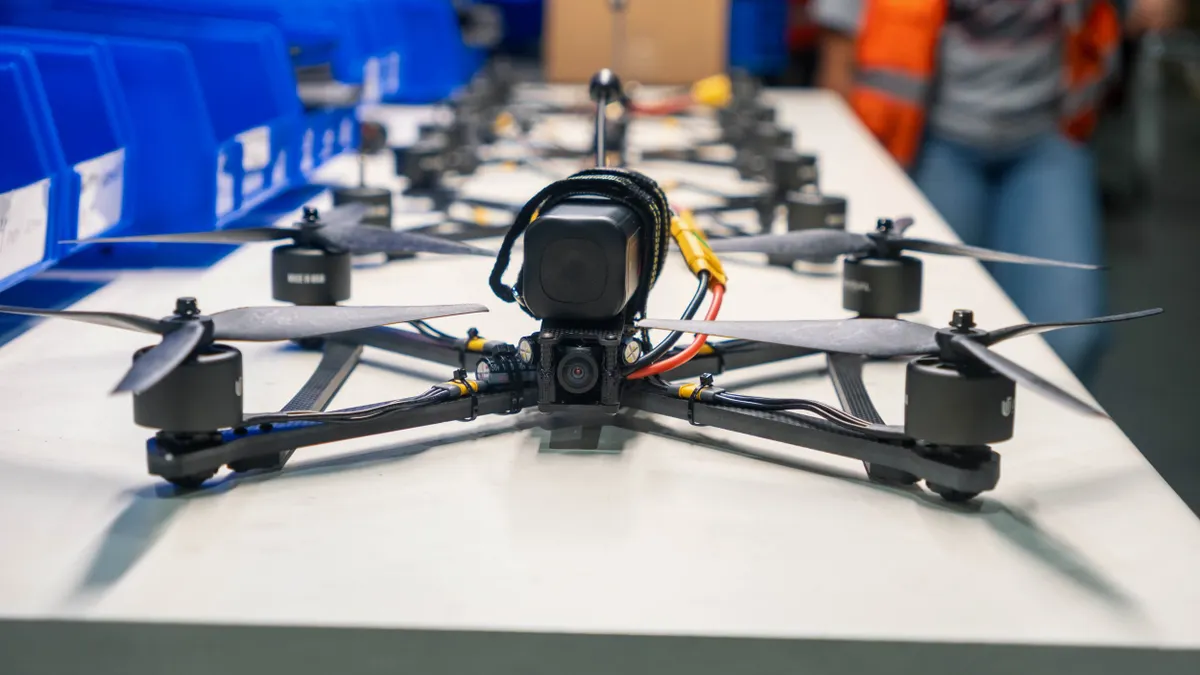
The scale, the speed at which drones are made. People used to get excited in the U.S., when a defense contractor could build, like, 100 drones a month, and that's just not the reality of the way we fight wars.
I've been in one [Ukrainian drone facility] where they were building 125,000 [first-person view] drones a month. That was one facility, and their facilities are distributed all around the country. And the same thing that [Urkaine drone makers are] doing, Russia’s doing, and China’s doing. You can't find a company in the U.S. that's making 50,000 drones per month, 100,000 drones per month. That's a big major issue.
I think like the scale and the speed at which we manufacture, we need to completely revamp our entire industrial base here in the U.S. to be able to prepare ourselves for that type of fight. It's non-sustainable. The math is not sustainable.
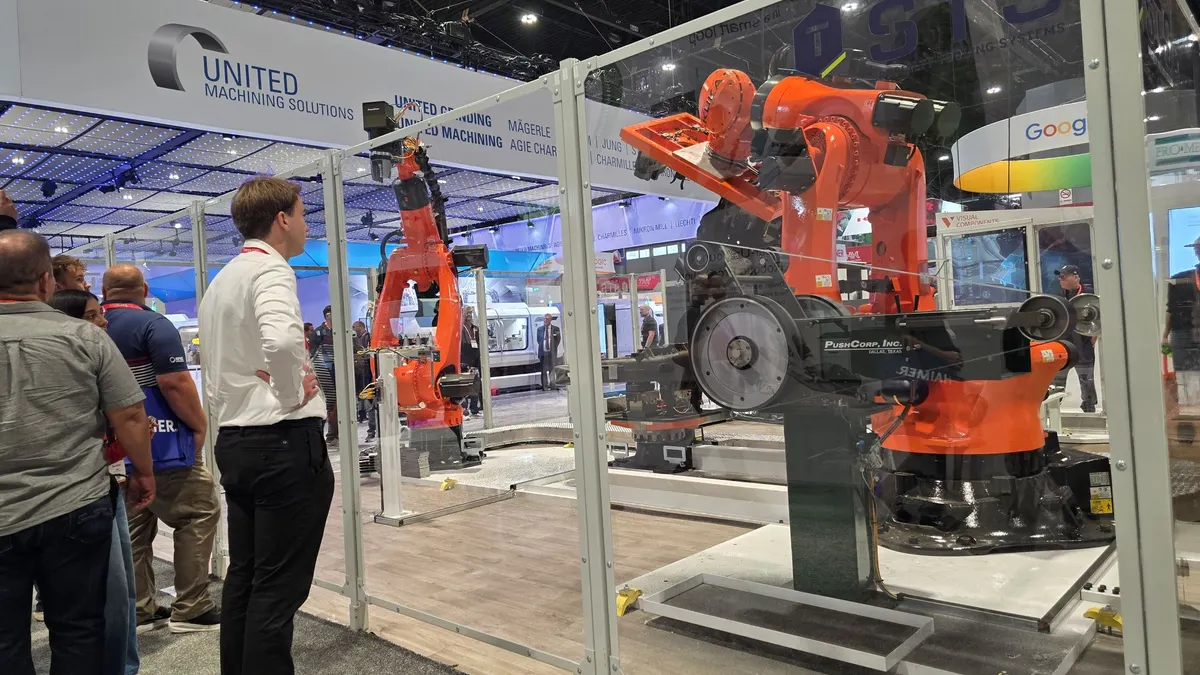
I look at the drone industry a lot like the car industry. We need to have these big manufacturers producing thousands of these things per month, and there's a lot of room for different companies. It doesn't need to be owned by one company, there's a lot of companies that can be involved in it, so that was a big thing. [MQ note 4 is about photo below]
The other thing I saw, for instance, interceptors, [which] we had basically ready before the Iran conflict kicked off. We knew that that was one of the main mechanisms by which the Ukrainians were shooting down.
Interceptors in the U.S. are very new, but they’ve been operating in Ukraine for at least the last year or two, and we saw the writing on the wall with that. So we developed our own systems that again, we can also build at scale, because it comes down to the math problem. We shouldn't be shooting a million dollar missile at a $20,000 drone. We should be shooting a $5,000 interceptor at a $20,000 drone. You get more capability there, and these things can be mass produced at scale.
Why merge Powerus with golf course company Aureus Greenway Holdings instead of another drone company? What's the strategy behind that?
We really want to provide access to retail investors and the general public and give them the ability to invest in a company that is at the forefront of drone technology. There’s so many drone companies out there that have been funded by [venture capitals] and all these private investors, and it doesn't give access to the everyday person who wants to be a part of this craze when it comes to [artificial intelligence] and drones.
The purpose of that is giving folks the ability to have access to us, to be able to invest in us, to be able to understand our vision, and give everyone the ability to be on this journey alongside us, versus these companies that never go public, or you never really hear about them, but you hear about these big investments behind the scenes. The traditional person on Robin Hood or E-Trade does not get to typically get access to companies like that. Now, they will.
At the same time, we build heavy-lift drones that work in the agriculture space. One of our major clients is a company where we're spraying pesticides in replacing traditional crop dusting machines overseas. And so, you have the ability to do that over golf courses as well.
What kind of obstacles is Powerus currently facing, and how is it overcoming or pivoting from those obstacles to keep production going?
For us, it's all about supply chain. Whoever owns the supply chain is going to own this sector, because there's only so many motors that can be spooled, and there's only so many frames that can be built, and so our focus is getting that right. It's going to take time, but that has to also come with contracts that support that supply chain as well. We need more drone dominance programs out there, we need more billion-dollar programs designed to get companies to build all these things at scale.
So our focus now is getting our processes in place.What happens when we win a drone dominance program, and they say, “All right, we're ordering 50,000.” Okay, what's the next step? Because when you peel back the onion of a lot of people's supply chains, a lot of it still goes back to China, literally down to the mines.
The point of this is to make everything American made and NDAA compliant, and it just came down to like they just couldn't get them, they couldn't get certain things American made.
So I always think about the supply chain, I just think about how whoever owns that really is going to win, because when you look at the competitors and the drone dominance program, a lot of them are still all pulling from the same manufacturers. Whether it's a flight controller or whether it's a motor, when you peel back the onion, there's only so many manufacturers actually building that thing, and you'll find a lot of the drone companies are all using the same other manufacturer to buy it, so that's one thing that we're all working on to try and solve.
The National Defense Authorization Act for fiscal year 2026 updated manufacturing requirements that would prohibit the U.S. Department of Defense from purchasing batteries for weapons and support systems made with materials from foreign entities of concern, such as China or Russia, beginning Jan. 1, 2028. What are your thoughts on that?
Every year, they're making it more and more difficult, which is good. You just need to force these people to do it. I love it. When I got out of the military, one of the first things I did to make money was sell DJI drones. I was selling DJI Chinese drones, so I got to understand DJI and the stranglehold a Chinese company had on the commercial sector, and it was like, at one point, it was like 86% of all drones sold in the U.S. were DJI Chinese drones, and no one cared at the beginning of all of it. Then it just got out of hand, and we got to get that back. Everyone needs a shock to the system to fix that in there, and there needs to be money applied to it, which we're starting to see across different offices, which is great.
Is Powerus investing in advanced technology in its manufacturing operations, such as automation and robotics? If so, what kind of technology is being implemented, and how is it influencing the company’s manufacturing operations?
Powerus is investing in advanced manufacturing technologies, including automation, digital production workflows, and robotics where they improve throughput, quality, and repeatability. The goal is not replacing people — it’s enabling faster scaling, more consistent production, and reducing bottlenecks in critical manufacturing steps.
What are the workforce issues and gaps Powerus and the drone industry are encountering? How is Powerus addressing that? Also, what kinds of policies or initiatives does the industry need for workforce development?
Like much of the drone and defense industrial base, the biggest constraints are experienced engineering talent, advanced manufacturing labor, and workers who can operate in regulated environments. Powerus is addressing this through internal training, partnerships, and building processes that allow faster onboarding and greater productivity. More broadly, the industry would benefit from workforce development programs focused on engineering, technical trades, and accelerated pathways into defense manufacturing.
There have been critics of President Donald Trump’s sons, Donald Jr. and Eric, for backing the Powerus/Aureus merger, saying it’s a conflict of interest. How and why does their contribution influence the business and operations?
Soldiers don’t care who is on an investor deck — they need what works. The involvement of outside investors or supporters does not influence day-to-day operations, manufacturing decisions, customer execution, or governance processes. Powerus remains focused on execution, customer outcomes and building long-term industrial capability. Strategic support is evaluated based on whether it helps accelerate growth and strengthen the business.