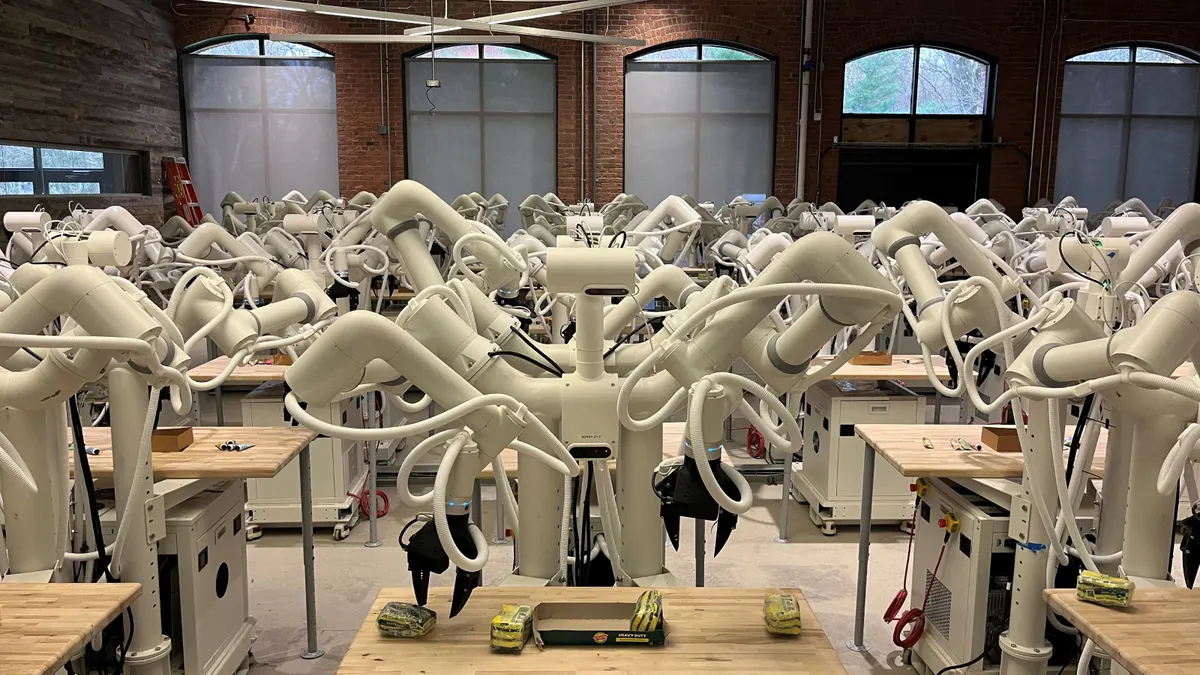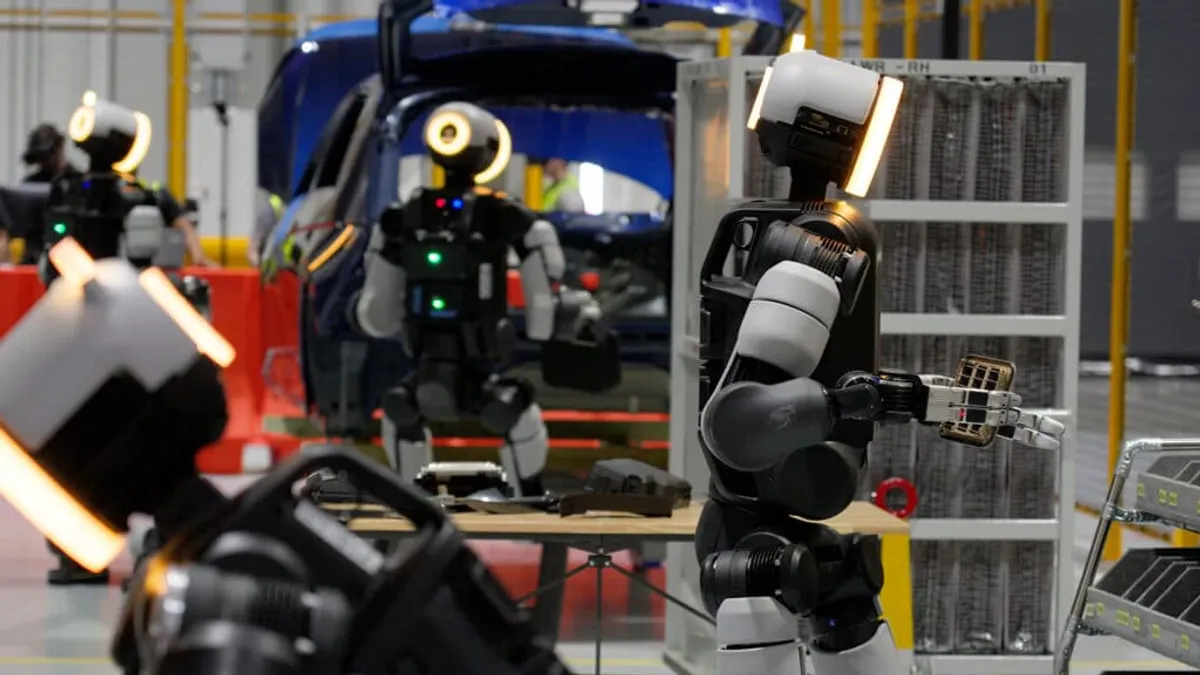


CHICAGO — Not only is artificial intelligence in high demand for its potential to reshape how manufacturing works, but AI and automation are also seen as a partial solution to the labor shortages that continue to plague manufacturers of all types and sizes.
“Demand for automation is off the charts, and a lot of that is driven by the lack of available labor,” Chris Chidzik, the Association for Manufacturing Technology’s principal economist, said at IMTS in Chicago. “There are currently about 400 or half a million open positions in manufacturing, and as demands on U.S. manufacturers continue to rise, the only real way to meet that demand is through automation.”
A recent PwC survey found that manufacturers are expected to more than double their use of automation, artificial intelligence and other advanced technologies by 2030. According to the survey of 443 industrial manufacturing executives, the median share of respondents said that advanced technology adoption throughout their operations will increase from 26% to 68% over the next five years.****
Still, adoption has been slow. According to Intrinsic Chief Technology Officer Brian Gerkey, 80% of U.S. manufacturing facilities have zero automation. This is in stark contrast to the fully automated factories in countries like China and Japan.
Chidzik acknowledged that U.S. factories have a long way to go when it comes to automation. However, he said the way automation is measured has changed significantly and qualifying processes can be undercounted.
“If you think back, CNC control was not a standard feature a while ago, but now it's on almost every machine,” he said. “An automatic tool changer was an added feature to a mill a while ago. Now everybody wants one, and we call it a machining center. So as those added features become more ubiquitous, more people are demanding them. The value goes up, and then the economies of scale kick in, they become standard futures.”
According to Chidzik, one way to measure the true impact of automation on U.S. manufacturing is by looking at the difference between the general inflation rate and the average order value. “If you quantify the difference between the [Producer Price Index] and the average total order value, it would imply that demand for automation in 2025 was about four times the level that it was in 2018,” he said.
Automation has also had an effect on employment, he said, but not an entirely negative one.
“If you look at manufacturing employment following the 2020 recession, it peaked, kind of plateaued, and then started to taper down,” he said. “And I feel like it's really easy to...shake your fist and go, that's the robots taking all the jobs.”
However, he noted that there are still more than half a million open manufacturing jobs in the U.S. today.
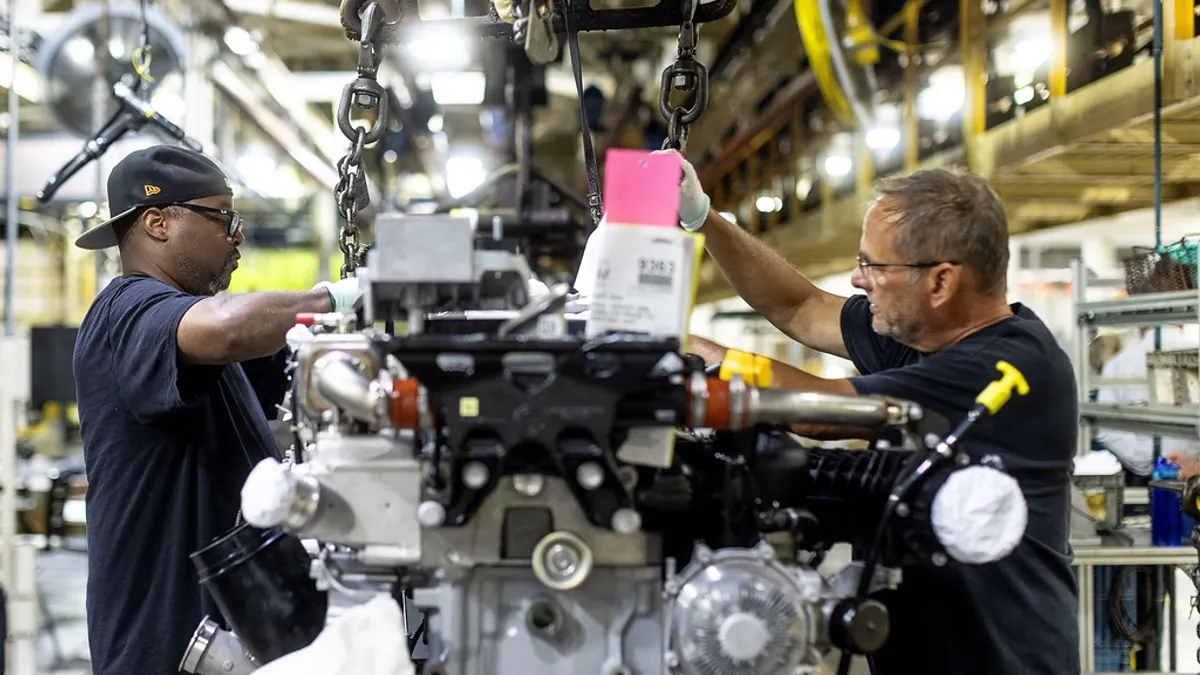
“Manufacturers want to hire people, but because of the dwindling labor supply and inability of manufacturers to find people, automation has been even more in demand,” he said. It's not necessarily [that] we're investing in automation and don't need people. I think it's much more of an educational perception and availability issue. You can't snap your fingers and have more 18- to 65-year-olds available... have them trained to work at a factory, and then... have them change their perception of what manufacturing is.”
According to Chidzik, many people do not even consider manufacturing as a career option because of these misperceptions. “That's what's resulting in this massive increase in the need for employees, the inability to get people to do that work, and the reason a lot of people are turning to automation,” he said.
At the same time that manufacturers are beginning to automate some of their processes, AI is driving major investments in engine turbines and power transmission equipment. Chidzik said orders for this equipment are about 35% above their long-run average.
This trend is due primarily to the data center boom. Spending on data center construction has tripled over the last three years, and occupancy rates remain near record highs for third-party leased data centers, according to Goldman Sachs research published August 2025.
“There was a real push to modernize and expand grid infrastructure, so that led to a big increase in orders, and then AI just kicked this into overdrive,” he said. “Demand for power grids is increasing rapidly, and manufacturers need a lot more capacity to get this done. There's huge shortages of transmissions, bus bars, relays, pretty much any electrical component.”