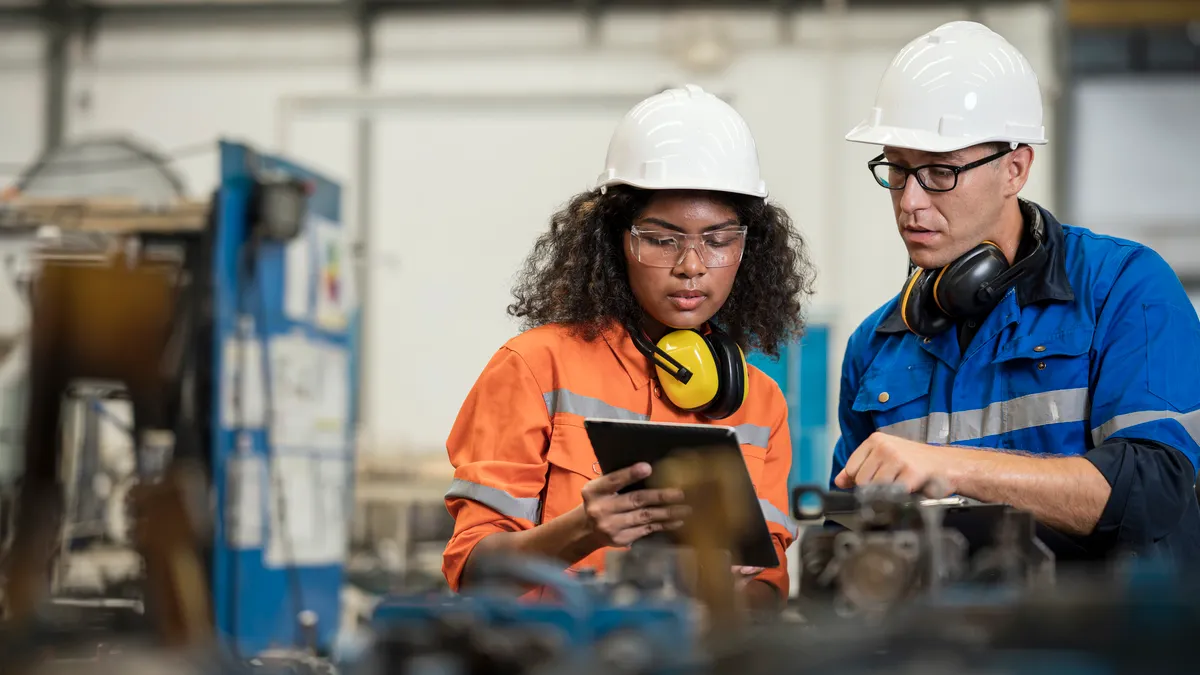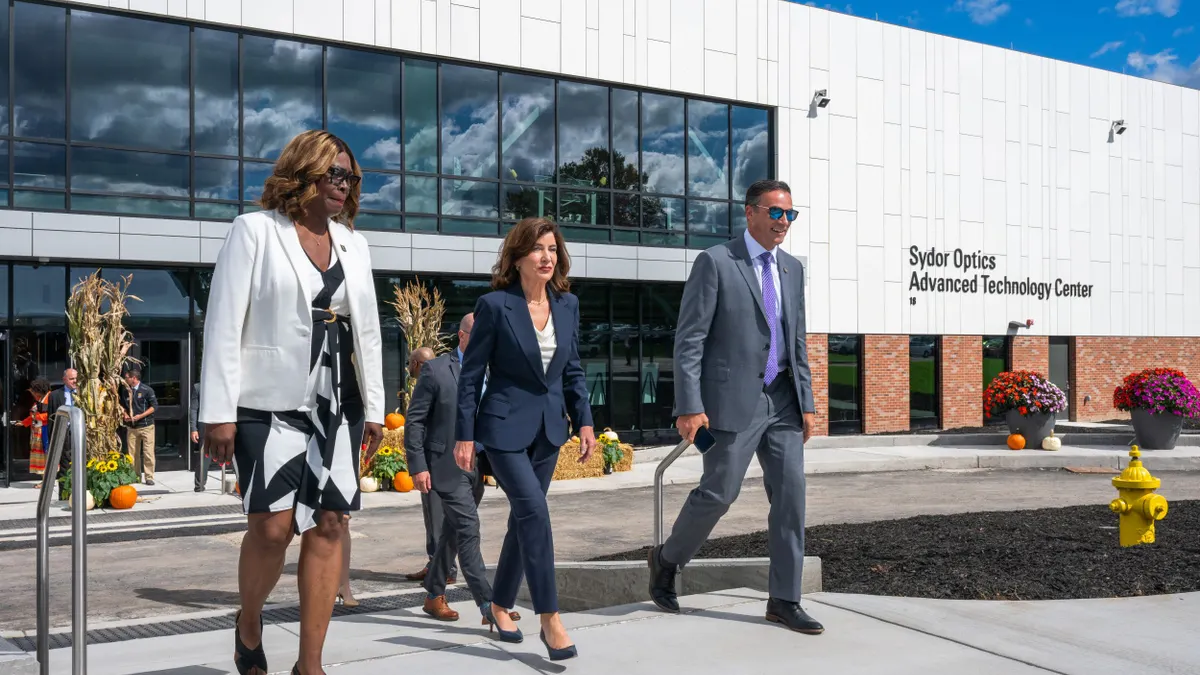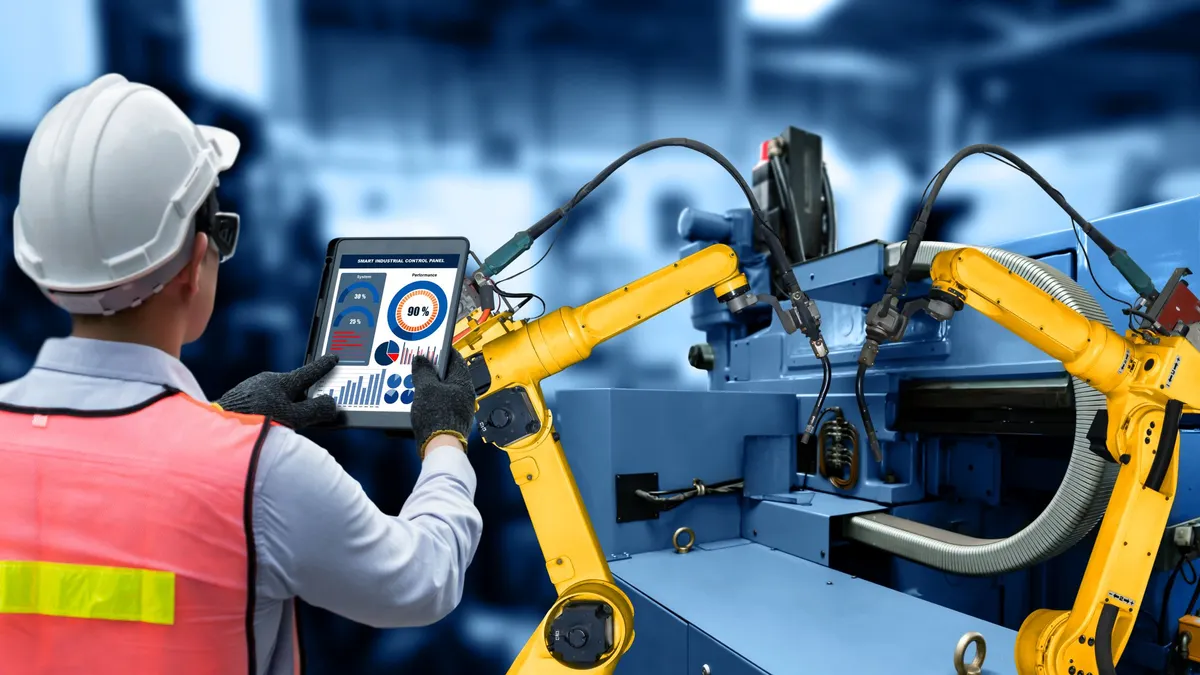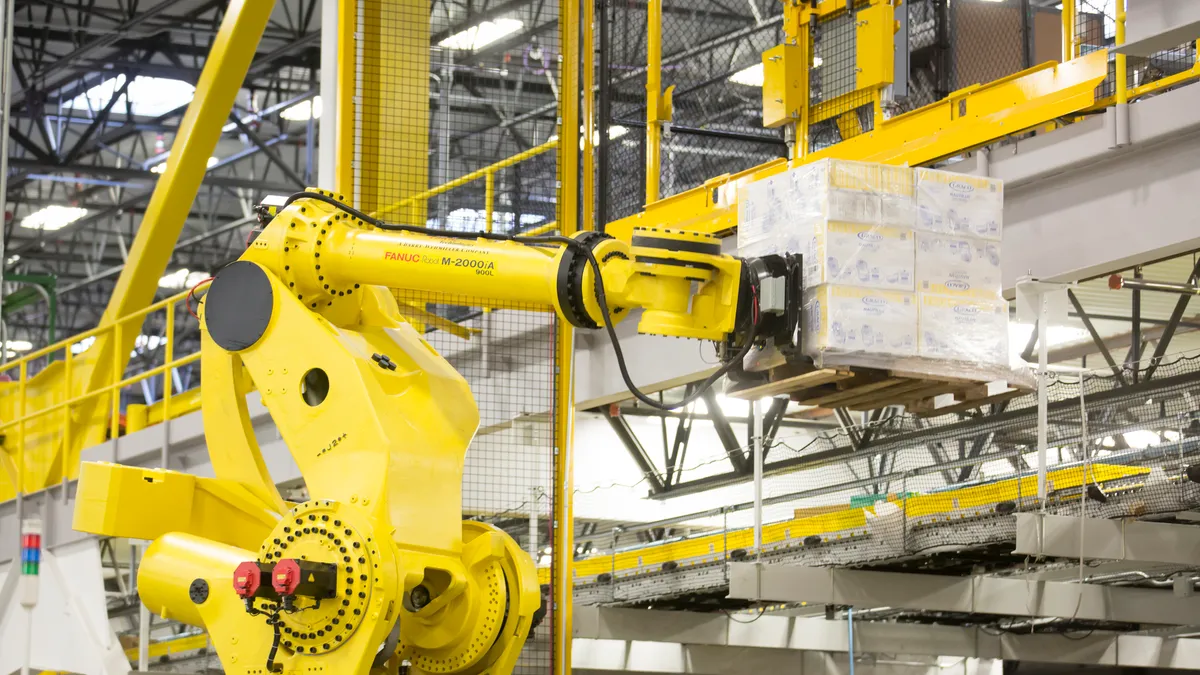
CHICAGO — Artificial intelligence is reshaping how manufacturing works. Agentic platforms are integrating with robots to enable autonomous processes. 3D printers are leveraging generative software and smart cameras to make durable parts. Companies are even using AI tools to communicate with and support shop floor workers who speak different languages.
As more breakthroughs happen and trust in AI builds, these new processes will become normal and talk around AI and its capabilities will eventually stop, Mehul Patel, chief technology officer at Honeywell Technologies, said at a media panel at IMTS in Chicago on Monday.
“My prediction is that we won’t talk about AI — it will be part of what we do,” Patel said. “Our systems will not only be predicting as to what will happen, but they will tell us what is going to happen, why it is happening and what we need to do.”
He said humans will continue to be in the loop in certain industries, but there will also be guardrails strong enough that the system itself will be able to support processes without human intervention.
Patel and executives from Fanuc America, Generac and Briggs and Stratton gave their thoughts and predictions as to how AI will evolve and impact manufacturing. Praveen Rao, global director of manufacturing at Google Cloud, moderated the panel.
“I really think we’re still at the starting line when it comes to where AI and these agents can affect the physical robots and machines,” said Mike Cicco, president and CEO of Fanuc America, the largest maker of industrial robots.
In recent years, Fanuc America has seen “exponential growth” in robot orders as AI demand increased, he said. Fanuc produced 500,000 robots between 1982 when it entered the U.S. market and 2017. That total doubled to 1 million in 2023 and will likely continue to surge, Cicco said.
In May, Fanuc advanced its capabilities with Google Cloud, partnering with the cloud developer to implement Gemini Enterprise platform and robotics software Intrinsic into its robots. Cicco said Fanuc now has access to an “infinite amount of resources in the cloud” for its robots to learn and perform tasks.
It can be as simple as writing instructions on a piece of paper. In a factory setting, he said workers can now list the parts they need and present the information to the “automation” technology, which in turn sends it to the cloud, comprehends what the workers want and digitizes instructions for the robot. Physical action follows. Multiple robots can be linked to the Gemini brain, meaning they can work in harmony to complete tasks.
“Now all the things that used to be hard coded into the robot are now completely flexible,” Cicco said. “The operators are able to just tell the robot what they wanted to do.”
In other words, AI is becoming more accessible to people with limited technology experience. Instead of high-code solutions run by professional programmers, Brad Witter, senior vice president at generator manufacturer Generac, said there will be more no-code or low-code solutions such as “point and click” that can drive predictable behavior.
Worker augmentation is also on the rise. As AI becomes more advanced and interfaces with operating systems like Oracle or SAP to understand data and make recommendations, the people who currently work within these systems can “take a step back” and “become more strategic,” said Erik Syrjanen, senior vice president of supply chain at utilities engine maker Briggs and Stratton.
“We have employees spending far too much time focusing on data analysis,” he said. “Those same employees are going to [eventually] be focused on ‘What do I do with the information?’”
While many companies are looking to push the boundaries of what AI can do, a growing number of leaders are sounding alarms that progress should slow down for safety and security reasons. Recently, Anthropic CEO Daior Amodei warned on CNN that “AI could kill us all,” after making a lengthy post on his website about the risks the technology could pose in terms of cyberattacks, bioterrorism and economic disruption.
When asked about what companies are doing to ensure worse-case scenarios don’t happen in manufacturing, executives on the panel assured listeners that safety mechanisms and security layers are in place.
Cicco said Fanuc is able to monitor and maintain good reliability with its robots. For example, if someone were to tell the robot to move in a way that was harmful to itself or humans, there’s a protection layer between what the robot is told to do versus what it would do, he said.
Patel, of Honeywell Technologies, added that the acting in the physical world is done by control systems, offering a layer of reasoning to prevent potential harm.
“AI plus the control systems is where the breakthroughs are going to happen,” Patel said.