As manufacturers navigate high turnover and labor shortages, many are leveraging the latest technologies to not just address hiring and skills gaps but also to get new employees up to speed faster on company systems and operations.
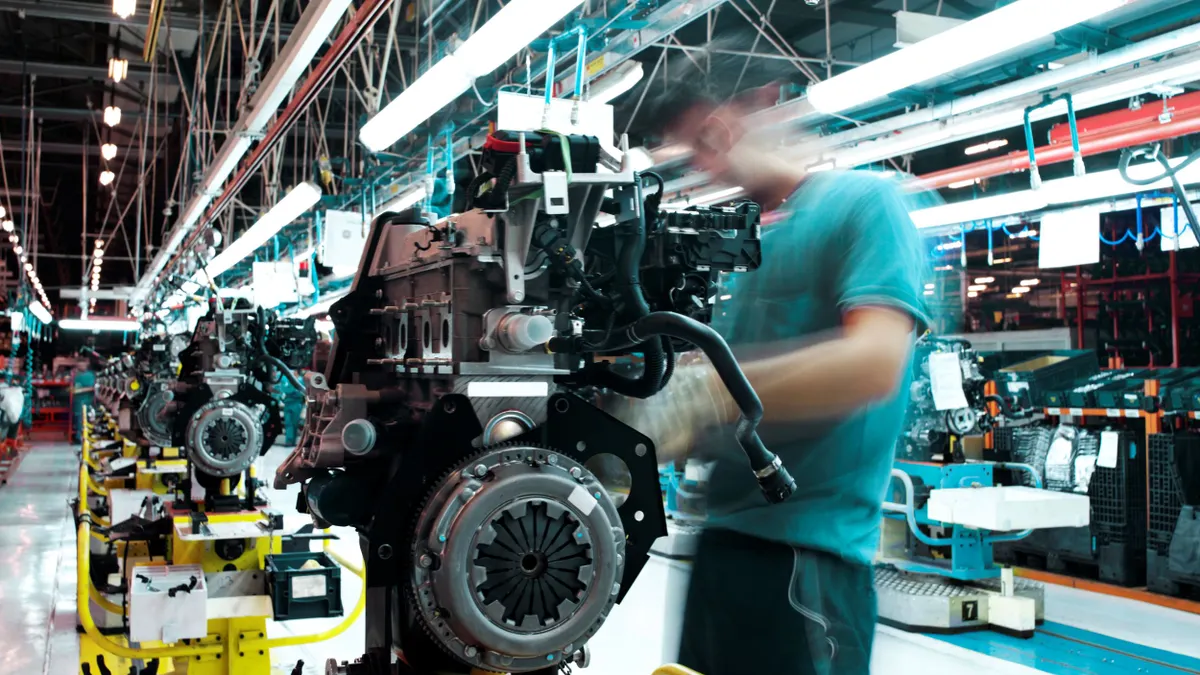
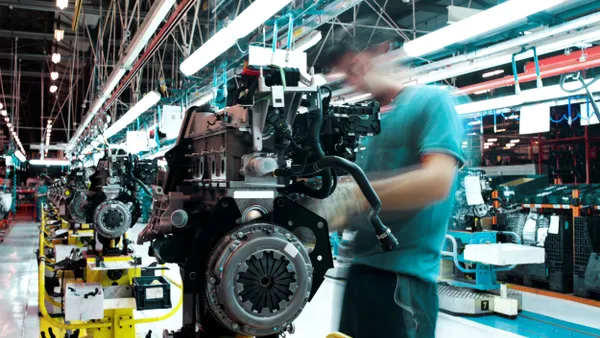
“Many times what we are doing with some of our customers is have them videotape repairing an engine or fixing a machine that is broken down, feed that video into AI, turn that into step-by-step instructions in different languages that can be converted into multiple languages with a click of a button,” said Praveen Rao, Google Cloud’s global head of manufacturing.
Rao leads Google Cloud’s global manufacturing strategy, developing innovative technologies and driving growth across the industrial manufacturing sector. His expertise spans cloud solutions, analytics, artificial intelligence and the internet of things.

Rao has more than 20 years of industry experience, including previous leadership roles at Amazon Web Services and IBM.
Rao recently spoke with Manufacturing Dive about how worker roles are changing across the industry to account for AI and autonomous technologies. He also spoke about some of the work that Google Cloud is doing to help companies retain institutional knowledge and accelerate training.
This interview has been edited for clarity and brevity.
MANUFACTURING DIVE: How do you see worker roles changing as manufacturing becomes more software-defined and autonomous?
PRAVEEN RAO: We are in one of the most exciting times. We have a once-in-a-generation opportunity in terms of the transformation. We have a whole industry 5.0 view that is very advanced from the industry 4.0, because the focus is not so much about automation — it's about making things autonomous.
There is a big shift in terms of what we can do, and the workers are an essential part of that. We always keep humans in the loop in terms of the AI-centric approach that we are doing, because our approach to AI is not about eliminating human hands or finding more human hands. It's about how we take the human hands that we have and multiply the capability of those hands so that their productivity is higher, and then they are more confident in what they're doing.
If you think about it, throughout history technology has always focused on improving productivity per person. And now AI is going in the same way — but it's on steroids, per se. Because the kind of productivity gains happening are nearly a hockeystick effect compared to what we have seen in the past.
The Massachusetts Institute of Technology is retraining workers to be technologists who can think about systems holistically and bridge the gap between technicians and engineers. What do you make of this new type of worker, and are companies ready for a role like this?
Traditionally, if you think about manufacturing workers over the years, you imagine people walking around with screwdrivers, hammers, sweaty hands and all that. But now, what you see is the new manufacturing workers are becoming technocrats. They're not coders. They're not traditional mechanics.
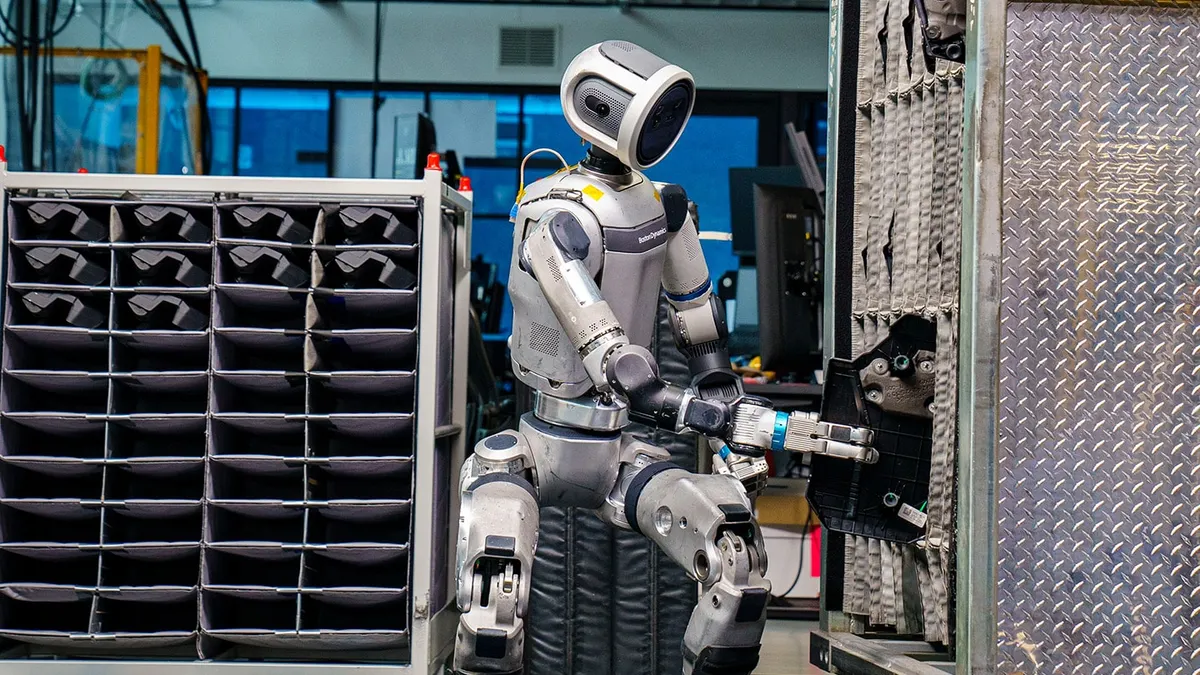
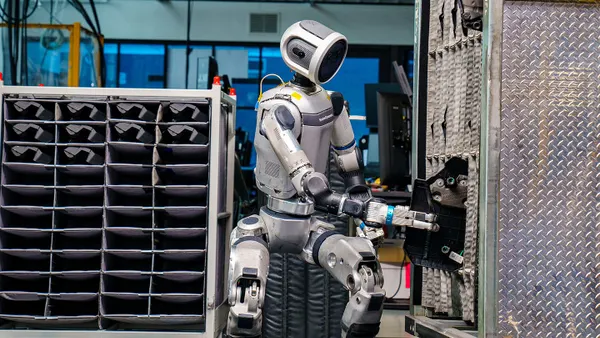
In fact, they're elevating themselves to operations orchestrators with AI as a digital branch that they control. So they're mostly walking around debugging the machines remotely, diagnosing a problem, or working with physical AI and robotics to really increase the throughput or analyze what's happening and get the insights, and then allowing AI to perform what to do about it as well. It's not about automating what you have. Instead, it's about how do you ensure your operations run in an autonomous way, and how do you ensure that it is supervised and governed properly, with the highest level of confidence.
So essentially their knowledge is increasing, their contribution to the overall corporate impact is increasing and their skill level is changing as well. Traditionally, it would take anywhere from two to seven years to onboard a good-quality manufacturing worker.
That's where AI is making a huge difference in terms of getting them ramped up quicker with AI-assisted coaches and leveraging synthetic data that we have to essentially teach them. Many times these what-if scenarios are very undesirable. You can't quite create them, but you can simulate them just like you do in a car or in a flight simulator. You could create all kinds of scenarios and train people in manufacturing.
What work is Google Cloud doing to help meet manufacturers where they are?
I would probably summarize all the work we are doing into three buckets. One is we are making structural changes across the enterprise in terms of the way you generate the data, you consume the data, the tools and techniques to essentially help workers get the right kind of information.
The problem we are solving is this: If you go now to five systems with the highest-level trained users, you get five different answers. Simple things like, what's my production today? MES will give you an answer. ERP will give you another answer. CMMS will give you a third answer. Oftentimes, workers scramble around to say who is right. We are solving that problem with what we call a UNS, Unified Name Space. So the data is accurate before we even go to the worker transformation.
The second thing we are doing is helping workers onboard and work more efficiently with AI-powered coaches, which could be audio coaches, video coaches, image coaches, etc. Taking all of your SOPs and turning them into training videos. And then once you are trained, having AR/VR technology to kind of do the work validation, so that you know what you did is right and there is little rework, so your efficiency and effectiveness is high.
The third thing we are doing is the communication piece of it, in terms of communicating both with humans and with machines. Because invariably the workers are going to work with physical AI and robotics, which is a different kind of communication than tapping on Joe and saying, "Hey, Joe, I did this. You continued this, right?” So there is a whole piece of communication with that, and also communication with your peers and managers.
Think about if your shop floor manager says, "Here is the game plan today,” and you’ve got to do 50 tasks. It's very hard to remember. Oftentimes, that's where the errors happen. With the AI coaches, they translate that work instruction into an action plan that you can take and go execute. So imagine the level of confidence you'll have in terms of: knowing you understood the instructions, you understood your different stakeholders' demands, you understood when things were due, when you need to meet your order-to-promise date. And you are equipped with the knowledge to do those things, and the data you are getting is accurate.
As companies look to adopt robotics and AI, what issues are they running up against and what do they need to improve before implementing these technologies?
I think the most important thing is to identify the right use case for solving the problem, and don't implement technology for the sake of it. Identify the right problem. The second thing is get your data right. Because like they say, you can't build a skyscraper on a swamp, right? Data is essential.
Data is like the soil, and then your compute is like the sun. Many of these pilots that companies do are like the seeds, which essentially provide you a crop and the fruits that you could do. It's very important when you identify the right use case and give it the right level of support.
Oftentimes what you see is when you do a pilot and all things are held together by “duct tape” architecture. When you scale, things fail because the duct tape architecture can’t support a larger building. So that's kind of where getting that data and architecture is right for the right use case.
Most important of all is taking people along. Because people inherently support what they help build. AI is really a digital range. It's about multiplying the hands that we have. So it is to make humans into superhumans, per se.
Many times these people have worked decades, so we’ve got to listen to them. They have a lot of wisdom that we could leverage in transformations.
What would you change about manufacturing?
I would probably make it more multimodal. Because the manufacturing industry traditionally has been dealing with structured data, and then some unstructured data with manuals and other things. But if I had a free hand, I would say, look, we live in a live world. The context is the most important thing in anything that we do. If you walk into a shop floor, the machines are buzzing, screaming. They have the noise, they have vibration, they have harmonics. Why are we not taking advantage of all that?
The stronger the context you have, the better your actions are going to be. Just like how Industry 4.0 makes OT and IT, I truly believe the future is multimodal and that's where you would see some of our products.
They can understand things in their native modality, whether it's processing the videos or processing the noise vibrations. We don't convert that to text and analyze like some of the others or some of the ways people are doing, so we can go look at a CAD drawing and really understand what you're trying to do. We can create different variations to make sure it's manufacturable.
We can even tell you the likelihood of this getting damaged when you transport it. And we can tell you how sustainable this is. When you ship a product, there is so much capability out there, and that's where we need to make sure that we have the right level of sponsorship. We think outside the box. Just because we are doing it in a certain way that has worked, you don't have to do it the same way. There is always a better way to do it.