NEW YORK — As manufacturers look to adopt emerging technologies to reshape their operations and become more competitive, they also have an opportunity to leverage artificial intelligence for an often overlooked reason: improving sustainability.
Technologies such as AI-enabled management systems, digital twins and automated sorting are helping companies save energy and develop more circular economies that repurpose waste streams within their operations, experts said on a panel at Climate Week NYC 2026 on Tuesday.
“We strongly believe that companies that manufacture more efficiently, that electrify their operations, that use renewable energy to do that, and innovate lower greenhouse gas products will be much better placed to compete in a climate-constrained world of the future,” said Hannah Hislop, head of sustainability for climate at Unilever, a maker of packaged consumer goods such as hair care, deodorants and food products.
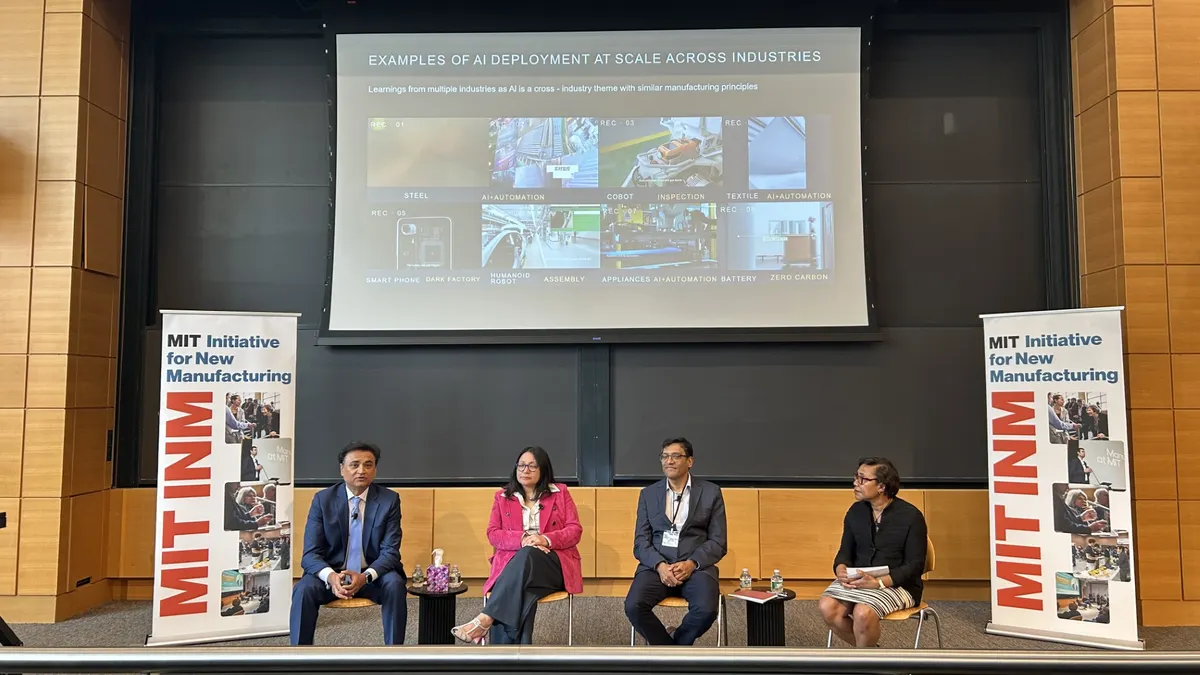
The panel, titled “Future Factories: How efficiency, electrification and AI will remake modern manufacturing,” also included speakers from Trane Technologies, the Ellen MacArthur Foundation and the Energy Efficiency Movement. It was moderated by Mike Peirce, executive director of systems change at Climate Group.
As manufacturers look to automate their operations to shore up labor shortages and unlock new ways of working, climate change and its supply shocks remain a pressing issue. The United Nations released a report this month predicting that global warming will exceed its 1.5 degrees Celsius limit within the next few years, pushing climate risks and impacts to “increasingly dangerous heights” unless substantial mitigation actions are taken.
Hislop said corporations have a responsibility to limit the scale and duration of this overshoot and build resiliency to the impacts “that we are already starting to see.” Since making energy efficiency a key part of Unilever’s sustainability strategy in 2008, the company has saved more than 1.5 billion euros from various projects, including upgrades to low-efficiency electrical equipment.
Unilever is looking to further increase factory efficiencies with AI-enabled digital twins, or virtual copies of physical operations. The company plans to build more than 40 of these over the next 18 months, the company said in June.
“By creating a digital replica of our sites, we’re able to simulate, test and monitor operations virtually before implementing the best of these solutions in the real world,” Hislop said.
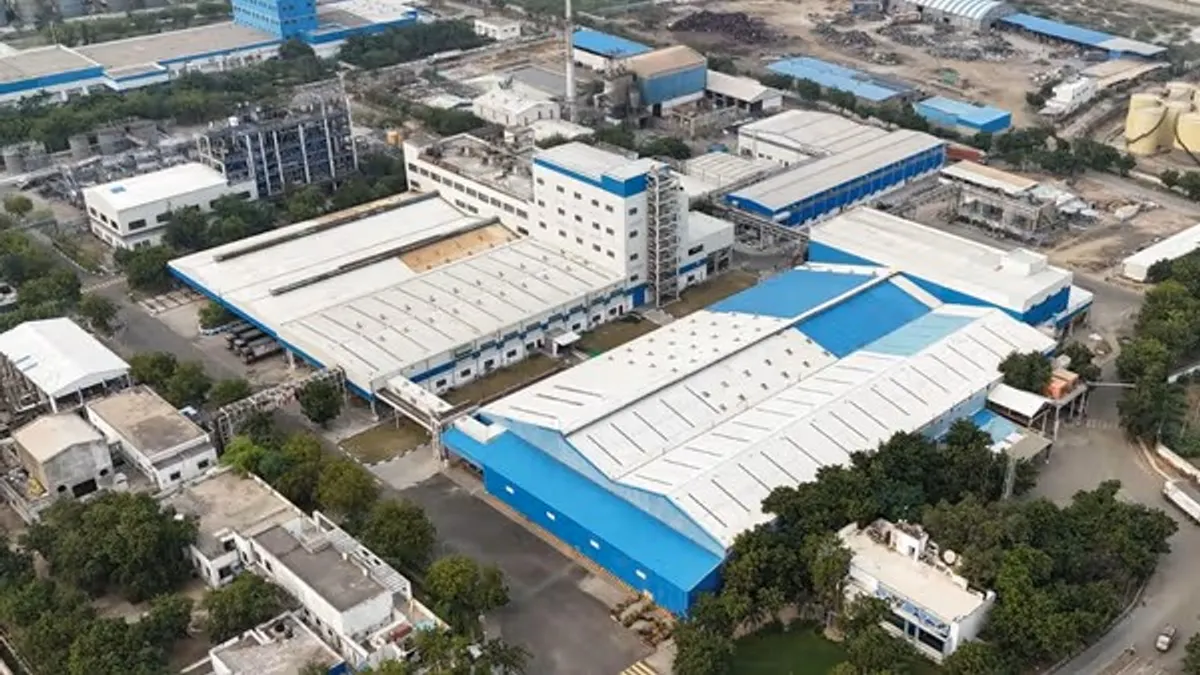
At Unilever’s powder detergent factory in Haldia, India, she said a digital twin allows the company to “optimize fan speeds, temperature settings and moisture controls” to reduce emissions and cut waste, as well as to improve product quality and respond to changes in consumer demand.
Companies can also leverage AI for autonomous building controls.
Trane Technologies, an Ireland-based maker of heating and cooling systems, as well as air quality equipment for home and commercial properties, acquired Brainbox AI last year to automate HVAC systems and predict building energy needs. Retailers such as Dollar Tree, Sleep Country and Sail Outdoors use Brainbox AI across hundreds of stores to advance their sustainability goals.
From a manufacturing perspective, Emily Vesling, director of sustainability at Trane Technologies, said Brainbox AI is useful in that companies don’t have to “rip everything out” to create their “factories of the future.” Instead, she said, they can apply AI-enabled building controls on top of their existing equipment to increase energy efficiency and predict operational failures before they occur.
“Ultimately, it’s creating resilience for these factories,” Vesling said.
Beyond energy efficiency, AI advancements are creating opportunities to develop more circular economies designed to eliminate waste and repurpose material streams.
Danielle Holly, executive lead for North America at the Ellen MacArthur Foundation, a U.K.-based non-governmental organization, said data transparency and predictive analytics allow companies to “really understand how circular business models are working and where they need to be optimized.”
Additionally, she said, AI advancements are enabling autonomous, more efficient waste sorting.
Google has an open-source machine learning and AI model, called CircularNet, that can identify materials like paper, plastic or metal to improve sorting accuracy and reduce contamination. Some of these models can boost sorting efficiency from 15% to 80% — “which is huge” when it comes to general recycling and recovering critical minerals from waste streams, Holly said.
The Trump administration has made bolstering U.S. and regional critical mineral supply chains a top priority as the country works to mitigate semiconductor-related supply shocks and reduce its reliance on materials from China. A recent part of that strategy has been investments in infrastructure that recovers metals from discarded electronics.
“There is a reality that there are not enough critical minerals in the ground, particularly, in North America, to fuel these transitions and to fuel AI,” Holly said. “What we are seeing in supply chains is an unprecedented…willingness to collaborate to create secondary markets and sources for critical minerals.”
Holly, who has collaborated with companies on the nonprofit side for more than 20 years, added that large technology companies are starting to work with nonprofits focused on circular solutions in “ways that never would have happened five years ago,” due to supply chain constraints.
“For better or worse, I think we’re going to see real innovation there because of that,” she said.