Dive Brief:
- The number of industrial robots around the world reached a record 5 million units in 2025, marking a 9% increase from the previous year, according to a recent report from the International Federation of Robotics.
- This was driven by an 11% increase in robot installations across factory floors — or 603,000 units added last year — underscoring strong demand as companies look to enhance productivity while navigating labor and cost pressures.
- Jane Heffner, president of the IFR, noted in a statement that the “strongest growth is taking place in Asia,” followed by markets in the Americas and Europe. The number of industrial robots has more than doubled over the past seven years, with a lot of the growth coming from the automotive and electronics industries, data show.
Dive Insight:
As automation technology progresses and trade policy shapes industrial relocation activity, robotics adoption isn’t slowing down anytime soon.
Installations are expected to grow 9% this year, an increase of 655,000 unit deployments, according to IFR’s outlook. They could be as high as 806,000 by 2029.
“Industrial automation is progressing at high speed,” Heffner said.
Globally, automotive and electronics manufacturing have been the driving forces behind robot installations, but demand has increased for other industries in recent years. IFR noted that other sectors, such as metal and machinery, plastics and chemicals and food, saw robotics demand quintuple from 2015 to 2025.
China continued to be the world’s robotics leader, accounting for more than half of all deployments last year at 354,200 units. The United States led the second tier of adopters at 38,400 installations, followed by Japan, South Korea and Germany, according to IFR data. Together, these five countries comprised 80% of the global market.
Meanwhile, other countries are pouring more capital into advanced automation. India, the sixth-largest robotics adopter, has seen demand triple over the past five years.
IFR estimated that more manufacturers will leverage robotics as they look to build out more production capacity in “high-wage economies” and “countries facing labor shortages.” The organization said that while regional shifts may happen, “there is no indication that the long-term growth trend in industrial robotics is coming to an end.”
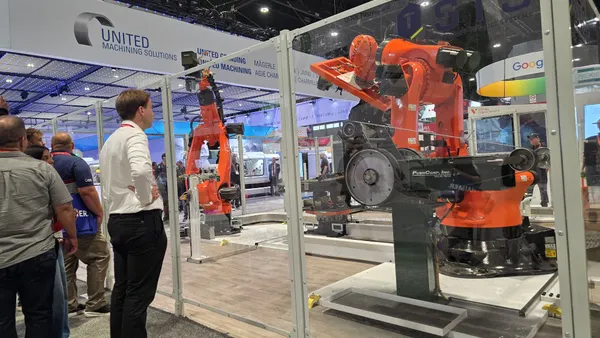
Advances in artificial intelligence, machine vision and sensing are enhancing robot capabilities, making them more accurate and reliable. At the same time, easier programming and system integration are reducing deployment costs and lowering barriers to entry.
In the U.S., automotive drove the majority of robot installations last year, followed by metal and machinery, food, electronics and plastics and chemicals. Food saw the highest growth of 30% over the previous year, while electronics and other industries saw declines.
This growth in robotics came as the U.S. lost some 68,000 manufacturing jobs between Dec. 1, 2024 and Dec. 1, 2025, according to federal labor data.
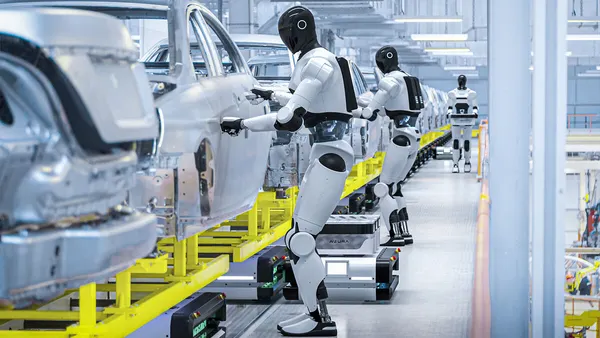
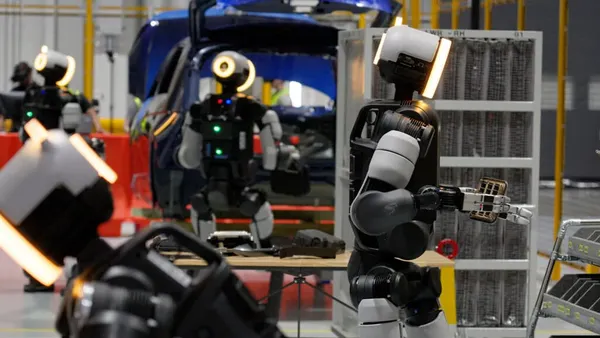
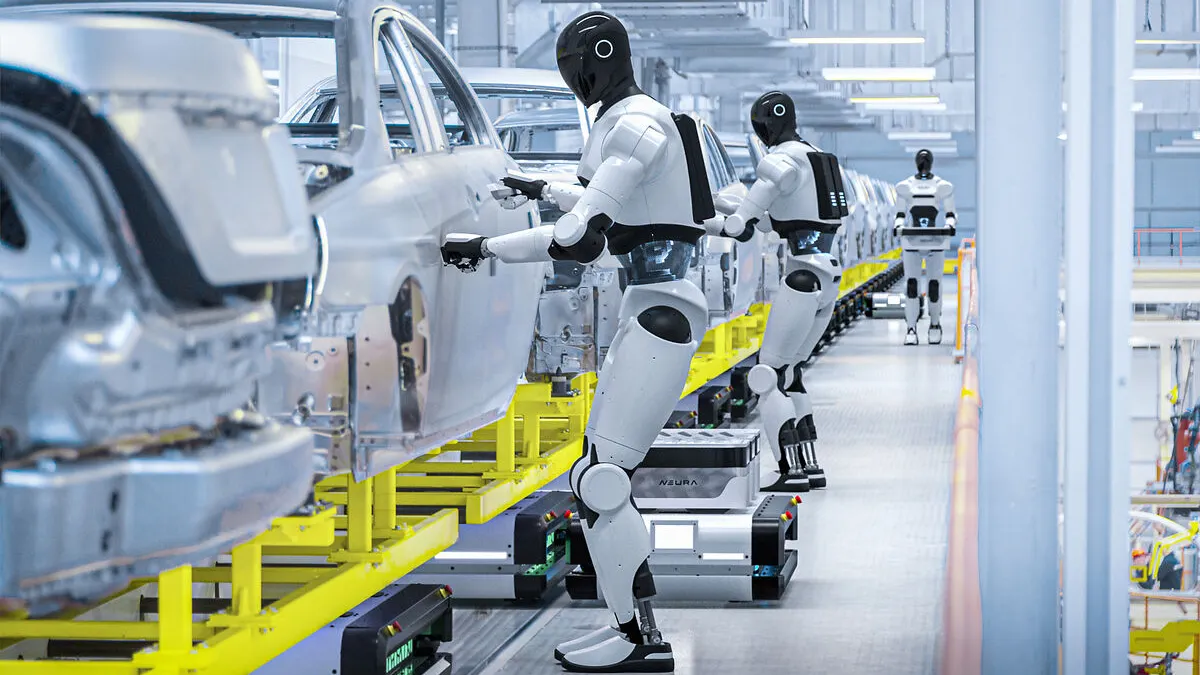
While companies install industrial arms, autonomous mobile robots and other units, humanoid adoption is also on the rise. Nearly 7,000 humanoids were sold worldwide last year, according to IFR. However, companies are still a ways off from deploying them at scale.
IFR noted that humanoids are on the cusp of making the leap from laboratory testing to pilots as generative AI advances. Although there is significant hype and investor interest, challenges remain around safety, security and reliability.