Vishaal Mali saw an opportunity for a new type of defense startup after a stint at Anduril Industries.
Mali, along with Kai Yin and Aiden Jenkins, worked as engineers at the Palmer Luckey-owned company and left in 2022 to establish their own startup, Salient Motion.
“Everyone is building all these incredible platforms that the country needs, whether it's aerospace and traditional airplanes, and rethinking commercial flight, all the way to missile productions and military aircraft,” Mali said in a recent interview. “But it really felt like there was a big gap in [the aerospace and defense] supply chain.”
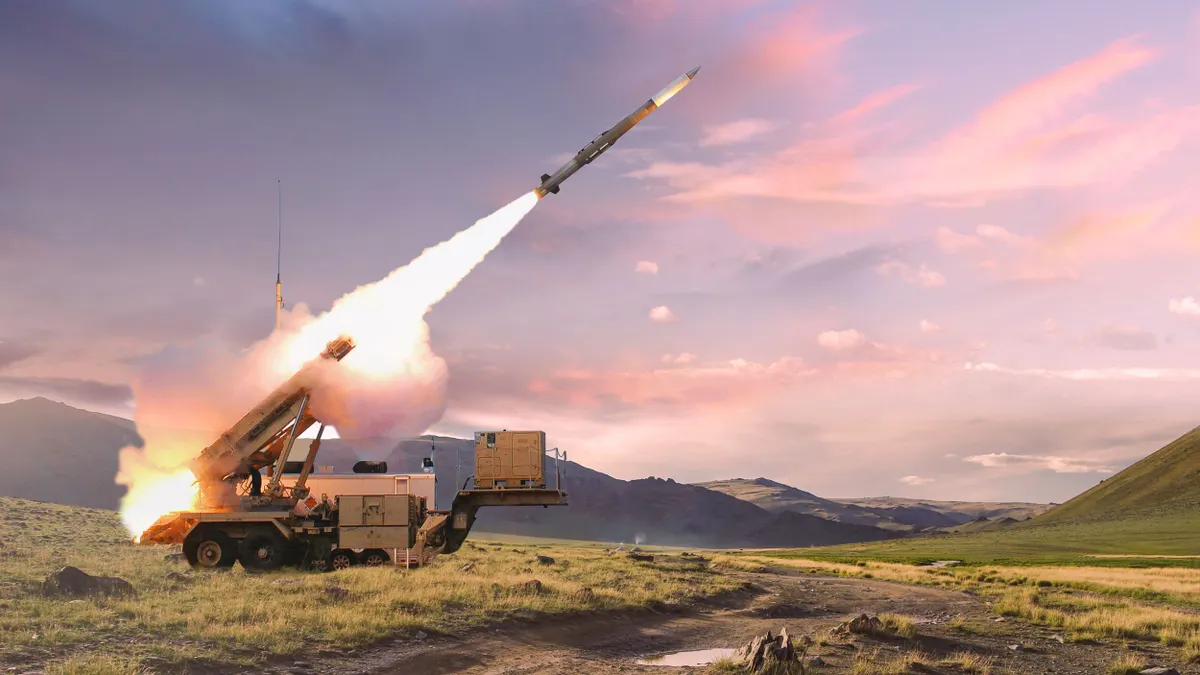
Most recently, the startup established a manufacturing division for precision ball and roller screws in Saginaw, Michigan, as demand for fighter aircraft and weapons systems rose. Precision ball screws are a critical component in missile systems from companies such as Lockheed Martin and Raytheon.
Ball screws are hard to come by and can take years to make, according to The New York Times. Much of the precision ball screw production in the U.S. has been offshored over the past few years. Even China has fallen short of its 2025 goal to produce 80% of the ball screws its defense companies use, despite the country dominating 90% of the market, according to a U.S.-China Economic and Security Review Commission report.
Mali recently spoke with Manufacturing Dive about how Salient is working to keep ball screw manufacturing in the U.S. and how artificial intelligence is helping the company train the next generation of machinists.
The following interview has been edited for clarity and brevity.
MANUFACTURING DIVE: You worked at Anduril for two years and then left to create your own company. What made you decide to go out on your own, and what’s the gap in aerospace and defense that you wanted to fill in?

VISHAAL MALI: There is such a big push right now in defense tech and an aerospace resurgence happening, but I sort of felt like there's a missing asset class in the manufacturing supply chain. It was pretty evident that everyone is building all these incredible platforms that that the country needs, whether it's aerospace or traditional airplanes and rethinking commercial flight, all the way to missile production and the military platforms.
But it really felt like there was a big gap in [the aerospace and defense] supply chain. This gap was these Tier 2 and Tier 3 types of actuators, now ball screws — high-precision, non-commodity machine parts, all of these kinds of sub components that no one ever thinks about.
Everyone was building platforms and continued to build these platforms, but no one was really thinking about, “Okay, well, everyone's going to need to buy these critical, highly engineered proprietary subcomponents” that have been dominated by two or three companies the last 40 years and have been massively consolidated.
With everyone building these next-generation platforms, there needed to be a company to do the really unsexy work of building the critical components so that these companies don't need to vertically integrate on every single part.
I think the really well-funded companies do because they have to, but there needs to be a world in which they shouldn't have to. There should be a mature supply base that hasn't been outsourced to China, hasn't been outsourced outside the U.S.
What made you decide to bring Saginaw Precision in to reestablish ball screw production in the United States?
You see the headlines of, “We have a massive missile shortage in the U.S. and so we need to make more.” But when you really peel back the layers of the onion, where truly are the bottlenecks?
As an actuator, supplier, and manufacturer, we for years have struggled to procure ball screws. They seem pretty simple, right? It’s a screw that moves up and down. But when you look at the complexities of the screw, [it] has ball bearings inside of the nut. So when the screw is moving, it's not riding on threads. It's riding on these highly precise ball screws or ball bearings that are translating up and down.
We started to uncover this massive demand and shortage of supply of these aerospace-grade, highly precise ball screws and roller screws that drive all these mechanisms. Since the early 2000s, so much of that has been outsourced to China and Europe and we've completely not only lost how to design these ball screws but we barely even have the talent to actually machine these screws and understand complexities and understand how these things need to be assembled.
What kind of obstacles is Salient Motion encountering, and how is it working to overcome those obstacles?
We're re-standing up an industry in Saginaw that hasn't been there or has faded away… in the last 30 or 40 years.
We need more people. We're doing so much work on making it easier to make these ball screws and retrain the workforce. We need more excited young folks to want to enter this industry and go back to the roots of what made the country great for so many years, which was our ability to make very complex things.
We're always hiring people. We always have a shortage of staff — whether it's engineers, technicians, or machinists. But the good thing is, we don't necessarily need these extremely highly qualified, highly skilled machinists because we made [ball screws] so much easier to make. We actually want a mix of younger folks that have never made a ball screw, or never really spent a ton of time machining. We actually want a generalized workforce of eager folks that are willing to be retrained, willing to learn how to make these complex systems, and then come join us.
How does Salient Motion attract new manufacturing workers?
We're combining the excitement around Silicon Valley-type technology and startups and growth and this new market, with this existing industrial base and manufacturing base of machining things.
Being a venture-backed business, we didn't want to just keep the venture dollars and the excitement in California. We actually wanted to take it out to Michigan, where we know the workforce, especially around automotive, has existed for decades, and give Saginaw this excitement again.
People that know how to make things are in the area. We really hope to attract new talent by combining that startup excitement and invigoration with a workforce authority existing out in Michigan, where you don't see a lot of startups manufacturing things. I think that's helped us attract a lot of talent.
Is Salient Motion investing in advanced technologies such as artificial intelligence, automation and robotics? How will that aid workers?
We're compressing qualification, certification, time cycle and timelines by taking this very software-first approach — automation through testing, verification, validation — and ensuring that we can take critical parts to the market significantly faster than the incumbent supplier can.
But for us, the core of our business, especially in Saginaw, is the workforce. It's the machinists. It's the guys that know how to make these highly intricate, highly precise parts. We expect them [to] use their gut feel on how to tweak and tune the machine ... The people and the talent and the machinists that do these things, they are forever at the forefront.
For us, AI isn't replacing workers. It's actually helping to make sure that all of these artisan-type things that our workforce has been doing for years ... making these small adjustments on the fly ... are captured in parallel. We can continue to build better and better training materials, better and better manuals and all these types of instructions. So when the workforce retires, when we need to grow from 10 machinists to 100 machinists to 1,000 machinists, we can ensure that we have captured all the intricacies needed.
We really want to keep this technology, this process and this manufacturing in Michigan, and especially in the country. We have to capture all the nuances.
With 2027 fast approaching, where do you hope to take Salient Motion next year?
We have a massive missile shortage. We have a massive shortage of suppliers in our industrial base today.
We're gonna have a problem with scale because you can design things in house, you can vertically integrate, but we don't have the foundation. The Tier 2, Tier 3 manufacturers like us can support this massive ramp up.
We are hyperfocused on increasing capacity by partnering with the primes, partnering with the OEMs and really being a good supplier to them, giving them confidence we can meet their rate.
We really only just announced our first factory. There's going to be many more in the pipeline, building all types of things. It’s all taking our core thesis, which is finding new and novel ways to change the cost curve of manufacturing these precision parts, changing the certification development framework.
All these [missile] programs are going to go into production, all these things need to scale. Right now every single one of those missiles are going to need actuators, are going to need ball screws, but they're going to need cost-effective actuators and ball screws.
More importantly, they're going to need assurances that the industrial base could scale, that we can provide the thousands of actuators and ball screws that these missiles are going to need for the next 15 to 30 years.