Experts discussed how strategies such as accommodations and modifying their hiring processes can help manufacturers draw in and support workers with disabilities during the Manufacturing Institute’s Sept. 24 webinar, Building Disability-Friendly Careers in Manufacturing.
“Manufacturing is competing harder than ever for skilled talent, and there’s an enormous pool of capable, motivated people that too many hiring and advancement processes still leave on the table,” said Sabrina Zarifi, senior manager of the Manufacturing Institute’s retention program, Step Ahead.
The manufacturing industry is facing a workforce shortage of 3.8 million employees by 2033, with about 1.9 million jobs expected to go unfilled, according to a 2024 joint study by the Manufacturing Institute and Deloitte. At the same time, Zarifi said manufacturers are passing on a group of workers that could help fill the gap. More than one in four Americans live with a disability, according to the Centers for Disease Control and Prevention.
“This is an issue that affects really close to half your workforce, and so it isn’t a side issue to talent strategy,” said Beth Sirull, CEO of the National Organization on Disability, an employment nonprofit. “It is a core part of talent strategy, and a business imperative, and that's really what gets me out of bed every morning because the economy needs these workers, and these workers need jobs, so we need to get on it.”
Listening and exploring ways to return to work
Michelle Barnhart loves manufacturing. In fact, she often credits the manufacturing industry with saving her life, twice, she said in a recent video by the National Association of Manufacturers.
The first time occurred after she graduated high school, when she was “a little bit lost in the world,” Barnhart said. She didn’t know what she wanted to do, so she visited an unemployment office, leading to a job at a local ink company and her love for the industry.
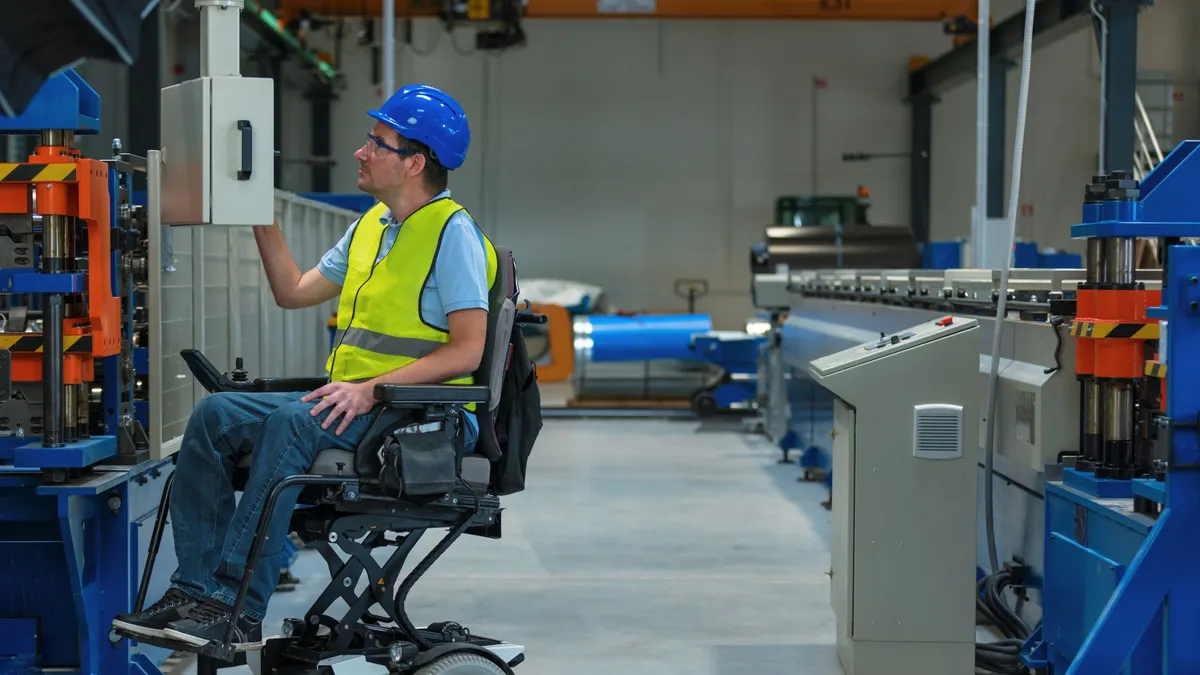
The second time manufacturing saved her was after an ATV accident in 2013 that left her paralyzed and using a wheelchair.
At the time of the accident, she was 26 and a few years into her manufacturing career, working on the floor as an hourly operative employee, Barnhart said during the Manufacturing Institute’s webinar. After her injury, she explored how she could return to normalcy.
At first, her employer transitioned her job into an office-based role in customer service. But Barnhart was desperate to return to working on the manufacturing floor, she said. So she advocated for herself, and the company listened.
“At no point in my early career of being disabled did someone assume what I could or could not do,” Barnhart said.
The company’s human resources team explored various tasks and asked Barnhart if she could perform them. She didn’t always have an answer right away.
“A lot of those early discussions was a go-and-see mentality,” Barnhart said.
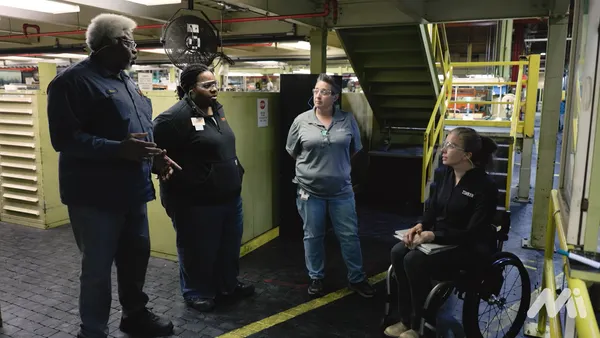
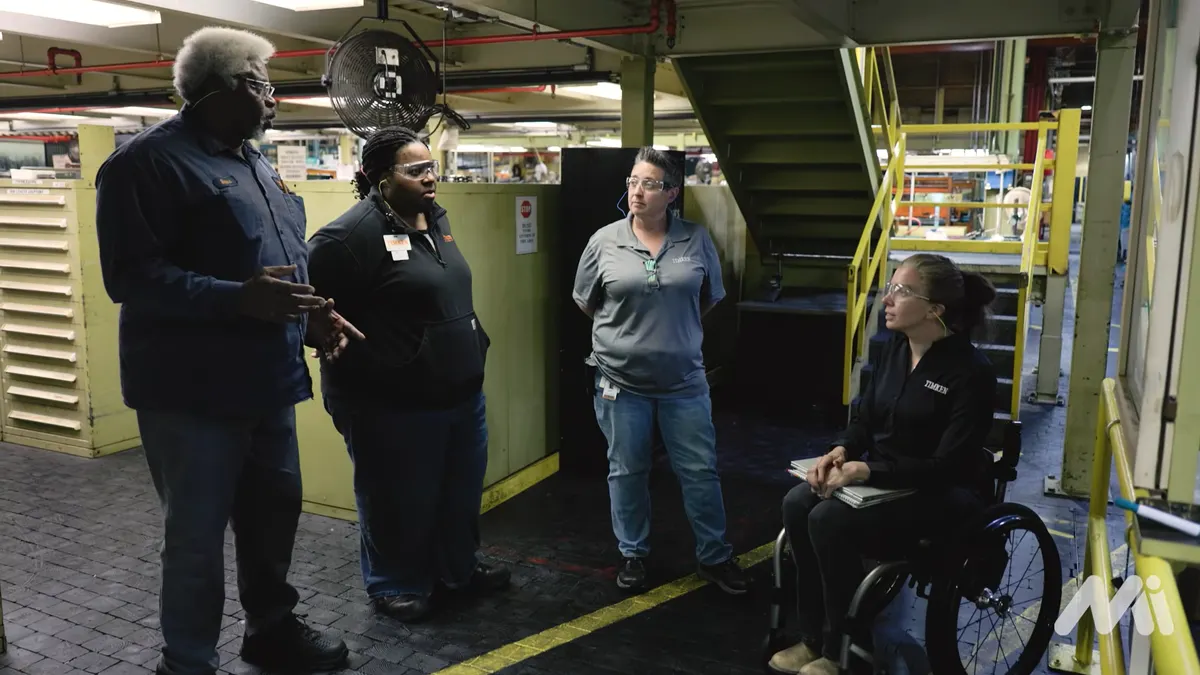
That meant going to the factory floor in her wheelchair and “testing things out,” such as seeing what the shop floor could do to her wheelchair tires and determining if she could get through doors.
“It’s so important for individuals with disabilities to have that kind of contribution to society, but also for themselves, the mental and physical stimulation that has been proven over and over again to improve quality of life for people with disabilities,” Barnhart said.
Empathetic curiosity
If a manager notices an employee struggling, asking about their health conditions is crossing a legal line, Sirull said.
“I think pretty much everyone is educated on what you can’t do,” Sirull said. “The question isn't ‘What’s wrong with you?’ or ‘I’m going to put you on a performance improvement plan.’ This is really good management practice, empathetic curiosity.”
Empathetic curiosity is a practice that therapists often use to better understand their clients, underpinned by empathetic listening and maintaining a curious attitude about peoples’ concerns, according to a paper with the National Library of Medicine. In the workplace, Sirull said it entails asking the worker what the employer can do to help with their tasks. To do this effectively, managerial heads from the shop floor to the CEO suite have to be educated and trained, she added.
“You’re putting it in a very positive framework as opposed to an accusatory one,” Sirull added. “You’re opening the conversation because some employees are very scared to open the conversation, and you as a manager can open the conversation, and then go from there.”
That can lead to other benefits, such as psychological safety and building trust within the team.
“Even though it's a private conversation, when you demonstrate that empathetic curiosity, the specifics will not bleed to the rest of your team,” Sirull said. “Other colleagues will see that that's the kind of manager you are, and it just engenders trust across entire teams, and that's an invaluable characteristic of a team.”
Conversations during the recruiting process
In 2016, Barnhart joined The Timken Co., an Ohio-based engineered systems and components manufacturer, working at the company’s facility in New Hampshire. Thirteen years after her injury, Barnhart worked her way up and is now at her third Timken location, where she was recently promoted to manager of operations workforce development, according to her LinkedIn profile.
But getting hired was a different conversation versus retaining someone with an injury, she said. At her previous employer, the HR team discussed how Barnhart could return to the factory floor, as she was still committed to working there when her accident happened.
At Timken, those conversations took place before she was hired, which meant the company’s recruiting process “brought in people with physical disabilities into manufacturing successfully,” Barnhart said.
That dialogue involved asking questions about what the process looked like during the candidate interview, such as going out on the manufacturing floor for a quick tour to see what worked and what didn’t, she added.
“We need to look at best practices from — our job descriptions to our interview processes — that we are allowing space for people with all different disabilities,” Barnhart said.