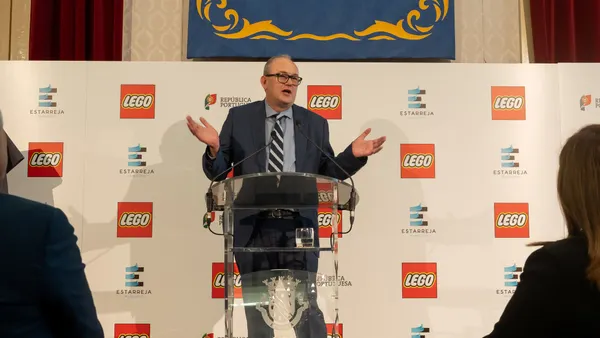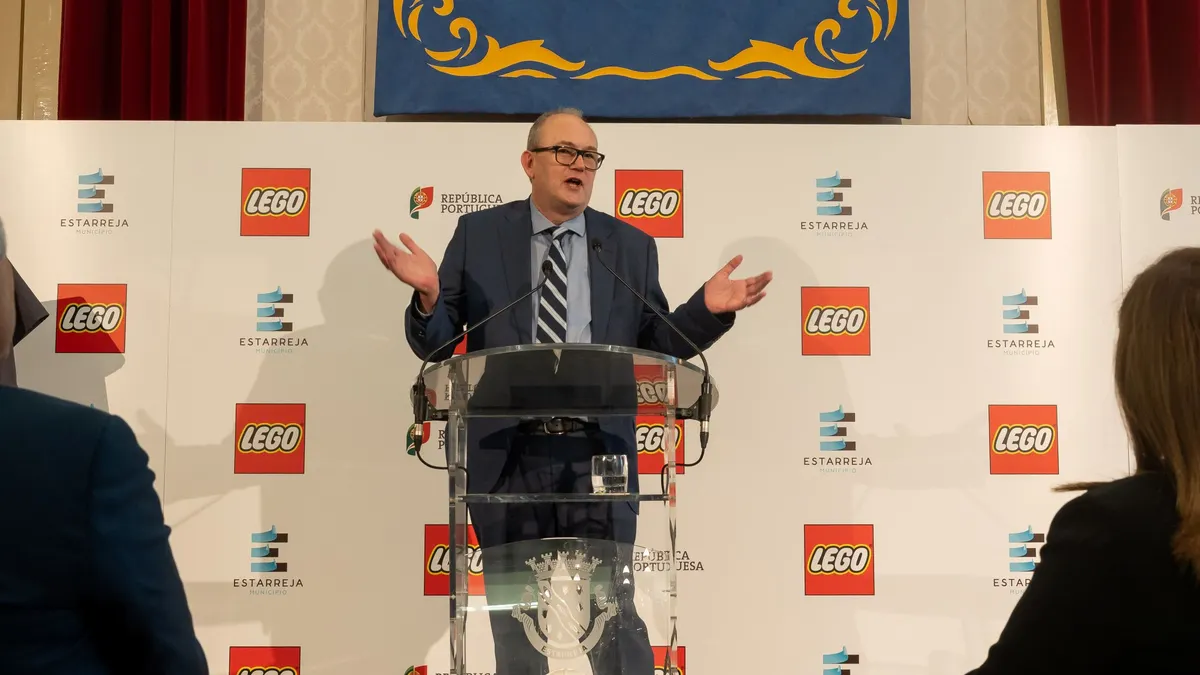
The Lego Group announced plans to expand its global manufacturing capacity with a new factory in Estarreja, Portugal, on Monday.
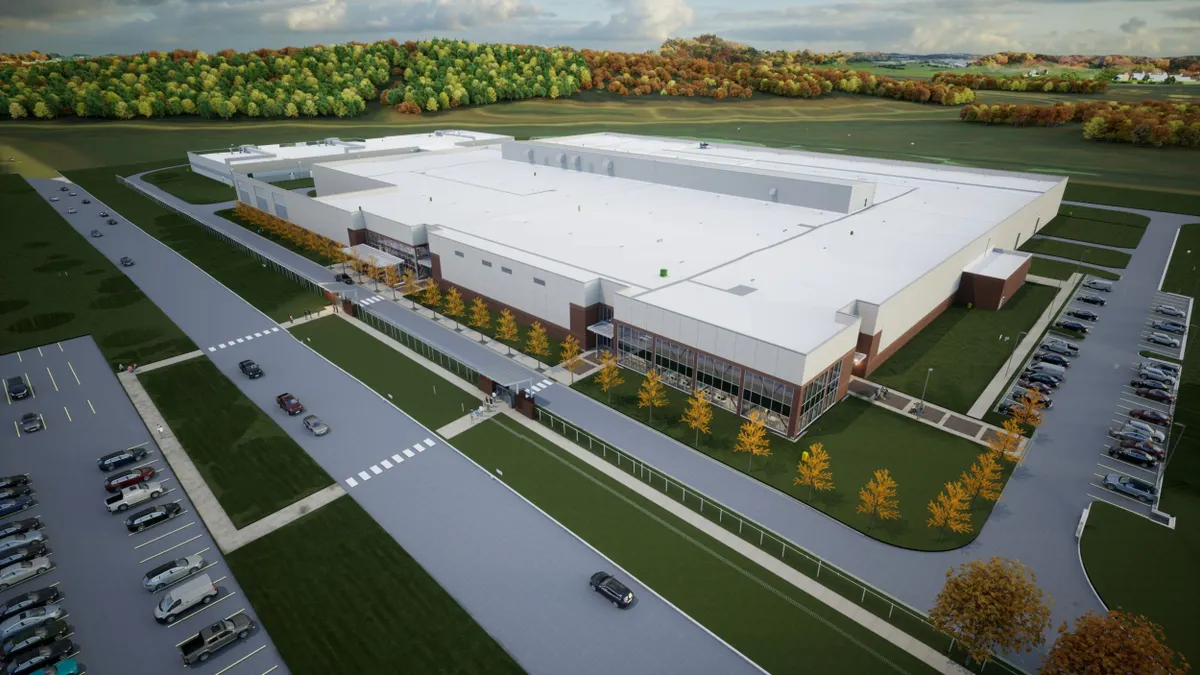
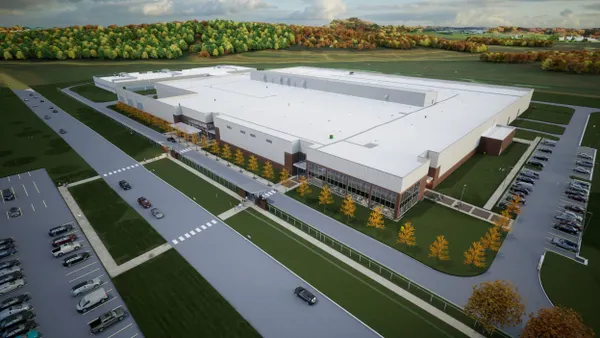
The facility will span 1.2 million square feet and include molding, processing and packing to support the growing Lego products demand across Europe, the Middle East and Africa, according to the press release.
Construction is expected to begin in the first half of 2027 and will be designed to “flexibly” accommodate potential expansions in the future. Lego plans to hire 1,000 people for the Estarreja plant by the time production begins in 2030. An investment number was not disclosed.
The upcoming Portugal factory will be Lego’s eighth manufacturing facility overall and its fourth in Europe.
The site will boost the toy brick company’s European operations and build up its region-based manufacturing strategy to shorten its supply chain. The plan will allow Lego to immediately shift operations based on changes in demand while reducing its environmental footprint.
“We cannot always predict what the wish list is for kids and parents, so it’s important we have that flexibility and infrastructure,” Lego COO Carsten Rasmussen said in an interview with Manufacturing Dive.
The Portugal announcement follows Lego’s plans to spend over $400 million to expand its manufacturing operations in Monterrey, Mexico, in September. The Denmark-based entity is adding packing and warehousing capabilities to the Monterrey site.
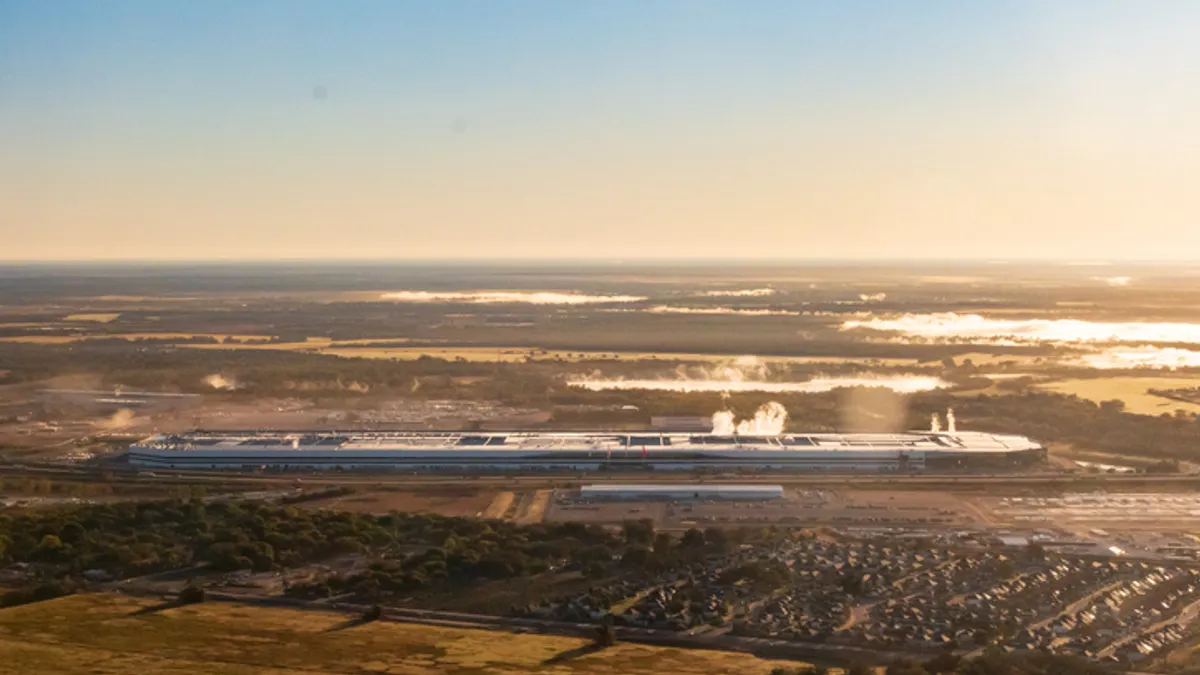
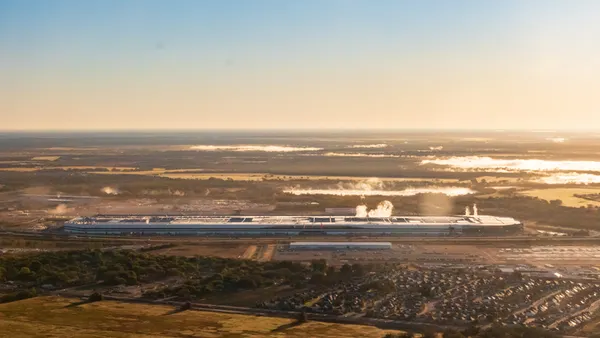
Lego is also set to open its manufacturing and distribution facility in 2027 in the U.S. The company spent over $1.5 billion on the factory and regional distribution center in Chesterfield County, Virginia, which will be Lego’s first production site since it closed its factory in Enfield, Connecticut, in 2007.
Manufacturing Dive spoke with Rasmussen about Lego’s automation and digitalization strategy and what the toy brick maker has in store for 2027.
This interview has been edited for length and clarity.
MANUFACTURING DIVE: You said in the press release that the upcoming Portugal factory will be Lego's “most automated and advanced site.” What kind of innovative technologies will Lego implement in the new factory, and why did Lego choose the Portugal factory to implement them?
CARSTEN RASMUSSEN: Every time when we open a factory we put a lot of effort into understanding what is good enough for the future and where we want to innovate. Within the automation and digitalization industry, there is a lot of innovation and development happening. So we’re going to build on the fantastic factory we're going to open in Virginia in 2027, where we have enhanced our innovation in these areas to add another layer on, so we can get, in a simple terms, more output per the same square meters by using AI, new technologies, more use of robotics, etc. So that will definitely help us because we can see this serve us well for the future. And now, within sustainability, we know we want to make an even more positive impact to the planet by having a better impact on sustainability in general: water, waste, of course, energy, renewable energy, etc. So here we're going to bring it to the next level compared to Virginia. So that is clearly our ambitions in Portugal.
How is Lego training employees to use these technologies in the factory?
First of all, every time we open a factory, we actually spend a lot of time and resources on ensuring that the 1,000 new fantastic employees that we welcome to the Lego Group will be trained by all the existing factories in culture, in our safety, in our quality standards, etc.
And in this case, when we have new technologies, we need to use external partners to help us as well.
So it's got to be a mix of internal existing factories, and then of course getting some external help and resources we need to bring in. Exactly the same as we're doing in Virginia.
Can you provide more into details about how Lego is building sustainability into its supply chain, such as what kind of alternatives Lego is using to reduce its reliance on virgin fossil fuel materials?
Materials are a little bit different than building the factory, but let me give you a flavor. For construction, we have very clear external commitments about what we want to do when it comes to sustainability, and that is rolled into the company yearly targets of what we have to do. So when we construct a new factory, we know we need to increase our efforts with sustainability across water, waste, energy use, and how we source the energy every single time, and that’s from design to construction to operation. We want to increase our solar panel coverage in the factory, around the factory, hopefully up to around 80% of annual use, which is the highest ambition we ever had.
Separate from that, we are working on materials where today we have very high coverage of more sustainable materials, and that R&D journey continues.
What details can you share regarding Lego’s first U.S. factory and distribution center set to open in 2027?
We are very excited about the progress in Virginia. We are very, very close to having the construction done so we can actually start moving in, training people and getting all the production equipment hooked up and ready. Then when we get later into 2027, mass production will really start happening, and this will also be a very automated factory where you can see the output per square meter. The simple measure is higher than what you, for example, see in Monterrey. So it's a building system also within factories where we take a step at a time every single time we open a new factory.
What plans does Lego have in 2027?
It’s a big year for operations, and one of them is to ensure we have enough capacity so we can delight many more fans with fantastic play experiences. As we see, the potential for growth is there around the world, both in the Americas, in Europe and also in Asia. So one big focus is, of course, constructing, adding new capacity like we do now in Portugal, the announcement we just had recently in Mexico, and with the opening of Virginia in ‘27. Sustainability is definitely a big part of our strategy, both when it comes to Scope 1, 2 and 3 with our supply chain, where we need to reduce our emissions, but also with water, waste, and other sustainability angles, and on the material side. So, big agendas.
The next step in automation and digitalization, including what we do with AI, how we make our platforms make even more use of these technologies in the years to come. So those are probably the big themes for ‘27.