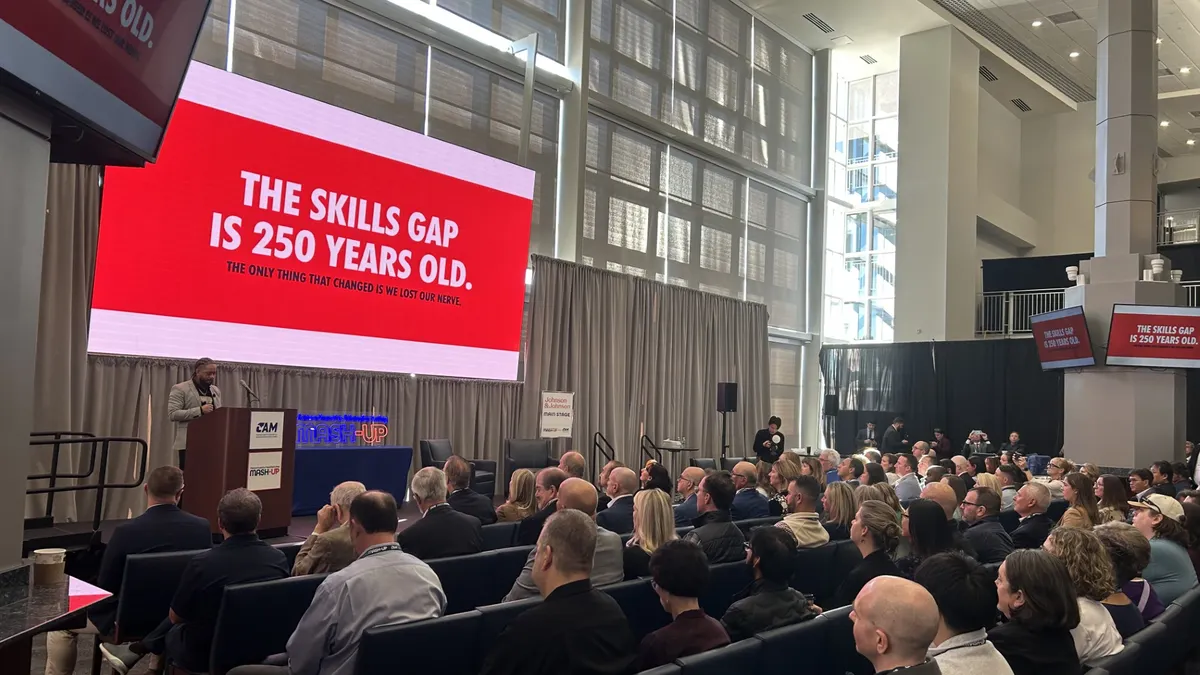
Drew Crowe believes a lack of courage on the part of employers is holding the manufacturing sector back.
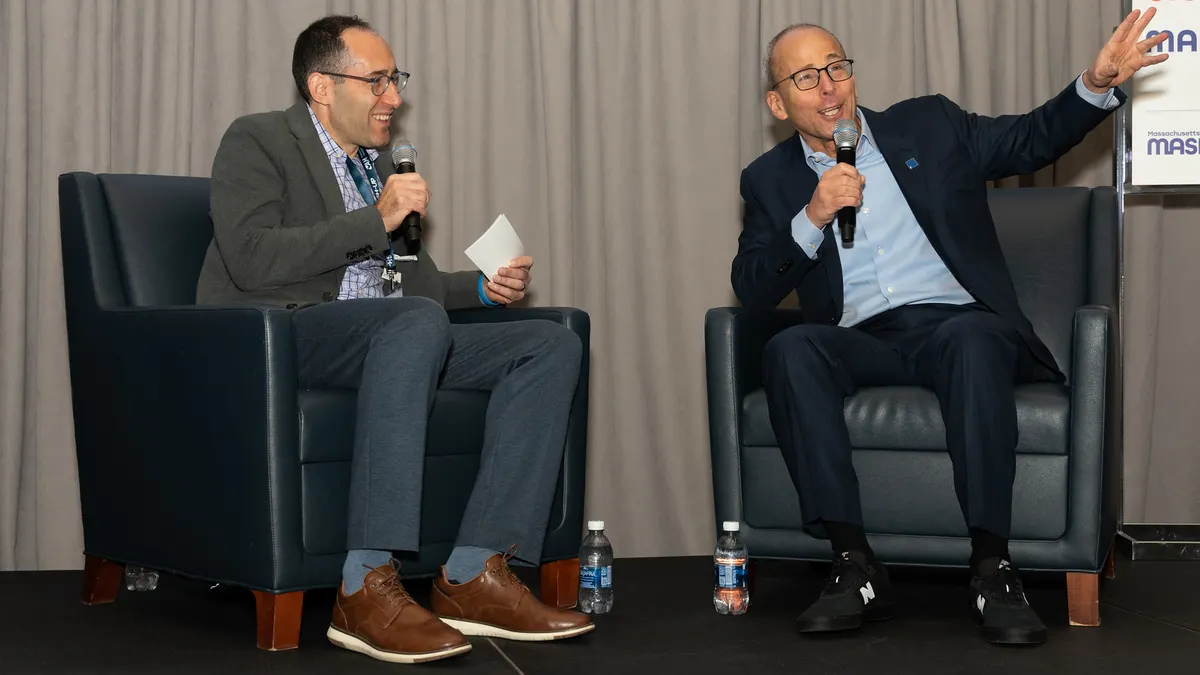
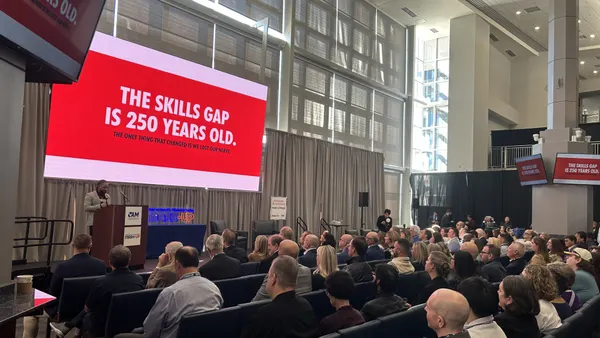
“There's never been a moment in manufacturing history when skilled workers were standing outside, knocking on your door, waiting to be hired,” said Crowe during the Massachusetts Manufacturing Mash-Up at Gillette Stadium. “The only thing that changed in this generation is us. We got lazy. We got comfortable. We lost the courage.”
Crowe, who calls himself “the MFG” and is founder of the New American Manufacturing Renaissance, talked about his own winding path as an example.
Growing up in St. Louis, he became a two-time felon and was inspired to change course as his son got older. He got an opportunity at a machine shop. While Crowe says he wasn’t considered the ideal candidate, he said that employer took a chance due to his math skills and helped shift his path.
In the years since, Crowe has held a variety of roles in machining, teaching and now as a consultant and speaker in workforce development.
During his Oct. 27 keynote talk at Gillette Stadium, Crowe cited multiple periods throughout history when untraditional workers helped meet the needs of the moment, such as women during World War II. He said this is especially true when new technology is emerging or national priorities are shifting.
“You can't require experience in something that has never been done before,” he said.
Citing a 2024 study from Deloitte and the Manufacturing Institute, Crowe said it’s possible that 3.8 million net new employees could be needed in manufacturing by 2033, but more than half of those may go unfilled. He encouraged employers to get more creative in who they consider, and critiqued perceptions that the national labor gap is the fault of workers.
“A kid can't do something that they don't know that they are equipped to do. A person will not do something and they will not stay somewhere that's toxic, that doesn't invite you, that doesn't build you,” he said.
Manufacturing Dive spoke with Crowe to learn more about his approach to workforce development, a partnership with the U.S. Navy and predictions for 2027.
The following conversation has been edited for brevity and clarity.
MANUFACTURING DIVE: Do you think the issues you described about hiring perceptions are more the case for bigger companies or smaller companies? Where is it easier to change quicker?
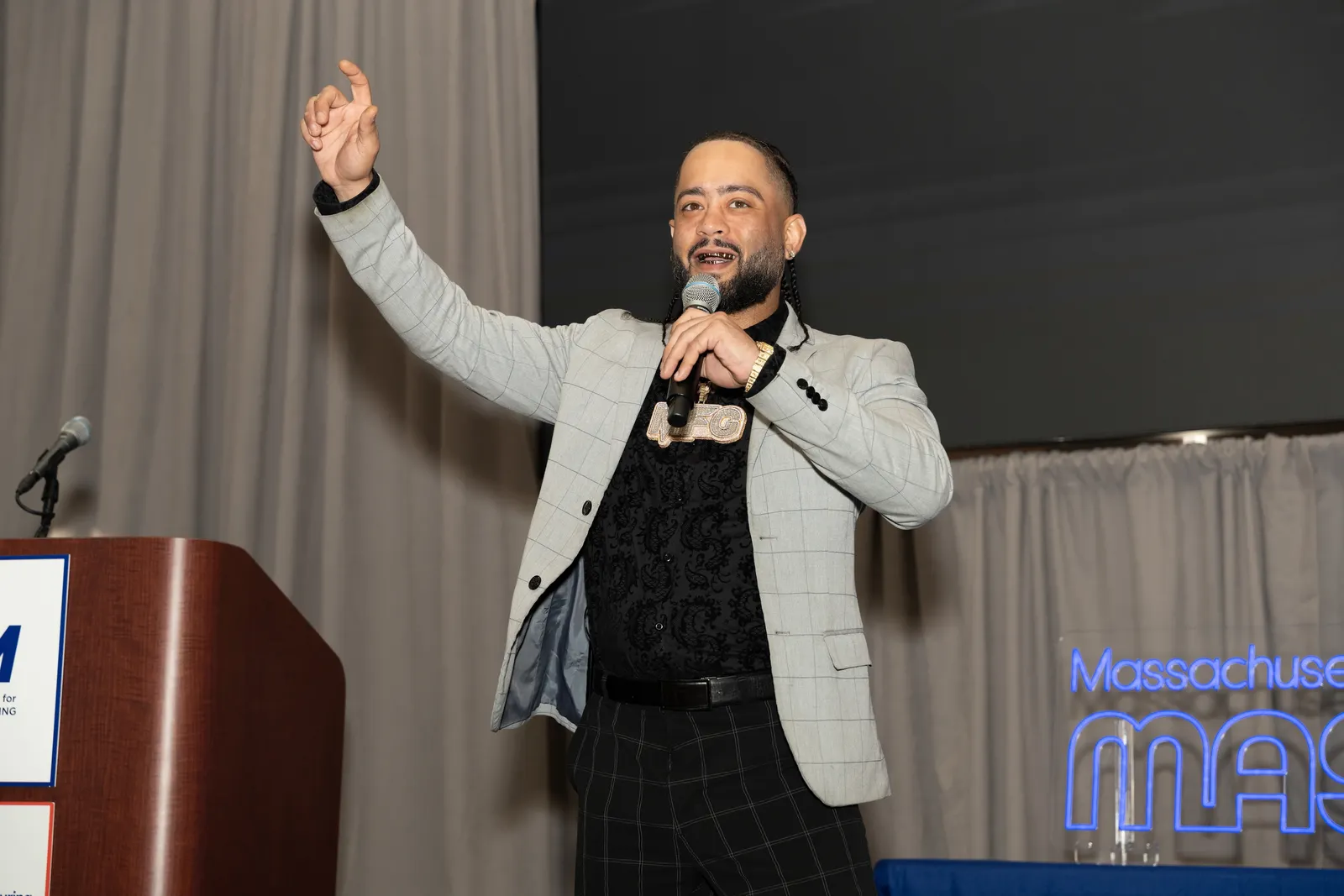
DREW CROWE: A lot of times when I'm working with cohorts of companies, one of the biggest things that the mom and pops hit me up about is, will it cost a lot of money for us to make the shift?
I tell a lot of them, this has nothing to do with money. When you're shifting the culture it's more about the standard, the mission, and then sticking to it and then having everybody under you stick to that. Then that's what changes. Retention goes up. People become brand ambassadors and go out and get the people that you're looking for to backfill some of those jobs.
I think when smaller companies look at these things they think it's very daunting. But when you really break them down they'll find that they're more agile than the bigger companies that may have the budget, but there's a lot of red tape. There's a lot of things they need approvals for before they can do different things.
A lot of mom and pops are like, what if we spend the resources looking for somebody, training them and then one of these bigger places can offer them more money? I always say, just let it happen. Because if we populate the pond, we've got skilled-up fish in the pond. I might train one and send them to you for more money. But you might train three that come to me and say, I don't want to just be a number at this big company, I like the culture over there better.
We hear a lot of stories about companies expecting workers to have AI and technology skills, or in some cases requiring them to be retrained to keep their jobs. How are you seeing AI affect the manufacturing workforce?
I think there's two different ways that it can affect us. Number one, I think AI is democratizing access to the skills. So for example, I was a young kid from the hood. A person that's a machinist or engineer can tell me something, but it's probably gonna go over my head. But I can talk to an LLM and say, what is this dude actually saying? Break it down for me.
These are things that have never been done, where the access to information and then the way that you digest it can be unprecedented. Or, on the other side, if I'm a guy that's trying to teach a new generation that I don't know anything about, that can be a great go-between.
Then I think on the other end, we're not using AI properly to open the door. Right now AI is screening out candidates that are amazing for our industry because the resume doesn't say machining or machinist. Nine times out of 10, if you say I'm looking for a machinist, you're not going to find one.
But if you say I'm looking for somebody that has a mechanical aptitude or likes to work with their hands, or you describe it in that type of way and then say we're willing to train the right candidate, then you're opening the door to a whole lot of different people. When you change the description, you change who walks in. I think in that regard, AI is keeping doors that are already pulled shut, shut even stronger.
Do you think it’s an unfair expectation for people to be fluent in AI from day one?
I think so and I think it goes both ways. I go to schools and I speak to kids or job seekers, early career people, and I ask them, if you see this on the resume, do you feel like it disqualifies you? And a lot of them did raise their hand and say, I won't even try. I won't even put in an application.
But then I asked them in another way. Do you use Siri on your phone? Do you use ChatGPT? Technically, you're using AI right now. So you do use AI. You do have experience in it. We just got to figure out how they're using it, and then how to adapt to it. But it shouldn't be scary.
And then, honestly, even the manufacturers themselves are still trying to figure it out. Where are the best opportunities to be most impactful in using AI? How do we use it? Is it a help or is it a hindrance? And so I think it's unfair for them to use that as a requirement when 85% of the manufacturers right now say that they want to use it, they just don't know how to apply it.
Can you share more about the work you’re doing with the federal government and the Navy?
The Navy did an assessment of our current industrial base, and they said we need to hire 100,000 more people in order to get new submarines built over the next 10 years.
They understand that people aren't just going to find our field. They understand that the people aren't just going to train themselves to get into here. So we, with the Navy and the Delaware Valley Industrial Resource Center — they’re the manufacturing extension partnership in Philadelphia — built a training center.
There's a neighborhood that we intentionally chose called Kensington, and we are training 50 to 100 people every 18 to 24 weeks to get these jobs in welding and CNC manufacturing.
So we're going to take our first cohort in spring 2027. The building is getting renovated right now. Okuma gave us a great opportunity to get some machines in there. PH Horn has backed us and given us some donations for the students.
It's cool to see .... machine tool companies making sure that the skilled workforce comes and they're skilled up right, and they're not just skilled up on donated, clapped out machines. We want them to have the best so that this isn't charity.
How does this fit into your goal of broadening access for more people to enter the industry?
We got partners to handle soft skills. If a person called and said, I've got trouble getting to work, we'll take care of that. We'll take care of family stuff, we'll take care of household stuff, so that this person has a solid foundation. The company has a liaison to rely on because companies aren't workforce developers. They're not therapists. They're not all of those different things. And we just take that heavy lift off of them.
Plus, we'll come back in and do incumbent worker training. A lot of these higher skilled positions that people want to hire for, they've already got the workforce on that Tier One position. Instead of skilling them up, they try to jump over them and hire for this position, and that's where we're finding the need. They're saying they need five years experience, they need this or that.
So if you build a system where the frontline workers become another tier, and then we backfill with some of our people, we'll come in and train the people that moved up and then just keep on going. So I think that's the best strategy for manufacturing in our big courage gap — not a skills gap — is saying, we got a lot of great positions and all of this intro level stuff might be filled, but let's start upskilling people and moving people from our own ranks.
Who knows your processes, who knows your systems better than the people that have been there?
What are you watching as we head into 2027 for training and workforce development in manufacturing?
I think there's going to be a big wave of more training. I think companies that have gotten away from in-house training are going to start leaning on some of this apprenticeship money, some of this workforce money that's at the federal level. I see a lot of money coming at the state level to support manufacturing as well. I see manufacturers connecting with training and technical colleges and really strengthening the full ecosystem.
And then I see a lot more startups. Everybody's a maker. You go on Etsy, you go on Instagram, everybody's got a little side hustle. So I see people that are everyday hobbyists or just regular people having access to machines that are a lot cheaper, the internet helping them understand how to program, finding teachers, using LLM in ways that can help them learn the trade.
I'm a felon, so I don't vote either way and I'm able to work across the aisle. One thing that I know is a recurring theme on both sides is reshoring and bringing a lot of that stuff back here. So as that comes back, people are gonna have more opportunities to make more things and pick up some of that work, which means more jobs, better, higher-paying jobs. And the democratization of skills is going to get more people in our industry.