Dive Brief:
- Toyota and the University of Chicago have signed a research and development agreement to accelerate advancement of quantum technologies for “future mobility, sustainable transportation and secure vehicle systems,” according to a Nov. 3 press release.
- The collaborators are aiming to build a joint research portfolio in which Toyota will invest up to $1 million annually throughout the multiyear agreement. The automaker and university did not disclose how long the agreement spans.
- Toyota’s funding will also support up to eight University of Chicago graduate students across the university’s theoretical and experimental labs, enabling face-to-face interaction with “industrial research challenges as advanced mobility systems are designed from the ground up,” according to the press release.
Dive Insight:
The partnership will focus on identifying new or existing materials that could lead to advancing vehicle technologies, such as protecting data transmissions, improving environmental sensory surroundings and improving energy storage systems.
“Through the UChicago, Toyota gains access to fundamental discoveries, advanced talent and new computational approaches to solve complex engineering challenges,” Jeff Makarewicz, group vice president, advanced research and technical resources at Toyota, said in a statement. “In turn, Toyota offers UChicago the opportunity to translate cutting-edge research into tangible societal impact.”
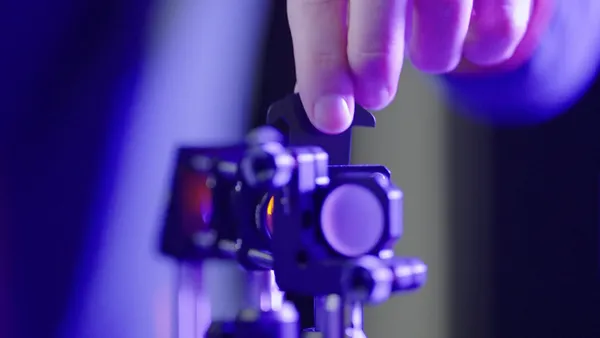
The collaboration will combine University of Chicago’s quantum science research with Toyota’s industrial expertise delving into new applications across quantum sensing and secure communications, according to the press release.
“The delicate sensitivity of quantum systems to even the slightest changes in their environment — including temperature, magnetism, electricity, and other sources of noise — makes these systems excellent at detecting a wide range of small, and even previously undetectable signals from the world around us,” according to the university’s Chicago Quantum Institute.
The companies plan to start five collaborative research projects that will heavily rely on UChicago’s Pritzker School of Molecular Engineering faculty and resources. The projects will focus on five key areas: communication, sensing, materials discovery, theoretical modeling and prediction, and electronic properties.
The R&D collaboration will delve into core obstacles in transportation, including extremely precise sensing, in which quantum sensing will measure environmental changes with “unprecedented accuracy” in laboratory settings, according to the release. Researchers will examine how “translating” this technology could enhance vehicle capabilities “beyond what is possible with current sensor systems.”
Other challenges that the Toyota and University of Chicago research teams will examine include secure communications and how to protect data transmission between vehicles, roadside infrastructure and regional data and control centers. The two organizations will also use quantum simulation-based computational techniques to investigate new materials for designing quantum sensors, transceivers and data links.
“Through advanced computational modeling, we can predict and design materials with novel electronic properties for quantum sensing, helping detailed monitoring of energy storage systems,” Giulia Galli, a University of Chicago molecular engineering professor and a theory science team lead on the initiative, said in a statement.
The University of Chicago R&D collaboration is the latest in Toyota’s strategy to enhance mobility. In October, the automaker opened the Toyota Battery Center of North America facility in Michigan. The collaborative R&D site will enable teams to examine battery technology including raw materials, production, applications and recycling.