Dive Brief:
- Bill Gates, co-founder of Microsoft and philanthropist, wants to tax artificial intelligence tokens and robots to slow and address the replacement of human labor with advanced systems and machines, he said in a blog post Wednesday.
- Under the current U.S. tax system, employers hire people and pay payroll taxes on their earnings. Gates argued that with robots, they can simply write the equipment off as a business expense, which “nudges” companies toward replacing people with machines.
- The International Federation of Robotics has argued that Gates’ idea of a robot tax aims to “solve a problem that does not exist,” saying that automation and use of robots creates new jobs by increasing productivity. Gates also recommended creating a domestic and international framework for dealing with AI and intentionally setting aside jobs for humans.
Dive Insight:
Many thought leaders have compared AI and the coming technology transition to previous ones, like how jobs shifted in the United States from agriculture to office work. However, that change happened over several generations and created jobs where human cognition was required, Gates wrote. AI is different in that it can see, listen, speak, reason and eventually, do physical work.
“A tax would slow the rush away from human labor a little and raise money for retraining and a stronger safety net,” he wrote.
Gates first proposed a robot tax during a 2017 interview with Quartz magazine. He is reviving the idea to also include AI tokens and seeking to meet with world leaders about potential solutions before unemployment rises sharply.
“AI will take on work in law, customer service, medicine, software, and manufacturing,” he wrote. “It will hit these industries rapidly, over the course of a decade rather than a few generations. There will be some new jobs, but without the right policies there will be far fewer than exist today.”
Gates highlighted several pros and cons that come with the technology. He raised concerns about AI-enabled cyberattacks and societal effects, such as stunting kids’ development and replacing human relationships. On the other hand, Gates noted how it can make peoples’ lives easier and accelerate solving the world’s toughest problems related to clean energy, growing food and eradicating diseases.
“In all these areas, the operative word is ‘can’ — AI can improve life for people at every income level,” he wrote. “But it won’t do that automatically.”
When Gates first proposed the idea of a robot tax, he said most people thought it was a “strange idea” and critics pointed out that it’s “not optimally efficient in an economic sense.”
South Korea passed the world’s first robot tax, which took effect in 2018, in an effort to lessen the impact that increased automation would have on income tax and create a welfare buffer to cope with the expected rise in unemployment, according to a 44-page academic research paper. It is also the only country to pass a law like this.
The European Parliament rejected a robot tax in 2017, but called on creating a framework to regulate the rise of robotics, Reuters reported. The U.S. has no national robotics strategy, but industry groups and coalitions are actively pushing for one.
The IFR said it supports the idea of greater robotics cooperation between the public and private sectors, but “it is important to avoid bureaucracy which does not deliver value.”
“To tax production tools instead of their profits would have a negative impact on competitiveness and employment,” the organization said.
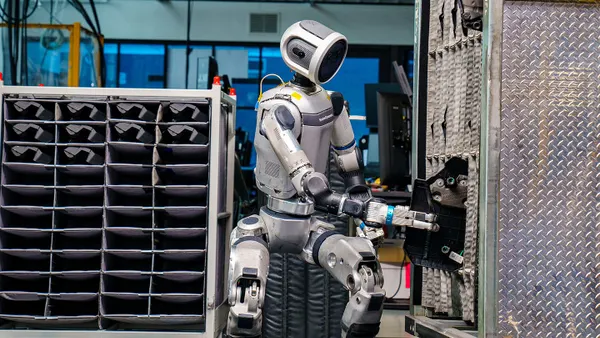
The IFR pointed out that a robot tax would make investments in technology more expensive for companies and hamper productivity. Manufacturers are leveraging industrial robots to replace repetitive or dangerous tasks, and create safer, higher-skilled jobs as they navigate a worker shortage.