Dive Brief:
- As manufacturers look to adopt and deploy robotics, many are moving faster than their operating models can support, according to a survey commissioned by Intel of 800 business and IT leaders, robotics specialists and government and healthcare officials around the world.
- The research found a “stark disconnect” in that seven in 10 senior manufacturing leaders expect their organization to have a fleet of robots in the next five years, but roughly four in 10 have a formal strategy to manage a mixed workforce of humans and robots.
- Unclear ownership of a robotics strategy across the organization could be a contributing factor to the 26% preparedness gap in manufacturing. The study, conducted by Man Bites Dog and Coleman Parkes Research, also identified gaps related to workforce skills, safety, form factor and scaling of robotics.
Dive Insight:
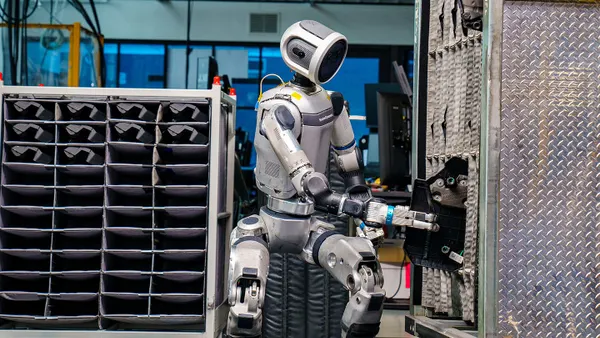
For decades, the role of robots was relatively simple. They were fixed machines with fixed tasks and fixed environments. But as technologies have evolved, powered by advancements in artificial intelligence, edge computing and real-time software, the industry is entering a “new phase of intelligent robots that can sense, reason and act,” John Healy, Intel’s vice president and general manager of industrial and robotics, said in the report.
“This move from repetition to interaction is changing the role of robotics entirely,” he said. “It also exposes an uncomfortable truth: most organizations are unprepared.”
Across industries, companies are moving beyond experimentation and beginning to embed robotics into their daily operations. However, Healy pointed out that many are building on antiquated foundations from a pre-autonomy era, including systems that weren’t designed to adapt and teams that were never trained to manage machines that learn.
“Robots need to be able to perform under pressure, and this takes more than a breakthrough in AI,” he said. “It means redesigning operating models and getting functions to work together in ways they haven’t before.”
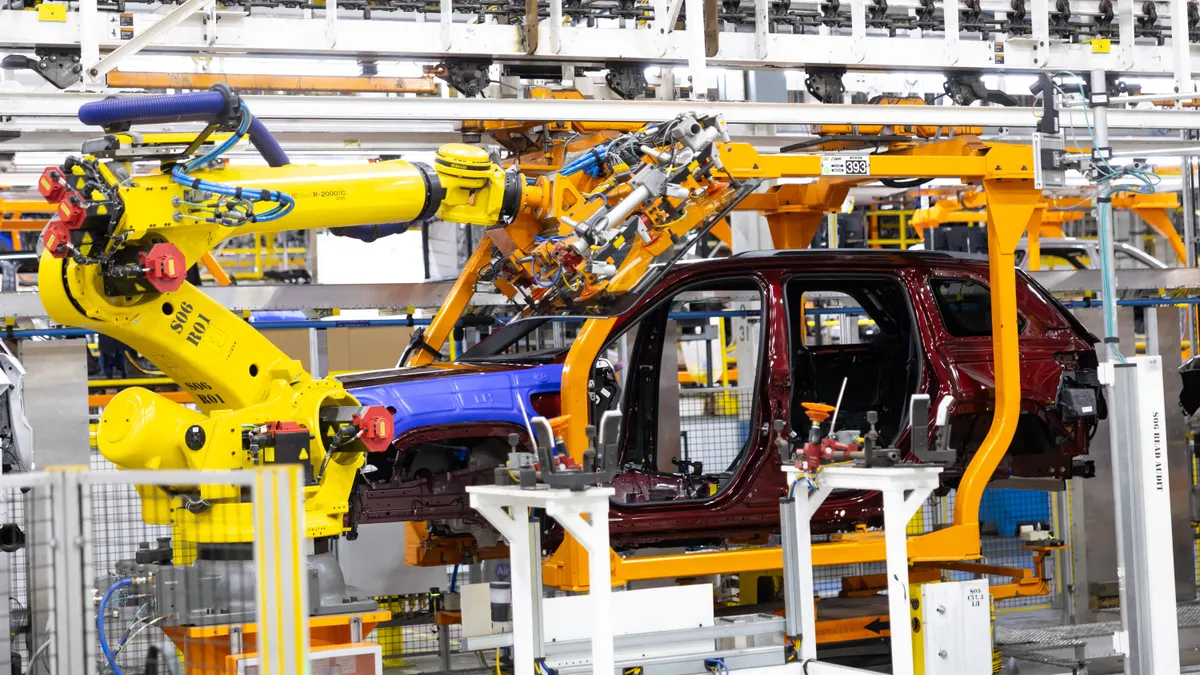
Today, robotics are at varying stages of deployment across manufacturing. Approximately 40% of survey participants have already integrated robotics into certain processes or functions, and 19% are establishing industry standards and setting the pace for the rest of the market, according to the report.
At the same time, 35% are pioneering robotics to gain a competitive edge across multiple processes or functions and 6% are exploring robotics and their use cases through pilots or proofs of concept.
Although robotics deployment is accelerating, the report identified a 26% preparedness gap between manufacturing leaders who were ready to manage robots by 2030 and those with a formal human-robot workforce strategy in place. This was higher than retail and healthcare, but lower than smart cities and defense — which had the biggest gap at 48%.
In addition to strategy, the report identified gaps related to workforce training, safety, form and scaling. Companies that address these challenges will have a greater chance of successfully implementing robots into their operations versus stalling at the pilot stage, according to the report.
Of the 800 survey participants, nearly a fourth of them came from the manufacturing sector. Others came from retail, healthcare, defense and smart cities.