

It's easier to develop new manufacturing processes and equipment than to develop new materials for manufacturing that have unique chemical and other properties, according to Z-Polymers CEO Mike Zimmerman. However, innovative materials are what really drives product development, he said.
“These things have typically taken a long time. A lot of big companies don't necessarily do new materials development. There aren’t as many people doing it as those developing new equipment.”
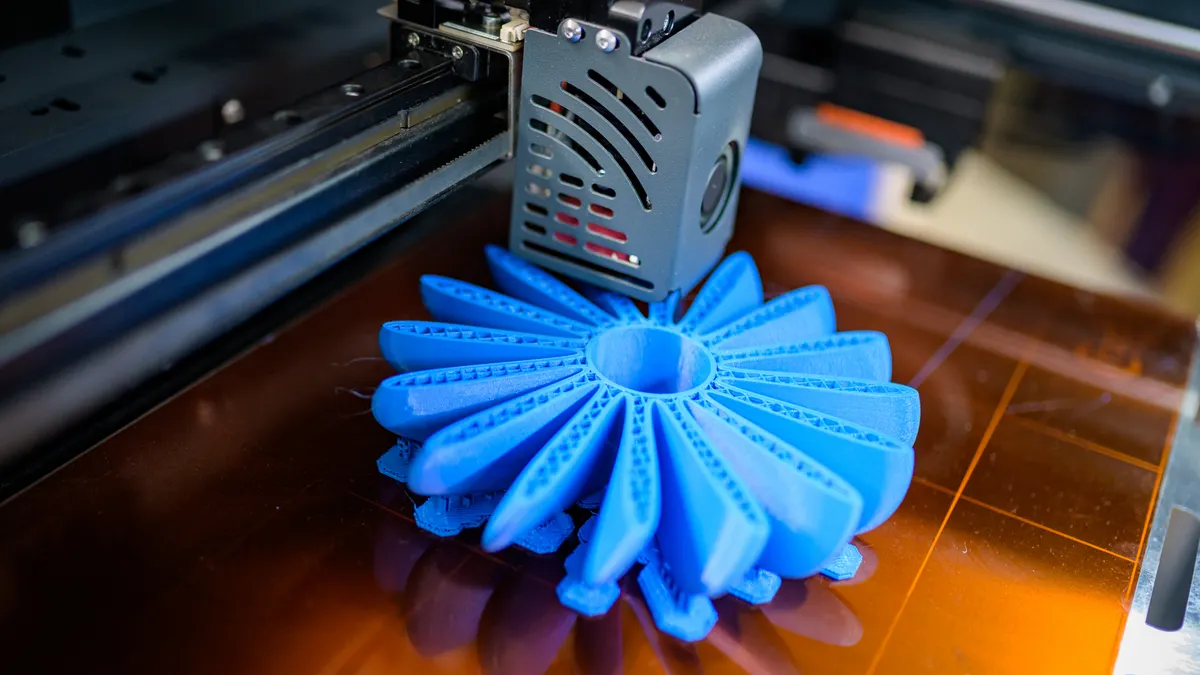
For example, many of the materials currently being used in additive manufacturing, such as nylon and carbon-filled nylon, have been around for 20 or 30 years, Zimmerman said. “One of the reasons why I was interested in getting into additive manufacturing was I thought I could come up with a new material.
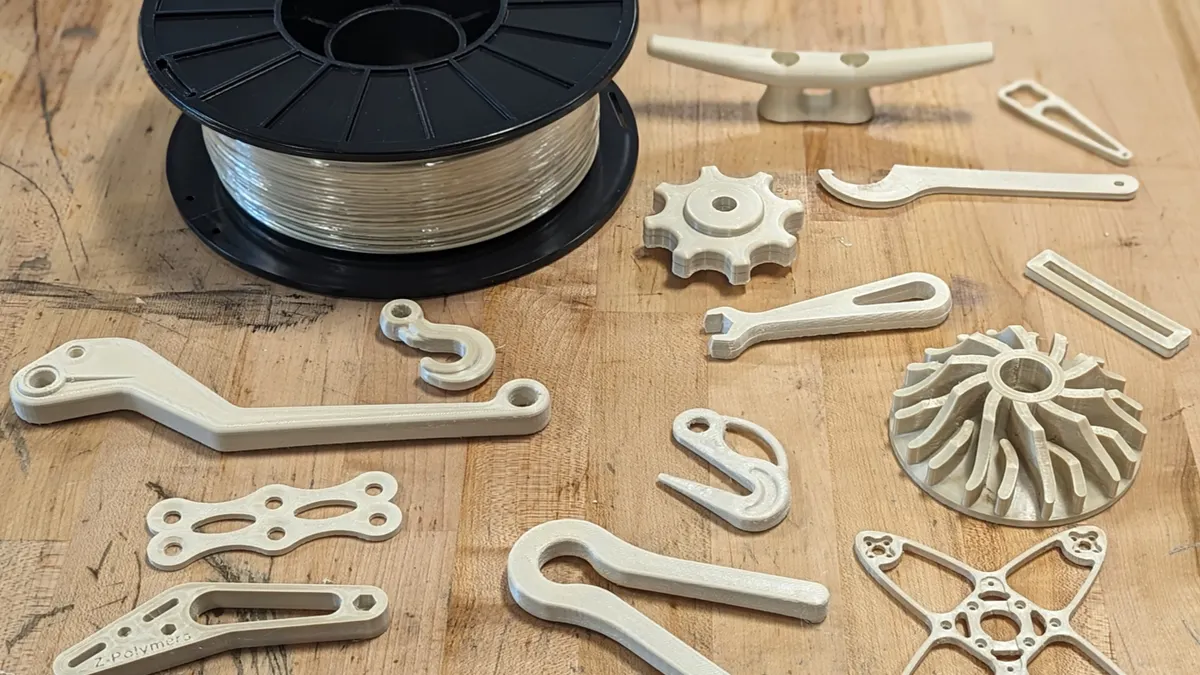
His interest in developing new manufacturing materials inspired him to start Z-Polymers. The company’s Tullomer is an ultra-fine fiber and filament that is several times stronger than steel by weight. Compared to other materials like carbon fiber, it has higher thermal performance, generates less waste and toxic materials, uses less energy to create and has other properties that make it especially suitable for additive manufacturing. It’s currently being used for applications in healthcare, aerospace, energy, transportation and other industries.
Zimmerman, a materials scientist who has started three other technology companies and taught materials and polymers science at Tufts University, recently spoke with Manufacturing Dive about the importance of new materials for driving manufacturing innovation. He also discussed some of the challenges in this area when it comes to development and commercialization.
This interview has been edited for clarity and brevity.
MANUFACTURING DIVE: Tell us more about what Z-Polymers does.
MIKE ZIMMERMAN: I noticed that in additive manufacturing, people were trying to develop plastic parts that are stronger, stiffer and have higher performance. I also noticed people were going to certain polymers and introducing carbon fiber, which is a material I'm very familiar with. I thought if we could optimize it, it would be good for 3D printing. So that was the start of the company. Since then, we've been developing interesting fibers that have better properties than Kevlar and can go into different types of products.
We're a materials science company with a unique polymer that has a different microstructure that we're applying to additive manufacturing. We're going into things like drones and aerospace. With drones, for example, people use a lot of carbon fiber to make parts very stiff and strong.
However, carbon fiber reflects radar. Our material can be very stiff and strong as well, but it's also radar transparent. We're also making really strong fibers that are very fire resistant, which is great for customers like NASA and companies that make sports equipment. They’re also very appropriate for textiles, where people are looking for lightweight, strong and cut-resistant materials. There are a lot of interesting applications.

Why are there relatively few new materials being developed compared to other manufacturing technology breakthroughs? Are new materials just generally harder to create?
I think inventing a material is not that difficult necessarily, but there has to be an ecosystem around it. Developing new materials can mean high development costs, difficult processing, and a lack of pilots. There also hasn't been a lot of venture funding, because materials can take a longer time to develop than software and hardware. Many investors actually expect software timelines from materials companies, which isn’t necessarily realistic. But I think that, again, the real innovations and products do come from materials.
Another problem is scale-up. People make something in the lab with really great properties and great results. But in any high-tech area, including materials, you then have to translate those results from a lab into a manufacturing process and then into a production process. When you do that, you often get different results.
At Z-Polymers, we're developing materials using end manufacturing equipment as opposed to prototype equipment, which eliminates the step of going from one to the other. Then we’re delivering prototypes we make with end manufacturing equipment to customers.
You’ve said that the next generation of manufacturing may depend as much on advances in materials science as advances in production technology. Why is that?
A lot of the new materials innovation is the foundation of manufacturing innovation, and additive manufacturing becomes transformative when paired with new materials. People improve and invent new manufacturing techniques when new materials become available.
Manufacturing can’t advance using just old materials — we've got to develop better materials that can help spur new manufacturing processes. So the next step comes when entirely new materials enable capabilities that today's materials simply can't.
How is artificial intelligence impacting the development of new materials?
I think that AI is definitely going to provide a good tool to develop new materials, specifically when it comes to creating molecular designs based on huge databases of different formulations, and then coming up with algorithms and new formulations based on those databases.
I've started to use AI, and there are people working on ways of optimizing different types of polymerization in material designs with it. So I think it's going to play a role, although it's not fully there yet.
Where do you see the manufacturing workforce skills gap most prominently in materials development and production?
A lot of the materials work has gone from the United States to various places around the world, and that is largely responsible for the skills gap. For example, DuPont invented Kevlar, but now most of that product is made overseas, and most of the innovations around it are there, too.
As another example, I was involved in semiconductor packaging when I worked for Bell Labs. We invented semiconductor packaging here in the U.S., and then it all went to Asia, basically. When manufacturing goes offshore, all of the other functions like materials development go offshore with it. At all four of my companies, we're doing the innovation here, developing the materials and doing the manufacturing in the U.S.