One year into the launch of its Initiative for New Manufacturing, the Massachusetts Institute of Technology is gaining traction toward its goal of helping modernize U.S. industrial systems.
INM launched with financial support from seven consortium members last year: Amgen, Autodesk, Flex, GE Vernova, PTC, Sanofi and Siemens. First Solar has since joined as a consortium member.
The group’s goal is to help develop new technologies and systems, as well as accelerate the adoption of emerging technologies. It will also facilitate efforts to share knowledge across businesses and industry groups, scale workforce education programs and develop more entrepreneurship options.
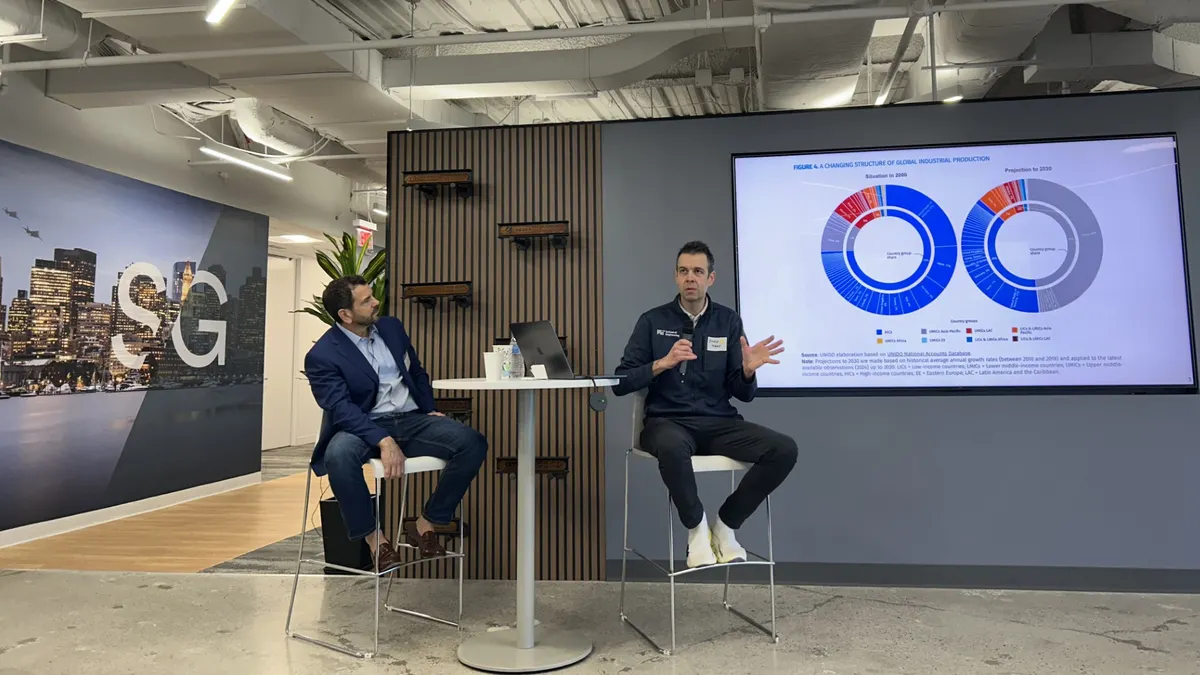
“It's not like MIT is going to change the world or change the country on its own,” said John Hart, one of INM’s four co-directors, during a May 26 event. “But we believe that there are important things we can do to help grow domestic manufacturing productivity, impart more sustainability in supply chains and industries, and also contribute to the creation of high-quality manufacturing jobs.”
Hart spoke at a Boston Tech Week event hosted by Ven^x, a collaborative hub for venture capital firms. The event also showcased regional tech companies working to address challenges in different industries.
“We believe that deep tech is an important sector in VC, but it's chronically underinvested,” said John Ho, a founding member of Ven^x. “So our mission is very simple. We just want to move more capital, more talent, more collaboration into the sector by creating a closer ecosystem.”
Hart highlighted the value of more investment in industrial technology, noting the potential for manufacturing to drive economic growth and job creation. He also noted that manufacturing accounts for more than half of all private sector R&D in the U.S.
The U.S. is the world’s second-largest manufacturing economy, with China becoming first in recent decades. By 2030, Hart said, it’s estimated that China could account for about half of the world’s industrial production.
“While there's the framing that the U.S. has lost something very important, which I agree with, there's also the framing that we're in a moment, a time where we can build new manufacturing here,” said Hart. He added that INM is focused on new ways of improving technology, the quality of work and the agility of supply chains.
He cited examples of “lights out” or “dark” factories that make smartphones and other products with little to no human labor, arguing that some elements of this can be brought to the U.S. while also ensuring the role of the manufacturing workforce is maintained.
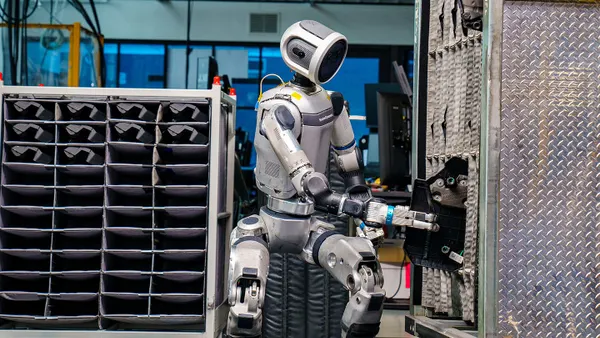
“This is what's happening in manufacturing overseas and, to some extent, I believe the key to building new manufacturing here is this deep infusion of new process technology, automation and data and AI, where it makes sense,” he said. “That will allow us to think about the dimensions of value in manufacturing, scale in manufacturing, and having more versatile manufacturing in a way that makes significant sense to build here domestically.”
INM received 50 research proposals from faculty in its first year and so far has funded eight. This includes projects focused on agentic artificial intelligence, robotics and other technologies. Hart likened this to seed funding for new startups, of which MIT has yielded many over the years.
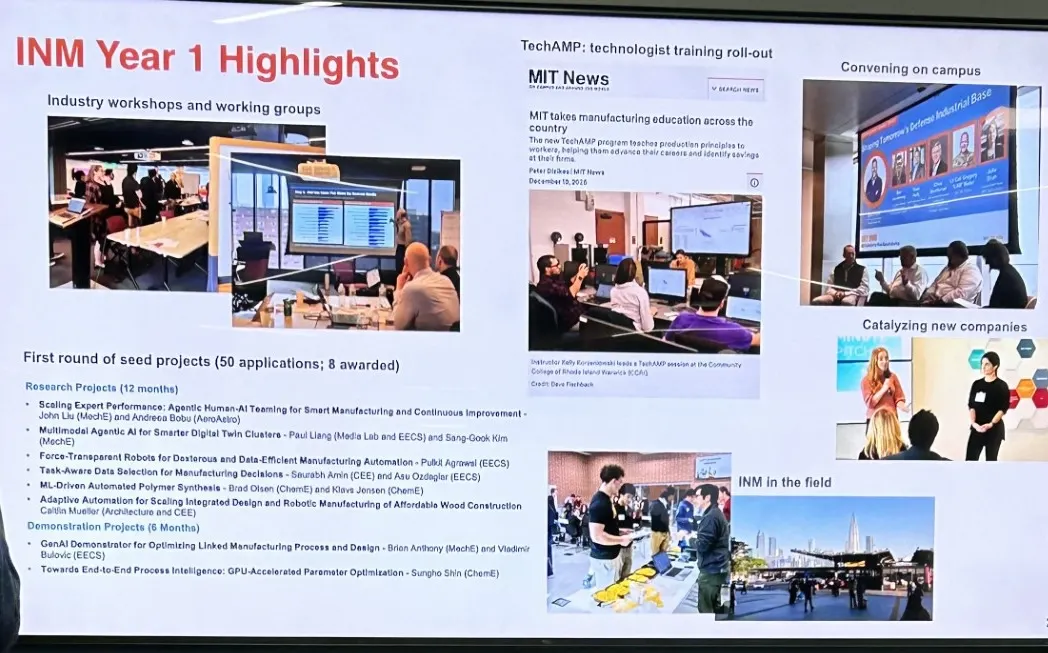
Other initiatives so far include MIT’s Technologist Advanced Manufacturing Program, which is training its first cohort of manufacturing employees at their organizations, among others.
Training and workforce development are key parts of INM’s mission, as outlined in a separate May 6 event at MIT, with a particular focus on small and medium businesses.
“We also recognize that manufacturing is very close to practice. So it's not enough for us as academics to say these are what we think the challenges are. We need to do this together,” said Chris Love, another co-director of INM, during the event.
Love cited digital twins, AI agents, the experiences of humans working alongside robots and other topics the group planned to focus on. He said INM’s goal is to bring this work out into “the broader country” to help tackle the challenges of unfilled manufacturing jobs and existing jobs that may be affected by AI, mentioning the potential need for new degrees or training pathways.
As part of this work, the group has been conducting visits to multiple factories and meeting with trade groups in states such as Iowa, Ohio and Wisconsin; as well as a trip to Shenzhen, China.
Suzanne Berger, the group’s third co-director, said this approach comes from a recognition that the university’s expertise in engineering and manufacturing hasn’t always translated into tangible outcomes.
Berger said people often ask what MIT’s new initiative can do differently when decades of faculty research, testifying before Congress and meeting with presidential administrations haven’t necessarily led to notable changes.
“What has changed is the world and the international economy and the place of the United States in that world,” she said, citing new trade patterns, China’s increasing manufacturing prowess, AI, multiple wars and more.
Given all of these factors, Berger said the U.S. needs the resources and resilience that domestic manufacturing can provide more than it has since the end of World War II.
“The world has changed in big ways, and so I actually think that the work that we do on manufacturing here at MIT stands a far better chance of making a difference than it ever has before,” she said.
Correction: This article has been updated to note that MIT’s INM has four co-directors.