

Dive Brief:
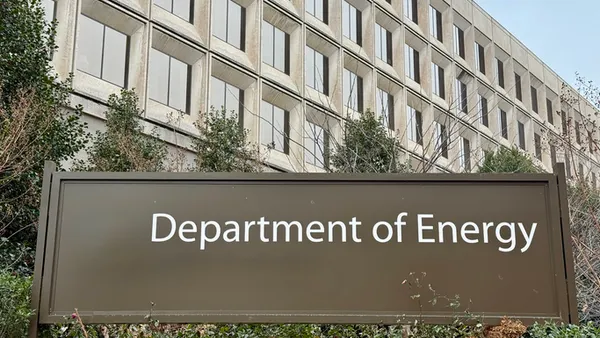
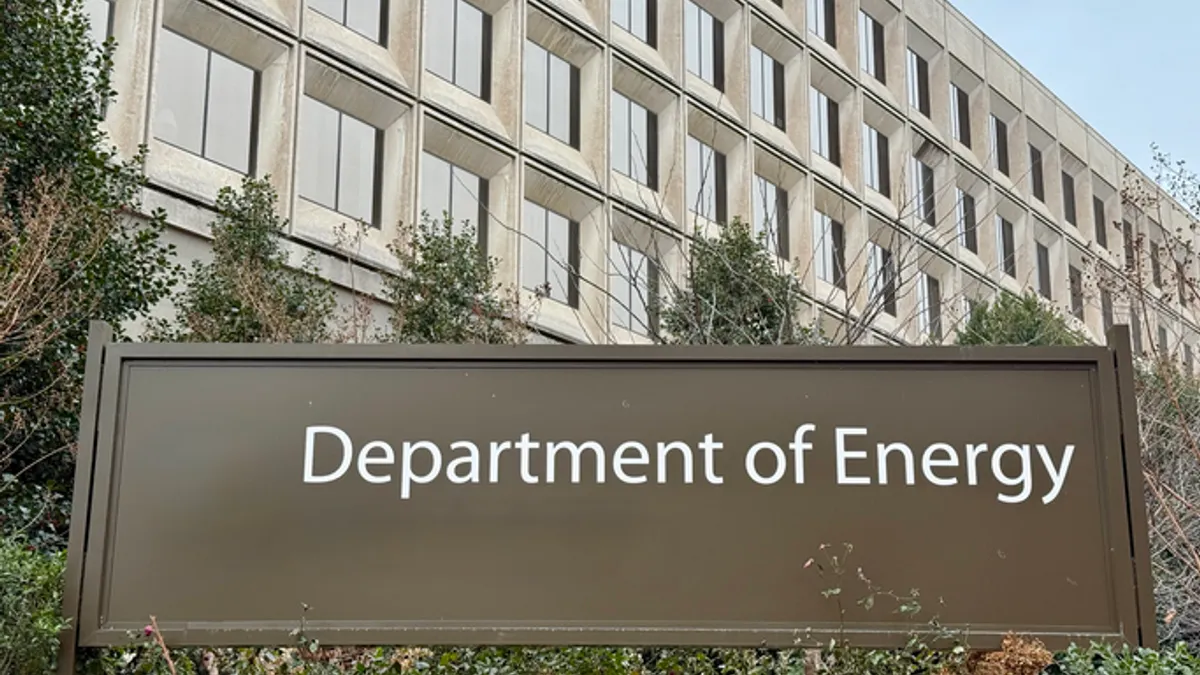
- Micron announced it will spend up to $50 million over five years to support and expand the U.S. Department of Energy’s Genesis Mission Graduate Fellowship Pilot Program and related research initiatives.
- These initiatives will involve projects led by academic and industry researchers “leveraging competitive, whole-of-government infrastructure and national laboratory capabilities” to promote innovations in semiconductors, artificial intelligence and other key areas, Micron said in an emailed statement.
- The investment would also support new partnerships across federal research agencies and laboratories while building on Micron’s existing partnership with Pacific Northwest National Laboratory.
Dive Insight:
Micron’s $50 million commitment was announced Oct. 8 and is part of Boise-based Micron Research Labs, which will focus on critical memory technologies, advanced memory and compute architectures, packaging, future semiconductor manufacturing and other key areas.
Billed as the first dedicated memory research hub of its kind in the United States, Micron Research Labs will be backed by a planned $10 billion investment over the next decade, the company said. The facility will allow customers, academia, government and industry to conduct advanced semiconductor research.
The Genesis Mission was launched in 2025 and works with industry to use AI to tackle challenges in energy, science and national security. Micron said its partnership with the Genesis Mission “represents an early step in how Micron Research Labs will engage with leading institutions and researchers to help advance the next generation of scientific and technological breakthroughs.”
Micron announced the investment as part of the “Science: A New Golden Age Summit,” where the Trump administration highlighted new industry commitments made through the Genesis Mission Consortium. Micron said the money will support fellowships, research and technical mentorship programs, while providing expertise in advanced memory and computing for doctoral students in the fellowship pilot program.
The pilot offers “accelerated, four-year doctoral pathways” by utilizing “dual-competency training and research experiences at DOE national labs and with industry partners,” according to the agency’s website.
“Memory is foundational to high-performance computing and emerging [AI] applications, enabling systems to process data at the scale and speed breakthrough science requires,” Scott DeBoer, president and chief technology and product officer at Micron Technology, said in a statement.
“By contributing our memory and compute expertise and technical mentorship, we aim to help fellows translate breakthrough ideas into meaningful impact,” he said.
The Genesis Mission has reached agreements with other companies as well. It recently announced a partnership with GlobalFoundries to pair AI-enabled semiconductor design with the company’s U.S. manufacturing platform to help translate basic research into working prototypes for advanced computing applications.
In total, 11 companies have committed $2.4 billion to the Genesis Mission, including Nvidia, AMD, OpenAI, Anthropic, Google, AMP, Emerald AI, AWS, Armada, Crusoe and Micron, the Trump administration announced Oct. 8.
Additionally, the DOE announced 12 Phase II Genesis Mission project awards totaling $159 million. They include awards to programs led by labs and universities across the country, such as the Massachusetts Institute of Technology and the University of Ilinois Urbana-Champaign.