Since perfluoroalkyl and polyfluoroalkyl substances, or PFAS, were discovered in 1934, manufacturers have found new uses and developed a range of chemicals in the family to use in various products such as cookware, food packaging, aerospace components and especially, semiconductors.
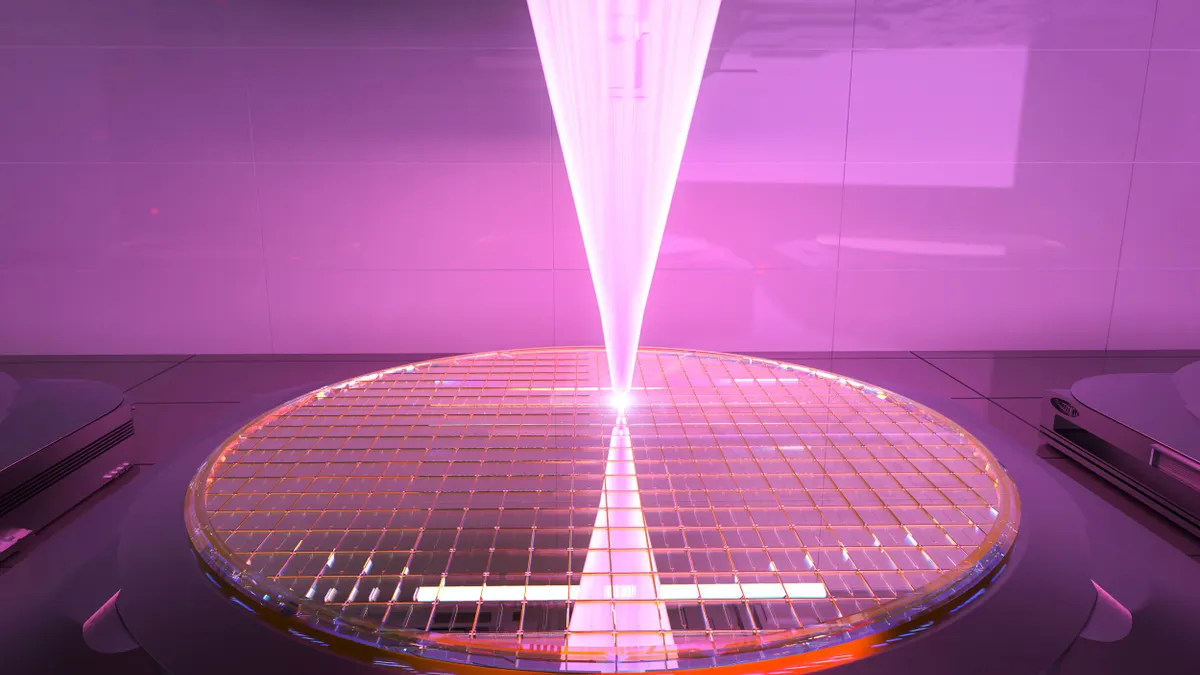
PFAS are used in many steps of the semiconductor manufacturing process, from photolithography or ultraviolet lithography, to etching, cleaning and plasma processing, making wafers heat-resistant and durable, according to semiconductor component maker Brewer Science.
State lawmakers have been taking aim at PFAS, also known as forever chemicals because they take a long time to break down, going as far as banning the fluorochemicals in a number of products such as aqueous film-forming foam.
However, there are exemptions for some industries that rely on PFAS and are deemed critical, such as semiconductors, because there are no alternatives available. And as more products are using artificial intelligence and consumers are relying on internet-connected devices such as smart phones, demand for semiconductors has surged.
Even if lawmakers were to ban the fluorochemicals in semiconductor manufacturing, finding PFAS-free alternatives will not be easy. It will take years to eliminate the toxic substances in addition to years of research and development to find alternatives that work just as well, according to a white paper by the Semiconductor Industry Association’s PFAS Consortium. Furthermore, the trade group estimated the timeline to find and implement successful PFAS-free alternatives is between three and 25 years. There’s also the possibility that some fluorochemicals may be irreplaceable.
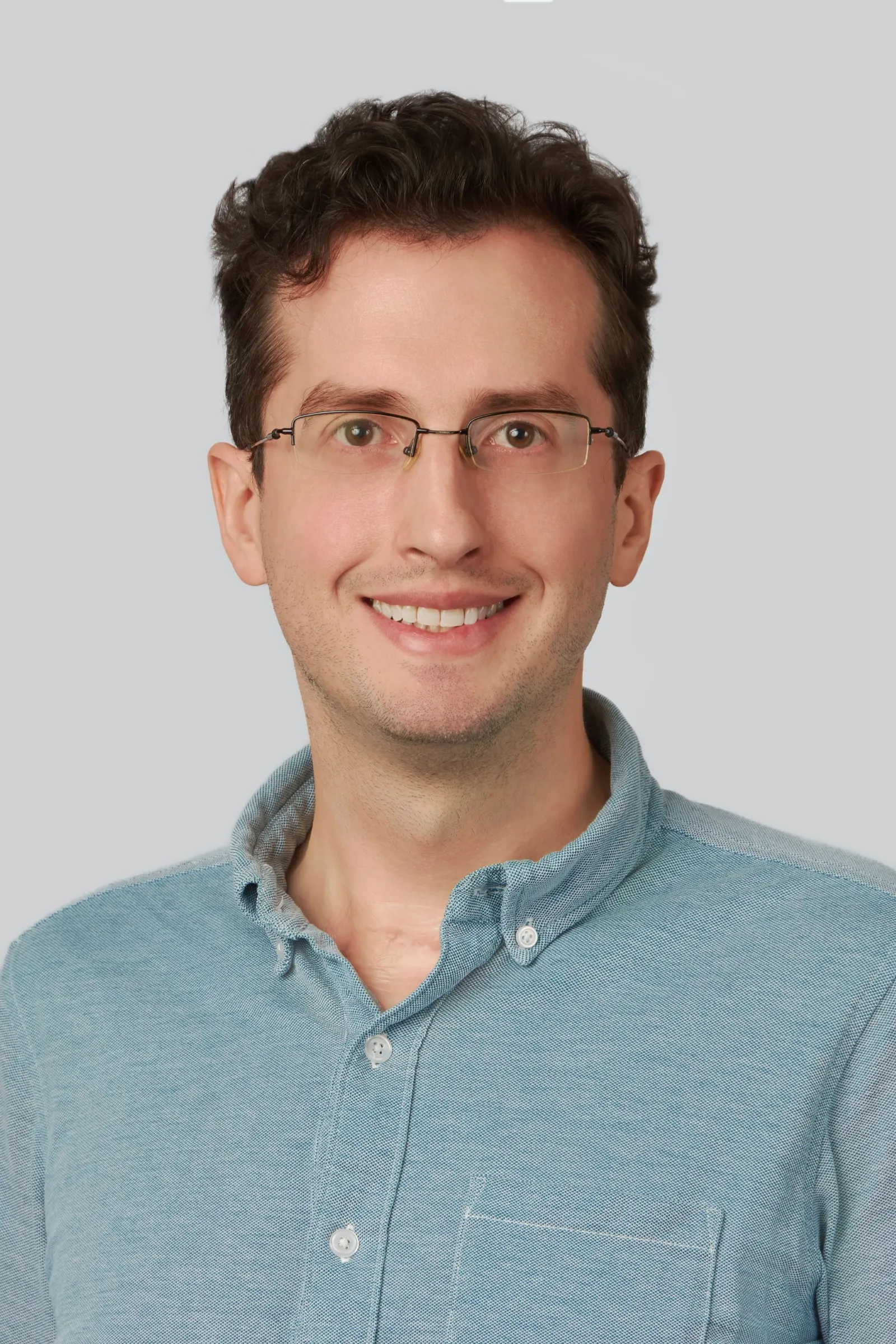
SandboxAQ has a goal to find alternative candidates in two to four years using advanced computational methods, Stefan Leichenauer, vice president of engineering, said in an interview with Manufacturing Dive. Advanced computational methods use data, algorithms and mathematical models and machine learning to find solutions for some of the most complex issues in an industry.
The Department of Commerce awarded $500 million to software developer SandboxAQ through the CHIPS and Science Act in June. The Silicon Valley startup will use the funds to develop and deploy artificial intelligence to research and develop new chemistries in semiconductor manufacturing.
SandboxAQ intends to focus on four categories: catalysts or chemicals that cause certain reactions, rare-earth-free magnets, battery systems for a facility’s backup power system and PFAS-free chemicals.
Leichenauer spoke with Manufacturing Dive to discuss how the startup will use AI to develop new chemicals that could tackle semiconductor materials bottlenecks and other supply chain risks.
The following interview has been edited for clarity and brevity.
MANUFACTURING DIVE: One of the provisions for this CHIPS Act award includes PFAS-free alternatives. How did this research and development come about and how long will it take for SandboxAQ to find PFAS-free chemicals?
STEFAN LEICHENAUER: [SandboxAQ’s] strength and our mission is around advanced computational methods applied to very hard problems in the world. Problems like new materials, batteries, drugs, things like that.
The things that we choose to work on are things that have a big impact, [a] global-scale impact. If we could wave a magic wand and get rid of all the PFAS, that would be great. But of course, and the semiconductor industry is one of them, there are many critical industries that currently still use and need the PFAS.
So, how can Sandbox AQ help with that? That's the question that we ask ourselves. So our secret sauce, our claim to fame, is this thing that we call the large quantitative models, LQMs. It’s a kind of computational physics and computational chemistry combined with AI in order to do this new materials discovery.
We can set objectives, like we want to try and find a material or a substance or formulation that has a bunch of nice properties that we want and doesn’t have bad properties that we don’t want. So something that can do the good things that PFAS can do without the bad side effects would be an example.
And then computations to try and basically find a molecule, a formulation, a material that can do that. Then we test it in labs, see if it works, and iterate. It’s an iterative discovery process. That’s the kind of work that we do at SandboxAQ, and what this [CHIPS Act] money is going toward funding and extending and expanding on that kind of work in a number of areas relevant to the semiconductor industry. Besides PFAS, magnets, catalysts and batteries are the other areas that are relevant for semiconductors.
One thing to be clear about the work on finding that PFAS-free lubricant or heat transfer material or something that the semiconductor industry can use: that work is not done yet. That’s the work that we’re going to do, but the methods that we have have shown promise.
We have worked on PFAS before. Not for finding replacements, but we did a record-setting 1 million CPU in the cloud simulation of PFAS molecules, basically to show that we have the capabilities needed, at a computational level, to address this very hard problem of understanding PFAS and ultimately finding replacements for PFAS.
This is not a 20-year goal. This is a two- to four-year goal that we have to really find candidate replacements using our computations and show with real-world testing that they can actually work. And then the next step would be to drive adoption in the semiconductor industry so that we can finally get rid of PFAS once and for all, ultimately.
There are a few white papers mentioning this research in SandboxAQ’s press release. Can you go a little bit further on the research in those white papers?
The work that we've done so far, or the work that's in progress, is leveraging all of the powerful computing tools that have been developed recently, in order to really address problems of physics and chemistry.
We've had large language models coming in and solving a lot of problems for us. We've had the development of better and better GPUs power those kinds of large language models. But those developments by themselves are not enough to solve the kinds of problems we're talking about. That's not enough to find a PFAS replacement.
For example, if you asked a large language model running on as many GPUs as you want, “Tell me a PFAS replacement,” it'll give you some answer, but the answer will probably be wrong. It will hallucinate, and that's just how language models work. They read everything on the internet, and then they process it and give it back to you in some way.
What we've done is we've created our own kind of AI models that are different from large language models. They are AI models, [but they’re] not large language models, and not trained on the internet. What we do is we generate our own data using scaled-up but understood computational physics methods. We have a lot of very talented scientists who know how to solve equations very well, and we're using the same views that have been developed for large language models.
We figured out how to leverage those to create and generate a lot of high-quality data, not the kind of data you would find on the internet. And then we take that data, and we feed it into our own AI models that are not large language models. Learning from that data, we now have AI models that understand physics and chemistry very well. And now, if you take those AI models and you ask those AI models that we've developed: “Help me find a new formulation of PFAS” or “some PFAS-free formulation of something that I'm interested in,” the models that we've created and the computational workflows that we've created through this process can answer those questions reliably without hallucinating.
That model that we've developed, that's what we call a large quantitative model, distinct from a large language model, because the kind of questions we're asking are quantitative questions that the inputs and the outputs are numbers. Numbers that describe the real world.
We're developing more [LQMs], we're making them better, we're applying them to new problems, and that's sort of the path forward and what we're described in the past on problems we've already worked on, and that's the method we're going to carry forward to work on this new semiconductor-related stuff.
How does SandboxAQ go about avoiding those hallucinations with LQMs?
Fundamentally, it's because we can objectively see if the answer is right or wrong, because we can check. So if the model says, “Here's a candidate molecule,” we can go back to our non-AI methods and we can check the answer. And if the answer is wrong, because we can check it objectively, then we know that the model has made a mistake, and we can use that information to retrain or fine-tune the model. There’s a self-correcting loop that we have that we can set up.
Inside of the computer, we generate data, we train, we check the answers, we retrain. We go through this process many, many times potentially until we have a very pristine model that never makes mistakes and can do a very good job.
Besides that, there's another level of checking that we do, where we actually test the thing in real life and see if it actually performs the way it's supposed to perform, not just because we checked it on a computer.
So there are lots of checks and balances here that we can use to to control the AI and make sure that it's not going wild.
How will these LQMs play a role in workforce development or training?
I think one thing that's very important in this whole discussion is that human-like expertise and human-like talent workforce, who know what they're doing in these areas. We need people who understand the AI and who understand the chemistry and who understand the physics and who understand semiconductors. All of that is absolutely critical. There are humans in the loop at every stage of this AI development and this AI use. The AI is just a tool that humans are using.
What else should readers know about the LQMs and the CHIPS Act award?
When we're talking about PFAS and batteries and magnets and catalysts, these are things that feed into the semiconductor industry, [which] is bigger than just the literal semiconductors themselves. If there's a weakness anywhere in the chain, then the whole thing is weak. It's a big, expansive national security effort to strengthen the entire ecosystem.
I think it's also good for readers to know that this is the approach that Sandbox AQ is taking to solve this kind of problem. It's not restricted.
The semiconductor industry is a big industry and an important one, but that's not the only industry. The approach that we're taking is, we're already taking it in other areas that are important, not just for national security, but also for, in general, improving our lives and making forward progress.