This audio is auto-generated. Please let us know if you have feedback.
2025 was a major year for manufacturing in the U.S., with heightened interest at the federal level and numerous efforts to invest in domestic production.
While these trends were significant, the sector faced financial headwinds as reflected by tariff costs, the labor market and other metrics. Meanwhile, state and federal policy changes also had implications for funding and regulation.
We’ve gathered some of the industry’s highlights by the numbers to help put 2025 in perspective. What themes will you be watching in 2026? Let us know at [email protected].
Tariffs
Chip Somodevilla via Getty Images
By the numbers
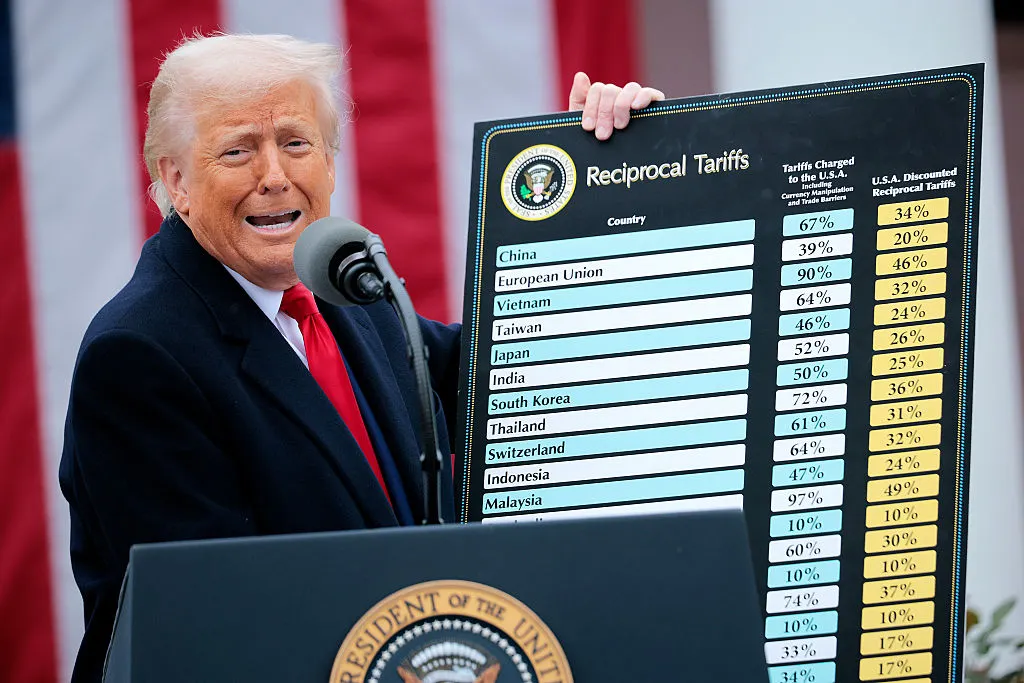
The amount of revenue President Donald Trump’s imposed tariffs could raise over the next decade, excluding foreign retaliation and negative economic effects, according to the Tax Foundation. The tariffs also amount to an average tax increase of $1,100 per U.S. household this year, according to the nonpartisan organization, making them the largest national tax increase as a percent of gross domestic product since 1993.
The percentage of manufacturers that plan to pass on all cost increases from tariffs into sales prices, according to the Institute for Supply Management’s December survey. Another 54% said they plan to pass on some cost increases through the price of sales or other services, or absorb them through reduced margins. Only 8% indicated they would absorb all the tariff costs; while 6% said they were unaffected.
How much manufacturing investments could decrease by 2029 as a result of prolonged trade uncertainty, according to estimates from the U.S. Congress Joint Economic Committee - Minority. In other words, the industry could see a 13% decline in investments per year.
Onshoring and reshoring
Mario Tama / Staff via Getty Images
By the numbers
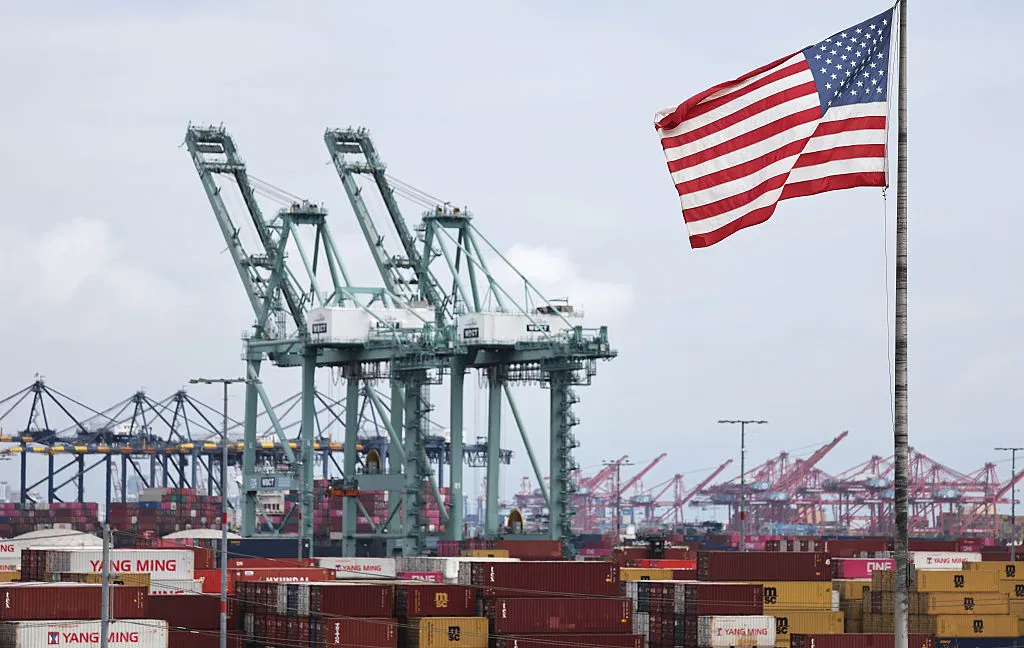
The number of primary reasons manufacturers reshore production to the U.S., according to a 2025 survey conducted by the Reshoring Initiative. Nearly half of the respondents said they were reshoring to locate manufacturing near engineering, or because of lower freight and duty costs. Approximately 38% said they would avoid any potential geopolitical risks by reshoring. Approximately 96% of participants that had reshored said they were satisfied with the results.
18%
The percentage of manufacturers that are “actively looking” into shifting production to the U.S. from abroad within the next six months, according to ISM’s December survey. Another 18% indicated they are looking to shift production domestically, but the process will take longer than 6 months. Roughly 31% of participants said they are not reshoring, but are looking for alternative trade partners in areas where tariffs are less impactful.
How much Kearney’s Reshoring Index fell in 2025 after two positive years. The strategy and management consulting firm reported in April a noticeable gap between intentions and the reality that global shifts take time to implement. Kearney noted that manufacturers reverted to sourcing from low-cost countries and regions in Asia as partners in Canada and Asia struggled to keep pace with U.S. output.
M&A and investments

Annabelle Chih via Getty Images
By the numbers
The year over year decline in industrial deal volume from Q2 2025 versus Q2 2024, according to KPMG. Tariffs delayed or affected M&A activity during the beginning of the year.
The amount of money that Taiwan Semiconductor Manufacturing Co. plans to invest in the U.S. in the coming years. Apple also pledged a $100 million domestic investment, with many other companies also promising smaller amounts to satisfy the Trump administration’s policy goals.
The manufacturing workforce
Alamy
By the numbers
The estimated number of people working in the U.S. manufacturing sector in November 2025, according to the Bureau of Labor Statistics. This is down approximately 76,000 year over year.
The number of manufacturing job separations in October 2025, according to BLS data. A separate BLS dataset estimated 507,000 manufacturing workers were unemployed as of November, equating to a 3.3% unemployment rate for the sector that is lower than the national average.
Automation and robotics
Getty Images
By the numbers
The percentage of manufacturing executives that plan to invest 20% or more of their improvement budgets into smart manufacturing initiatives, such as automation hardware, data analytics, sensors and cloud computing, according to a 2025 Deloitte survey of 600 participants. Respondents said they view smart manufacturing as the main driver of competitiveness over the next three years, citing improvements in production output and employee productivity.
The number of industrial robots installed globally in 2024, according to a recent report from the International Federation of Robotics. That is more than double the amount from 10 years ago. China is the largest market, representing 54% of all deployments, followed by Japan, South Korea and India. The U.S. accounted for 34,200 units, down 9% from the prior year.
29%
The percentage of manufacturers that say they’re piloting some form of artificial intelligence applications throughout their supply chains, according to ISM’s December survey. Another 20% named specific applications they’re using, while 32% said they are not using AI applications.
Federal policy

Sara Samora/Manufacturing Dive
By the numbers
The number of actions the Trump administration and Congress have taken to modify or roll back various EPA regulations, according to Columbia Law School.
A type of particulate matter emitted from industrial facilities that the Biden administration set tighter restrictions on. The National Association of Manufacturers and other trade groups hailed the EPA’s plans to revise that standard.
Potential cost savings for the manufacturing sector that EPA estimates will come from modifying reporting requirements for perfluoroalkyl and polyfluoroalkyl chemicals under the Toxic Substances Control Act. Meanwhile, states continue to roll out PFAS regulations for manufacturers.
The amount of project investments that manufacturing companies have abandoned through October since the Inflation Reduction Act was enacted in 2022, leading to 8,698 lost jobs, according to E2.