Several manufacturers are working through negotiations with unions to meet their workers’ demands and avoid potential walkouts.
Companies such as Boeing, U.S. Steel, Cleveland-Cliffs and Deere are at varying stages of talks with their workers’ unions. Following a couple of offer rejections, some negotiations have been contentious.
Here are a few of the latest labor updates from major manufacturers.
Boeing
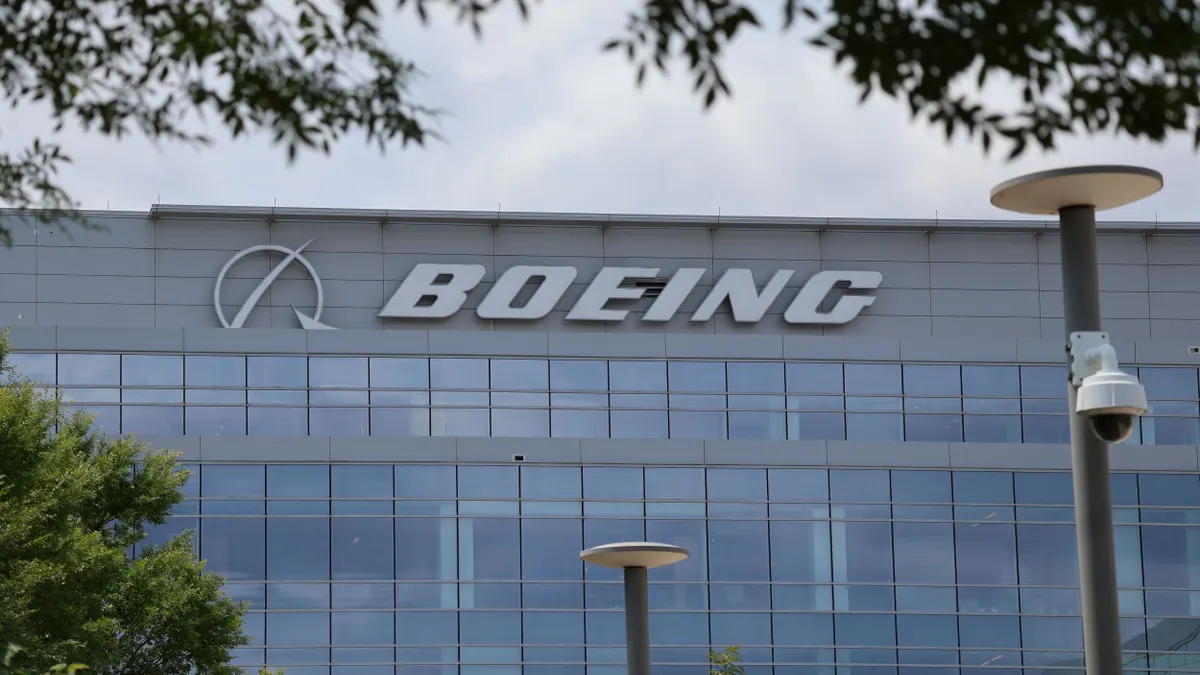
Boeing and the Society of Professional Engineering Employees in Aerospace on Monday said they will resume contract negotiations on Sept. 8, after workers voted to reject a four-year offer and authorize a potential strike across five states.
The union met with Boeing this week to address workers’ requests that were uncovered through a recent survey. Top priorities included large, guaranteed increases in wages and wage pools, or money set aside by the company for annual performance-based raises. More than 17,000 Boeing aerospace engineers and technical workers are represented by Local 2001 across Washington, Kansas, Oregon, Utah and California.
The workers are also seeking annual cost-of-living adjustments, increased 401(k) company contributions and a commitment from Boeing to grow and invest in its union-backed workforce in the next labor contracts.
In late July, Boeing offered two four-year agreements for the union’s professional unit that represents 13,000 scientists and engineers, and the technical unit made up of 4,000 technicians, analysts and planners. The union unanimously endorsed the offers, but workers ultimately rejected them by roughly two-thirds and three-quarters votes. They also set the stage for a potential strike when contracts expire Oct. 6.
“We appreciated getting a deeper dive on the survey results which gave us a better understanding of our employees’ priorities when it comes to a new contract,” Boeing said in an update posted on its website Monday.
“We also heard clearly from SPEEA’s bargaining team that represented employees believe there is more work to do to rebuild trust,” the company said. “We take that feedback seriously.”
U.S. Steel and Cleveland-Cliffs
The United Steelworkers union has agreed to extended its labor contracts with Cleveland-Cliffs and U.S. Steel by 30 days, allowing workers to remain on the job while negotiations continue for future contracts.
The original agreements expired at midnight Tuesday and cover tens of thousands of steel workers. The union said the 30-day extension allows more time to negotiate wages, benefits, job security and other issues in subsequent collective bargaining agreements.
“The USW remains committed to reaching strong agreements that recognize the contributions of union members and protect the future of good, family-supported steel jobs,” USW International President Roxanne Brown said in a statement.
The union represents about 11,000 U.S. Steel workers and 14,000 Cleveland-Cliffs workers across their domestic steelmaking facilities.
Deere & Co.
United Auto Workers members voted to reject a two-year extension offer from Deere & Co. last week, setting up what could be heated negotiations between the union and the tractor giant before the contract expires next year.
“The company failed to make an offer that addressed the issues weighing on the minds of our members, especially job security,” UAW President Shawn Fain said in a statement Aug. 23. “We’ll see Deere at the table in 2027.”
The offer, which would have extended the current collective bargaining agreement with the union through 2029, included healthcare coverage, a cost-of-living adjustment, pension benefits and additional compensation on top of their wages, according to Deere. The company made the proposal in July and sought to avoid early negotiations with the union, citing market uncertainty as equipment demand is down.
The union saw that as a way to dodge bargaining altogether. Deere said the UAW made a counteroffer that exceeded its proposal by roughly half a billion dollars.
“We see the same industry conditions Deere sees,” Laura Dickerson, UAW vice president and director of the agricultural implement department, said in a statement July 31. “We also see Deere’s corporate ledger. We see shareholders enjoying the ‘continuity’ of collecting the rewards of our members’ hard work.”
“If Deere wants to change the deal — including the contract’s expiration date — then Deere needs to respect the bargaining process,” she added.
Ultimately, workers turned down the offer. A Deere spokesperson said the company was disappointed by the outcome and looks forward to returning to negotiations ahead of the Fall 2027 deadline.
“Demand remains well below 2021 levels, competition continues to intensify, and the outlook for a significant recovery remains uncertain,” the spokesperson said in an emailed statement. “Like every successful company, we must continually evaluate how we operate, compete and prepare for the future.”
The union represents an estimated 10,000 workers at Deere across three states. In 2021, about 6,600 union members in Iowa and roughly 3,500 in Illinois and Kansas walked off the job for five weeks before reaching a contract agreement that November, the Des Moines Register reported.