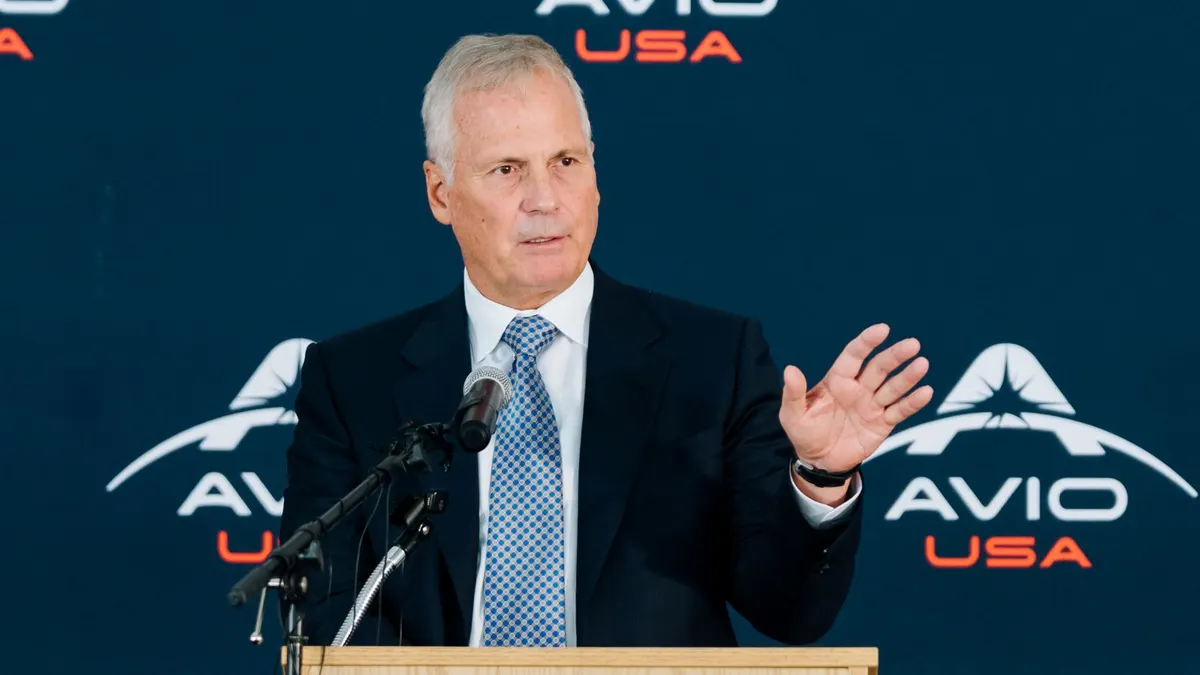
After nearly four years since Avio USA was established, the defense company broke ground on its first U.S. solid motor rocket manufacturing plant in late September.
The subsidiary of Italy-based Avio is investing over $500 million on the 900,000-square-foot facility in Hurt, Virginia, which will add “significant domestic capacity for U.S. missile and munitions production,” according to the company’s Sept. 29 press release. Avio initially announced plans to establish U.S. operations in October 2024. It selected Virginia for its first site on December 2025 with a focus on rocket motors for defense, tactical propulsion, missile systems and the commercial space sectors.
Virginia Gov. Abigail Spanberger approved for Avio to receive up to $6 million per fiscal year from July 1, 2027, to July 1, 2046, though the Solid Rocket Motor Manufacturing Grant Fund. The money is tied to the creation of at least 1,546 full-time jobs.
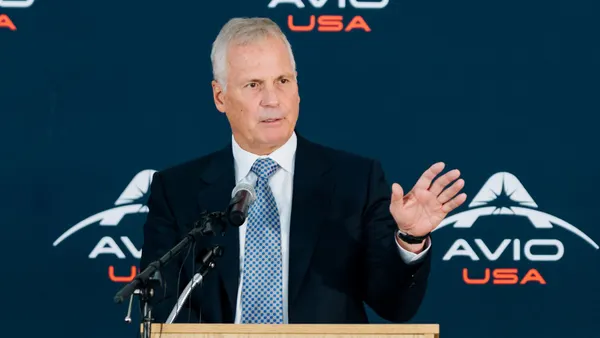
“Our goal is to be an independent, open-source merchant supplier, able to support multiple customers and programs and provide major defense primes with an additional source for this critical capability,” Avio USA CEO James Syring said in a Sept. 29 statement. “That means more capacity, more competition and greater resilience in the American rocket motor supply chain.
Avio signed contracts with two of its customers over the past year. Avio entered agreements with Lockheed Martin and RTX subsidiary Raytheon in November 2025 to back the upcoming Virginia facility as well as help stabilize the supply chain.
On Tuesday, Avio and Lockheed extended their partnership to increase capabilities at the rocket motor plant. The two defense companies signed an agreement to collaborate on boosting and expanding the solid rocket motors industrial base in an effort to strengthen the domestic supply chain, according to the Oct. 13 press release.
Manufacturing Dive recently spoke with Syring, a retired U.S. Navy vice admiral and former director of the Pentagon’s Missile Defense Agency, to discuss the upcoming manufacturing facility, the workforce and skills needed for its U.S. operations, and the defense industrial base.
The following interview has been edited for clarity and brevity.
MANUFACTURING DIVE: Tell me about this project. How did it come about? Why Virginia, and why now?
JAMES SYRING: We started Avio USA now almost four years ago, and we’re a separate legal entity under our parent company Avio SPA in Italy. [Parent company Avio S.P.A.] had the foresight and the strategy, with extensive experience in Europe and South America in terms of production, to scale into the U.S. to add capacity to our industrial base. It’s a good business strategy for them, and obviously we needed additional capacity here in the U.S. for rocket motors, so it was a perfect time for them to come in and establish the U.S. company.
I was hired as the CEO back in early 2023, and we've been through all of the defense security approvals for the special security agreement and the foreign ownership control influence. You know, issues that have been mitigated with risk mitigation plans through the [Defense Counterintelligence and Security Agency], so all of that is behind us.
What we have been doing is two things: one, working with the prime contractors who are the missile providers, specifically Lockheed and Raytheon, and formulating long-term agreements with them. And in parallel, we've been completing the design for the factories, so it's a very long process. We’ll be wrapping up the detailed design phase here in the middle of October, and then we'll be transitioning to full construction by the end of the year.
It’s been a two-prong approach: working with the customers to establish agreements and contracts in terms of qualification and production, and at the same time, we'll get the factory design and construction going.
Does preparing for that site and the facility include preparing for the Cybersecurity Maturity Model Certification, even though it’s currently on pause?
Yes, because whether it's on pause or not, it is something that we view as important to comply with in terms of the intent. And as we are inspected by [Defense Counterintelligence and Security Agency], on an annual basis, all of those programs will be evaluated in depth. But just because it's paused does not mean that we're not complying with the intent.
What kind of skills is Avio looking for and how is it going about finding workers for this new project?
It's a great question, and it has limited others in their ability to scale because of the workforce, not just in my industry, but in shipbuilding as well. So we picked Virginia, and you referenced the incentive plan that was approved by the General Assembly in Virginia for us in terms of jobs and incentives for jobs.
We picked the area of Danville because of the access to the trade workforce. In that particular area, they're a net exporter of trade talent. They graduate either through the high schools [or] the community college well over 1000 certified tradespeople every year. You don't graduate with a trade certificate for solid rocket motor manufacturing. You graduate with a welder certificate or electrician or mechanic certificate, and that area is so intently focused on the trade and that skilled workforce.
We did our research in many other states, but none of them compared to the access to the talent that I have down in Southern Virginia. We don't look for a person with a solid rocket motor certificate. If you've got some technical inclination, and you're able to be certified as a welder or electrician or a mechanic, that's the skill set we want, and we'll train them on how to manufacture a rocket motor.
We have the advantage of the Italian company as a full manufacturing facility just south of Rome, and in the French Guiana, where they actually mix, cast and cure 170-ton boosters, 160-ton boosters. So you're talking about a mixer that's 1,700 gallons.
We're able to then, as we hire people in Virginia, send them to Italy. These mechanics that we're going to hire that have specific skill sets, it'll be much easier for us to train them on the techniques of solid rocket motor manufacturing if they've been able to prove themselves in these different areas. We're going to basically train solid rocket motor manufacturing experts in Italy for a period of three or four months probably, and then have them come back and be under supervisors that have done this for decades, so it'll be a mix.
I have no doubt at all that we're going to be able to attract and retain talent because we're working on something very important for national security. Everybody loves rockets in space, and the ability for people that maybe haven't traveled as much to go to Italy for a few months to train is going to be very appealing to folks. We think it's a great way to attract the initial talent.
Will Avio also implement any kind of advanced technologies, such artificial intelligence, automation and robotics, in its operations?
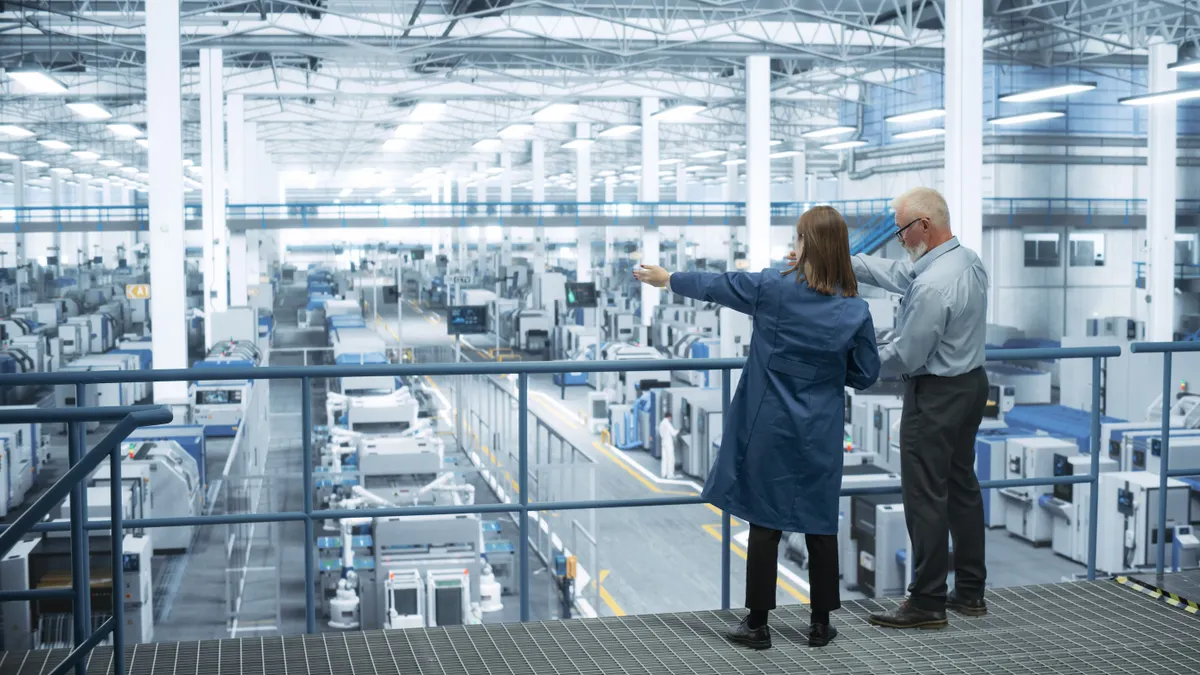
The answer is yes, and it's another key differentiator for us because we have the opportunity as a greenfield startup facility to do that from the very beginning, where others have been around for decades. That technology has evolved so much over the last few years that we must take advantage of big data analytics and AI to help us with the factory control processes, the ability to understand where the bottlenecks are in the factory, to be able to understand very quickly when there's an issue with a motor, the root cause corrective action to be able to understand where that defect came within the process. Whereas [having] to go pull all the data records and manufacturing records, which are very manual and manually intensive.
We'll be able to do that in hours, not weeks, and it'll be very important to us, as there'll be mistakes made in manufacturing, no doubt. To iterate and quickly improve the manufacturing process where we don't have to stop, but we'll know exactly what happened and what caused it, and be able to implement that corrective action in step, as opposed to potentially shutting down that production line until we figure it out. So this real-time monitoring and integration of data and data flow and resource management is going to be taking advantage of big data and analytics, and maybe even more importantly, agents in the AI world to build it initially and then manage it as we go into production. Big, big part of what we're doing.
What is something regarding Avio, the new facility or the workforce, that you want Manufacturing Dive readers to know?
I think the nation, and frankly our allies, need more solid rocket motor manufacturing capacity and capability. We've needed it since I was the director of [the Missile Defense Agency], back in the mid-2010s and what we're bringing to the table is another competitive solution for the [Department of Defense]. When I see that we're not just focused on the [research and development], sexy hypersonic one-off types of work.
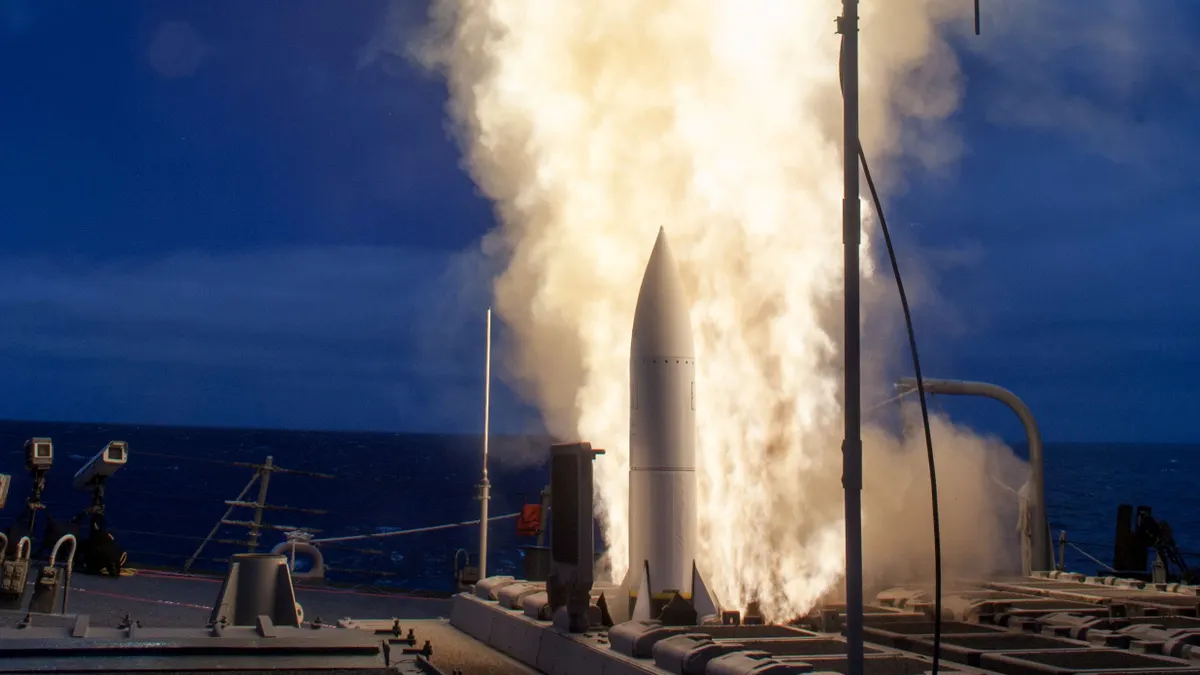
We are after providing solid rocket motors for the major production programs, Standard-Missile, Tomahawk,... that you all know about, and it's a needed tool and a tool set for the department at this point, and it's been needed for decades, in my opinion. As the mergers and consolidations and acquisitions have happened, there are basically two providers right now: Northrop Grumman and [L3Harris Technologies], and we want to provide a third alternative at scale, and we're doing it.
The whole reason I'm doing this is because of national security and being able to finally help with a problem that in my Navy career was constant, and I just feel so strongly that the nation needs that, and that's what we're going to do.