
When Hurricane Ian crossed Southwest Florida in 2022, more than two million customers lost power for days. Facilities that had budgeted for this scenario opened their fuel tanks and found diesel degraded past reliable use. Getting more took days because the regional fuel supply chain had broken down at the same time.
Diesel starts breaking down within six to 12 months in storage.
That's just one of many reasons why commercial generators fail. The Uptime Institute's 2023 outage analysis traced roughly 40% of diesel generator failures to problems with the uninterruptible power supply (UPS) system, including batteries that sit idle, lose capacity and corrode at the terminals.
For manufacturing facilities that can’t afford downtime, concerns about reliability often lead them to look for alternatives. But there are other factors driving them to look beyond backup power and explore other options, including microgrids.
Standby generators were designed for short-term events
A standby generator is rated to run during utility outages, typically for a few days at most or up to about 100 hours per year. When facilities stretch usage beyond that, they’re more likely to experience generator failures. Even generators paired with a UPS typically only supply power to critical loads that may not include production equipment.
Outages are becoming more frequent
Weather-related outages have doubled over the past two decades, with severe storms contributing to more than 80% of all US power outages, according to Climate Central.
This is a growing concern in coastal states prone to hurricanes and areas where winter storms hit hard. From 2000 to 2023, the states with the most weather-related outages were Texas, Michigan, California, North Carolina and Ohio.
Peak demand is reshaping energy budgets
With new data centers opening and companies responding with new semiconductor and battery manufacturing operations, demand for power is at an all-time high.
The Energy Information Administration projects electricity consumption will continue growing through 2050. Peak demand is forecast to increase 69% over the next decade. The load growth combined with retiring utility assets means the risk of outages could increase one hundred fold, the Department of Energy predicted in its latest report.
Large commercial and industrial customers are billed for the energy they consume and for their peak usage, a few spikes throughout the year that may only be a few minutes each.
Demand charges can be 30% to 70% of monthly electricity costs for heavy users, according to NREL and the Clean Energy Group. California tariffs often exceed $20/kW. Some Northeast and Mid-Atlantic zones top $50/kW.
In these high-cost territories, reducing consumption during these peak periods can save companies hundreds of thousands annually.
Utilities will pay for flexibility
At the same time, demand response programs pay incentives for facilities that reduce their consumption during times of peak demand. This revenue can significantly outpace the savings.
One large Florida venue is projected to earn additional revenue from utility incentive programs while reducing costs by over $400,000.
Capturing that money requires responding on command without impacting production. This is nearly impossible for companies to do manually.
Diesel and emissions targets
Under the EPA's RICE NESHAP rules, emergency stationary engines are limited to 100 hours per year of non-emergency operation, including maintenance and testing. Engines that exceed that can be classified as non-emergency, which means they fall under stricter emissions limits.
For manufacturers trying to meet target emissions criteria, whether for regulatory purposes or ESG goals, every hour of running diesel generators works against that.
Natural gas generation cuts emissions by as much as 90% compared with diesel.
Why more manufacturers are investing in microgrids
With growing concerns about diesel generators, many companies are exploring other options.
Operational microgrid capacity in the US is growing at a rate of 32% each year. Wood Mackenzie’s US Microgrid Outlook shows 5,338 microgrid projects online or in the works.
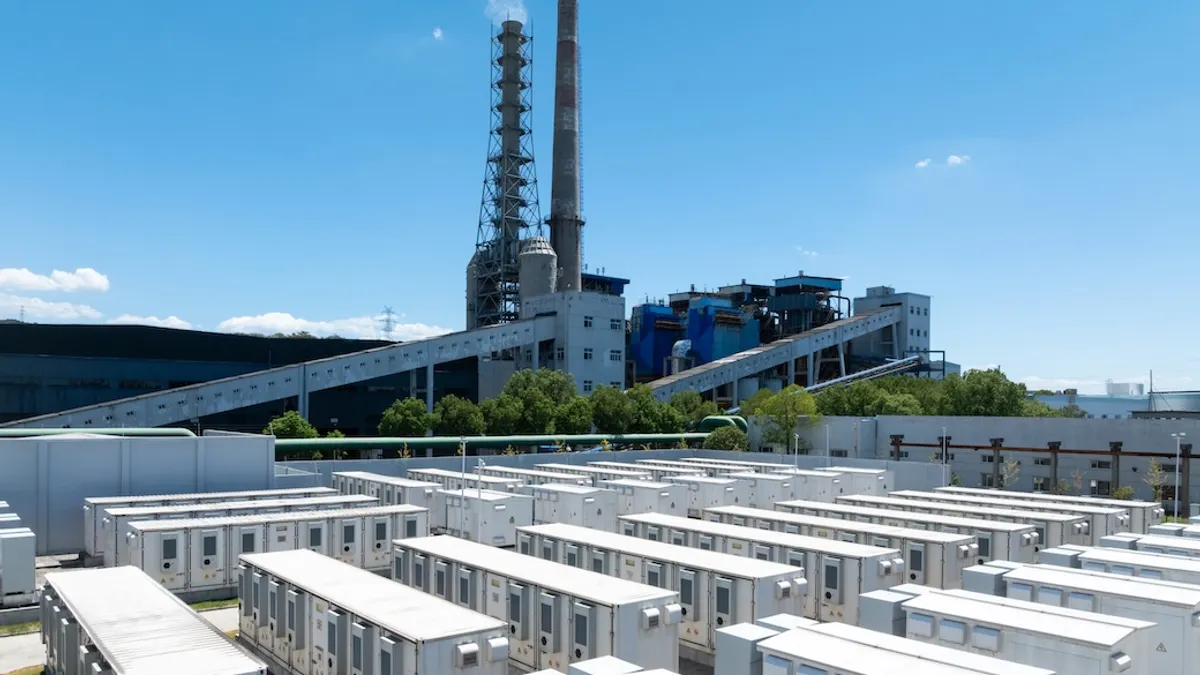
A microgrid combines on-site power generation, energy storage, power conditioning and intelligent control systems. It runs in sync with the grid or independently from it.
The on-site power generation covers extended outages, while energy storage bridges the gap between a grid event and generator response. Power conditioning smooths voltage sags and spikes that damage sensitive machinery, while intelligent controls monitor grid conditions, market pricing and weather and dispatch assets accordingly.
Fully combined systems like Virtual Utility®; package all four capabilities into one platform behind the meter, which sidesteps the multi-vendor coordination most microgrid projects require.
The right configuration depends on a facility's load profile, budget and what incentives may be available. But the questions every manufacturer should be asking are the same:
How long can we run without the grid? What are our peaks costing us? And what would our utility pay us for flexibility we aren't selling?