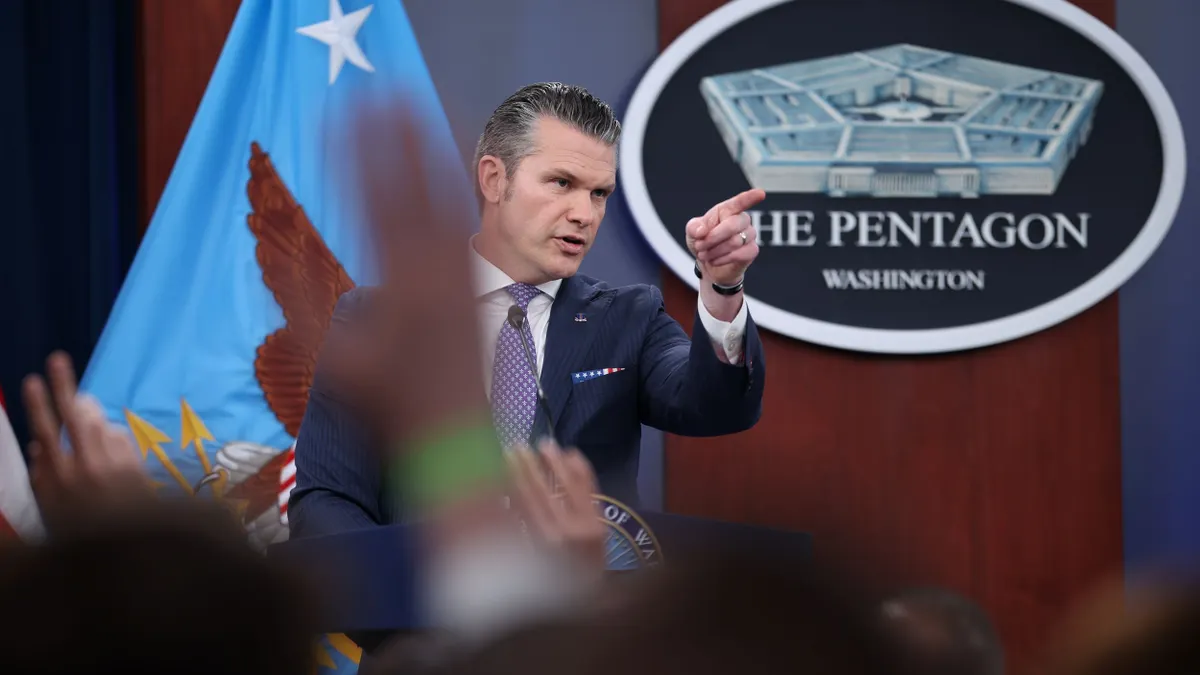
The White House released the proposed federal budget for fiscal year 2027 on April 3, which includes a record $1.5 trillion for the Department of Defense that aligns with President Donald Trump’s executive order to overhaul the agency’s acquisition process and accelerate innovation under the DOD’s industrial base.
Trump has been pushing for increased DOD funding to build the “Dream Military,” according to his Jan. 7 Truth Social post. The president added that he would have requested $1 trillion if it weren’t for tariffs imposed by other countries.
The budget would reform and reorganize funding, shifting it away from supporting aging legacy platforms toward research and development for new capabilities and the acquisition of new equipment.
The Pentagon’s proposed budget reflects Trump’s executive order to eliminate funding for programs and resources related to diversity, equity and inclusion, which the White House considers “unnecessary” and “wasteful spending.” The funds would instead shift to keeping DOD focused on the “mission” and reviving “the warrior ethos.”
The budget also aligns with another Trump executive order to cut funding for climate change and climate-specific programs, such as electric vehicles, research and renewable energy. The money cut from those programs would shift to DOD’s needs to supply and maintain the National Defense Stockpile.
Eric Fanning, president and CEO of the Aerospace Industries Association, said in an April 3 statement that he welcomed Trump’s FY 2027 budget request for its “strong investments” in defense and highlighted “the need to strengthen” the U.S.’s innovation enterprise.
“The defense budget reflects what AIA has consistently called for: resources aligned with real-world threats and the need to deter them,” Fanning continued. “Strong investments into the defense industrial base — with a focus on next-generation capabilities, shipbuilding, critical munitions, and domestic production of critical minerals — will help drive innovation and increase capacity up and down the supply chain.”
Other defense experts said DOD’s budget would do the opposite of saving taxpayers money, particularly as the U.S. and Israel are at war with Iran, which the U.S. Congress has not approved.
Greg Williams, director of the Center for Defense Information at the public policy nonprofit, Project On Government Oversight, said in a statement that the DOD budget would lead to “greater waste of tax dollars and high profits for defense company executives.”
“Investing in our national security is important — which is why there should be greater oversight to ensure our defense budget is actually protecting us and our tax dollars,” Williams said. “Until the administration offers a clear, compelling explanation of why this funding is necessary and provides a real exit strategy to the illegal war in the Middle East, Congress should not allow the president to put one more taxpayer dollar toward an already out-of-control defense budget.”
The budget will have to go through Congress and changes are likely to come before they come to a final vote. In the meantime, here is what the proposed $1.5 trillion would fund, particularly regarding U.S. defense manufacturing and supply chain operations.
The Golden Dome
The budget aims to “fully fund” the “Golden Dome” missile defense shield initiative, according to a White House fact sheet.
The proposal would build on the Golden Dome down payment made under the One Big Beautiful Bill Act, which allocated $25 billion toward the layered missile shield project. The Golden Dome is expected to cost $175 billion and take three years to build, according to media reports.
Maritime industrial base and shipbuilding
Funds for the maritime industrial base aim to examine and identify shipbuilding requirements across DOD as well as the Departments of Homeland Security, Transportation, Commerce, the Interior and the National Science Foundation to efficiently allocate resources.
Funding for the maritime industrial base was not disclosed. However, the proposed budget would allocate $65.8 billion toward shipbuilding to acquire 18 battle force ships and 16 non-battle force ships. The appropriations would also improve the agency's procurement and delivery of full-range vessels.
Additionally, DOD's budget proposal would establish Trump's "Golden Fleet,” as well as maintain or increase procurement of existing battle force platforms such as amphibious vessels and nuclear and ballistic missile submarines.
The proposed funding would add to the $29 billion allocated under the OBBBA for shipbuilding and the maritime industrial base, which aimed to accelerate shipbuilding, expand the U.S. naval fleet’s size and boost its capabilities. The OBBBA funding also goes toward investing in autonomous surface and subsurface technology, improving capacity and infrastructure in the maritime industrial base.
Munitions
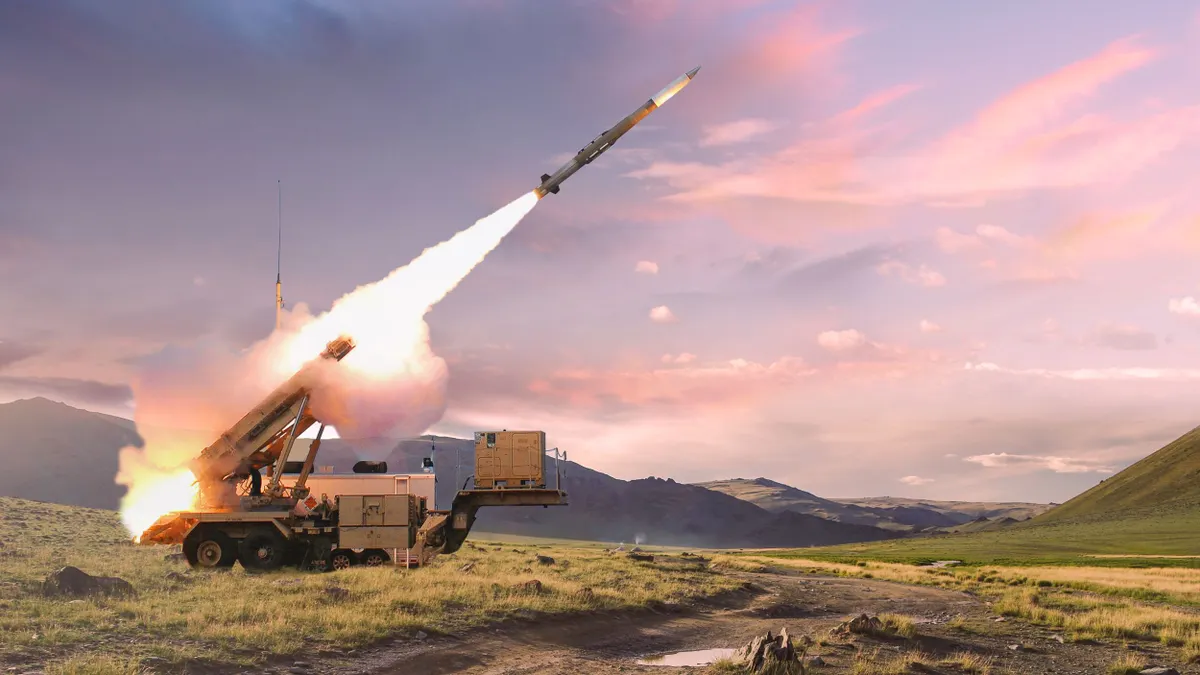
Munitions is one of the DOD's "highest funding priorities" in the budget proposal. The administration plans to acquire 12 “critical” munitions, though the budget does not identify which ones. Funding would go toward expanding the defense industrial base's capacity to lay the groundwork for future scalable munitions production.
Recently, DOD awarded defense manufacturers, including Boeing, Lockheed Martin, BAE Systems and Honeywell Aerospace, contracts to quadruple their weapons production, as part of their pledge to Trump.
Critical minerals
Funding for critical minerals aligns with Trump's executive order mandating increased domestic mineral production. The budget would expand DOD's investments in critical minerals as well as domestic critical mineral supply chains. The appropriations would also enable DOD's industrial base analysis and sustainment program to invest in the critical minerals industry, create jobs, reduce the U.S.'s reliance on foreign entities and secure low-cost, "predictable" minerals supply for new defense technologies.
F-47
In March 2025, DOD awarded Boeing and Lockheed Martin a $20 billion contract to develop and build the F-47 fighter jet.
The funding amount for the F-47 was not disclosed, but the proposal stated that the request "continues to prioritize" rapid development and production and is expected to begin flying in 2028.
Nuclear enterprise
The increased funding would upgrade DOD's nuclear enterprise and manufacture various nuclear forces, including nuclear weapons, delivery platforms, communication capabilities and nuclear command and control.
Drones
The DOD funding would supply drones for the U.S. military's combat units and provide protection against unmanned systems from competitors, rogue states and non-state actors, according to the proposal. The money would also allow new contracting ideas that would provide adaptability in "maturing" technology and generate more opportunities for new participants.