Niron Magnetics has entered a supply agreement with Japan-based Aspina to develop and manufacture rare-earth-free motor products used across automotive, space and other industries, according to a Monday press release.
Minnesota-based Niron agreed to supply its exclusively-owned iron-nitride permanent magnet products to help Japan-based precision motor and actuator manufacturer Aspina meet growing demand, by combining with the Japan-based company’s precision motor design and engineering. The collaboration aims to develop motor designs while reducing reliance on rare earth materials, as well as tackle supply chain concentration risks.
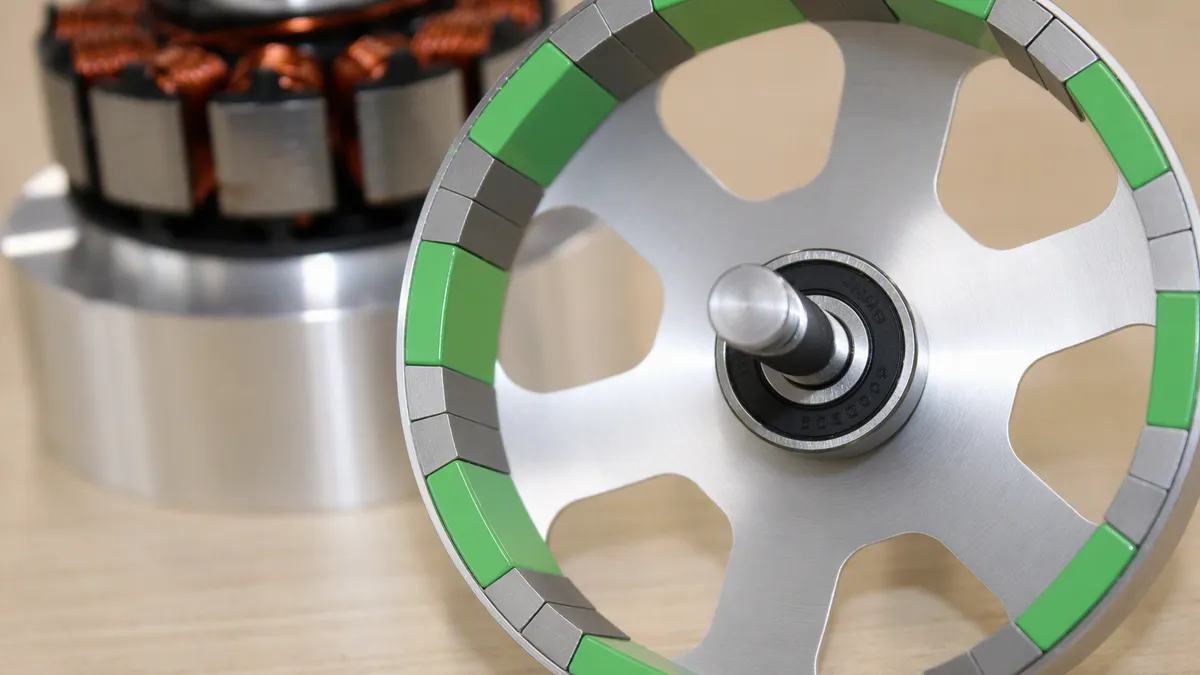
The deal will focus on various high-volume brushless direct current, or electric motors motors and hybrid stepper motors. Both types of motors are used for converting electrical energy into mechanical motion. Hybrid stepper motors also use electrical energy and are utilized as a component in industries such as medical devices, machinery and robotics.
Additionally, the agreement will focus on Aspina’s centrifugal fan blower products that are usedat industrial sites for air intake, suction or ventilation, such as for dust extraction.
“Aspina has deep experience delivering motor solutions across diverse global markets,” Yukihiro Kaneko, Aspina Group CEO, said in a statement. “By working with Niron’s rare-earth-free magnet technology, we see opportunities to expand our design flexibility and support customers seeking resilient, high-performance solutions.”
The collaboration is “already underway,” according to the press release. The companies are looking to create a path to implement high-volume production of rare-earth-free motor products.
The partnership comes about a month after Congress introduced legislation that would create tax credits to support domestic magnet production and supply chains, which Niron backs. The bill, dubbed The Magnets Value Chain Support Act of 2026, aims to help reshore the end-to-end process, including the motors and defense systems that rely on magnets, according to a June 9 House Select Committee on China press release.
The bill would block credits for any materials produced, processed, purchased from or sold to a prohibited foreign entity. Furthermore, the legislation would limit credits to U.S. manufacturing activity with inputs from NATO allies, such as Japan.
“Congress is sending a clear signal to innovators, manufacturers, and investors that the U.S. is committed to building resilient supply chains and backing breakthrough technologies that reduce foreign material dependencies,” Niron CEO Jonathan Rowntree said in a statement. “We are proud that Iron Nitride magnets are recognized within this framework, and we believe this policy will accelerate investment, manufacturing growth, and industrial competitiveness.”