Dive Brief:
- The U.S. Department of Justice has asked a federal judge to dismiss the Oklahoma attorney general’s lawsuit that seeks to block development of a primary aluminum smelter in Inola for environmental reasons. Emirates Global Aluminum and Century Aluminum are leading the project.
- In its filing last week, the agency supported construction and operation of the proposed smelter, arguing that the facility advances national and economic security as the United States looks to build out defense manufacturing and reduce its reliance on aluminum imports from China.
- A judge had not decided whether to throw out the case or grant Attorney General Gentner Drummond’s petition as of Thursday morning. Meanwhile, a separate lawsuit brought by a group of Inola residents also seeks to block the project, arguing that federal funding was advanced and awarded without a proper environmental review.
Dive Insight:
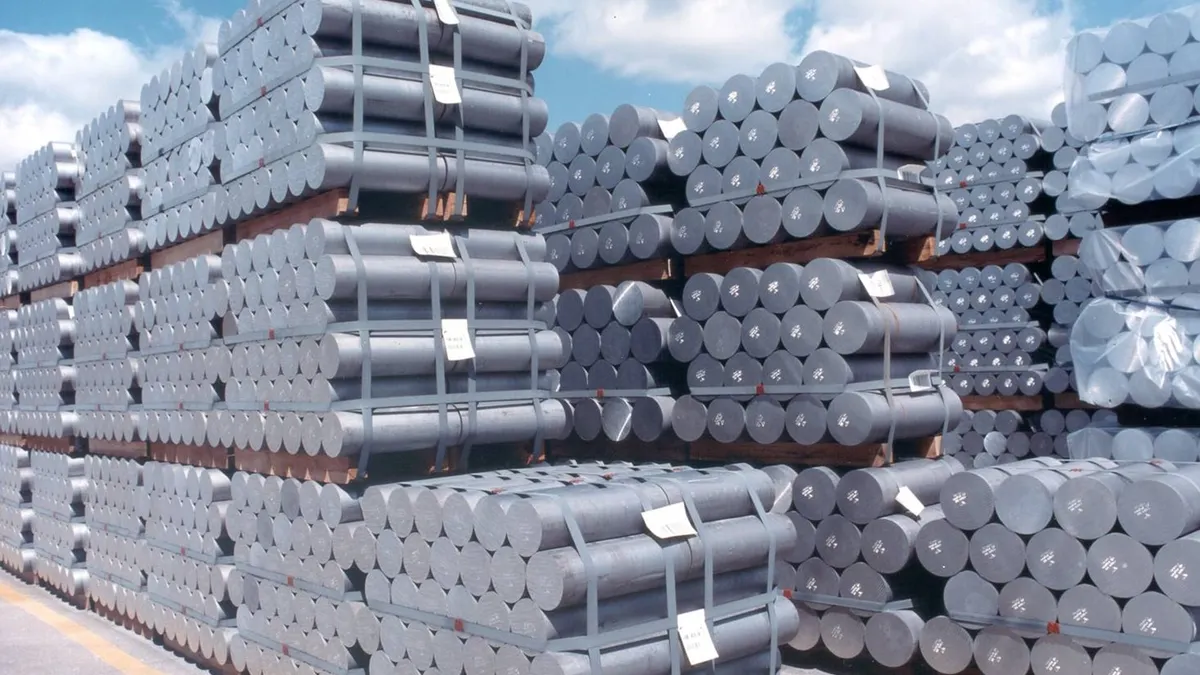
The $4 billion project, if completed, would be the first U.S. primary aluminum smelter built in the past 40 years and the largest one in the nation. The facility is expected to have a capacity of 750,000 metric tons per year, doubling the nation’s output of primary aluminum.
The Justice Department, which normally focuses more on federal enforcement than state litigation, gave a vote of confidence to the project in court documents, saying that the U.S. government has worked with Oklahoma “to ensure compliance with federal laws.”
The agency said the Clean Air Act and Clean Water Act “provide the appropriate mechanism to address environmental concerns” raised by Drummond. It asked the court to dismiss or stay the case, arguing that project organizers are actively pursuing permits that could influence the outcome of Drummond’s claims, and that a petition would be premature.
Blocking construction would “threaten America’s security by denying access to this critical material necessary for military readiness,” attorneys general representing the Justice Department said in a filing.
Drummond’s petition, initially filed in June in a lower court before moving to the Northern District of Oklahoma, raised concerns about emissions, water contamination and resource consumption related to the smelter. The petition also alleged that industrial pollutants could adversely affect nearby cattle and their ability to eat.
Inola residents have pushed back on the project for similar reasons. In a separate lawsuit filed Friday, a group challenged the U.S. Department of Energy, saying the agency approved the smelter for up to $500 million in federal funding without location, capacity or partner details.
The Department of Defense partnered with the Department of Energy on the award due to the facility’s ability to produce aluminum for military needs and at lower levels of emissions compared to traditional smelters
The residents argued that this violated the National Environmental Policy Act, which calls for a review of a selected site for any potential environmental risks before money is awarded. They allege that the current project is “materially different” from the proposal the Energy Department initially saw.
Despite environmental and legal challenges, Century Aluminum CEO said on an earnings call last month that he expects to break ground on the project by the end of this year with production slated to begin by 2029.