CHICAGO — Although humanoid robots are the best they’ve ever been, there is still a long way to go before they can fully be implemented on production floors due to scalability limitations, cost and other factors, a group of executives said on a panel at Automate 2026.
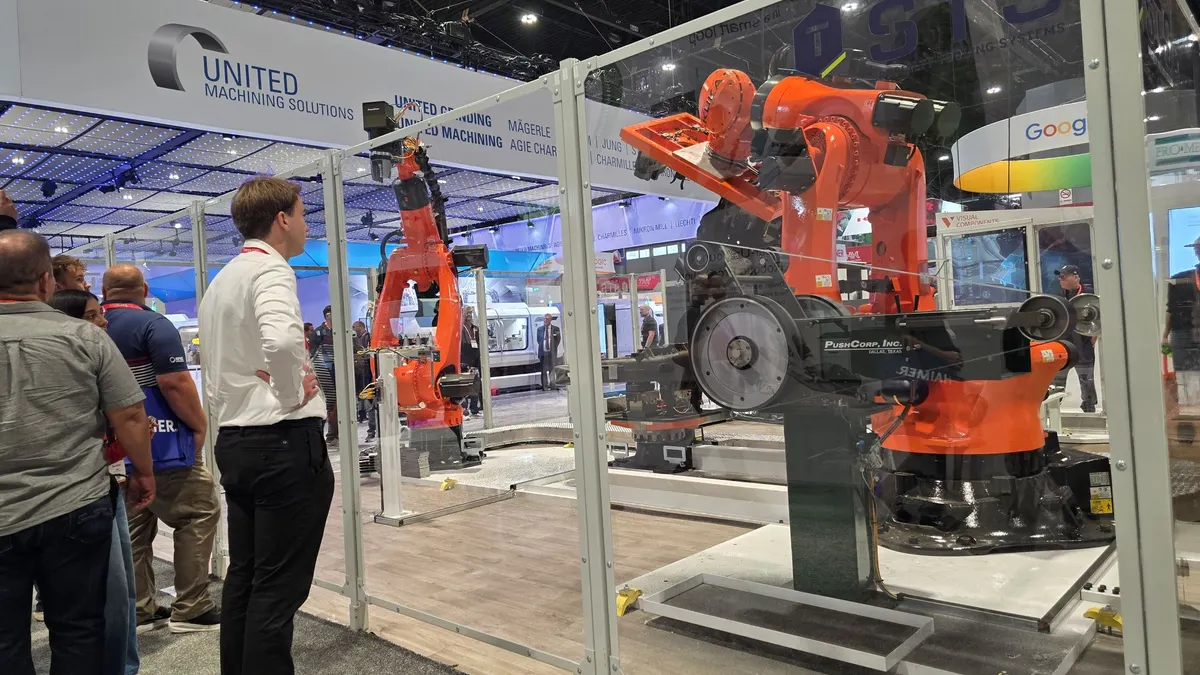
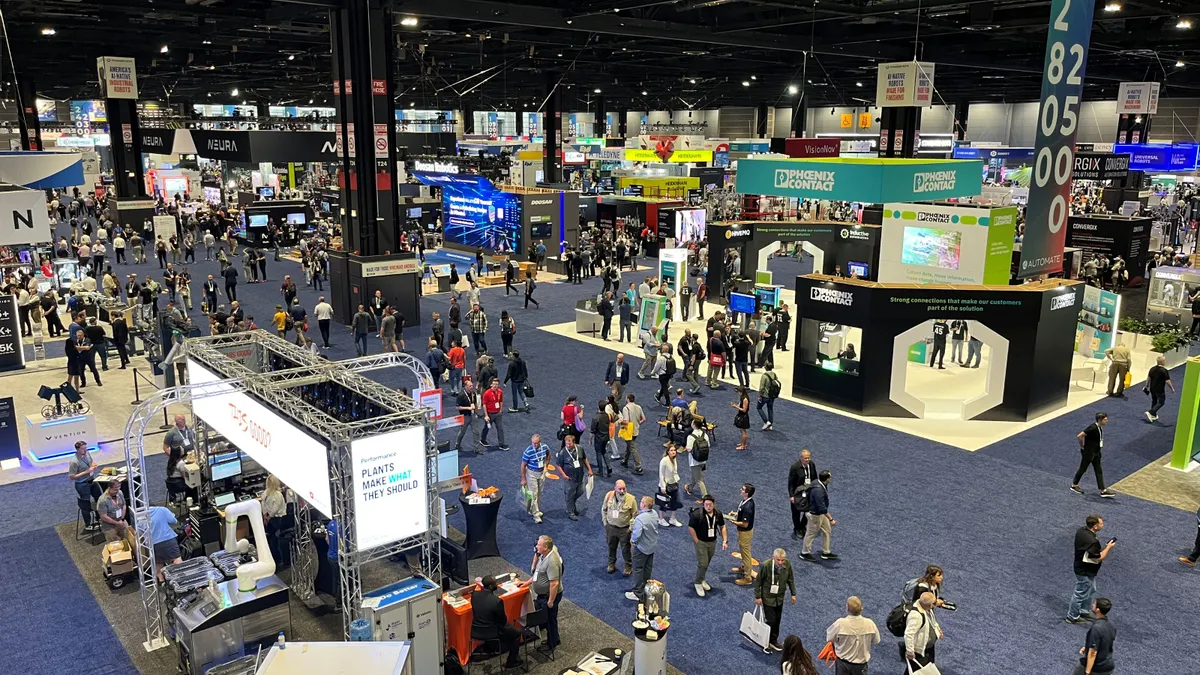
On the trade floor June 22-25, dozens of industrial arms and mobile robots demonstrated their unique abilities, such as welding, painting or moving boxes from one location to another. But some of the most popular booths showcased humanoids that could interact with attendees, dance and even make a latte.
“There’s definitely a lot of buzz,” Jim Brown, chief commercial officer for Teradyne Robotics, said at an executive panel about the future of automation. People are enamored by the humanoid “form factor,” but at this point, “maybe they’re not thinking about what problems we are actually trying to solve,” he said.
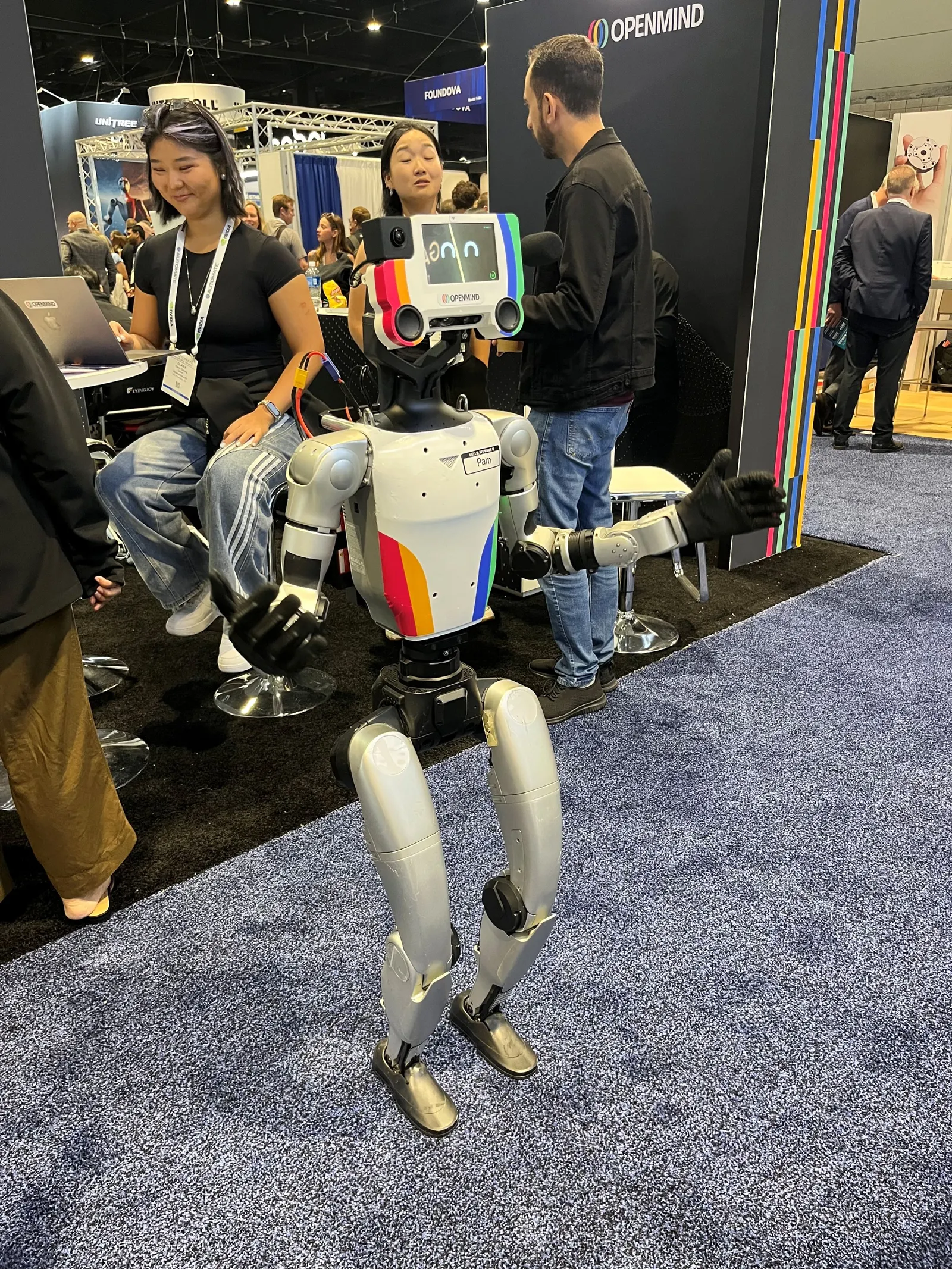
Several companies have bought a humanoid or begun trials. Earlier this year, Hyundai announced plans to deploy Boston Dynamics’ Atlas humanoid at its Savannah, Georgia, electric vehicle plant by 2028. Agility Robotics, which is preparing to go public, has piloted its Digit humanoid at Amazon warehouses and plans to expand deployment at Toyota’s manufacturing sites in Canada.
Despite surging interest, Brown said questions remain around scalability and applications for humanoids as more accessible, competing robotics are implemented. One challenge: It’s not free for robots to stand around.
“That requires a lot of power,” he said. “These are not devices that are extremely efficient at this point in time. I think there are a lot of other technologies out there that can do exactly what a humanoid can do.”
For example, autonomous mobile robots and automated guided vehicles move around on wheels, while industrial arms are often fixed to production stations for heavy, dangerous or repetitive tasks. There are also collaborative robots that work alongside humans and are used for tasks like palletizing, quality inspection or machine tending.
Humanoids, by comparison, are still in the very early stages of development and deployment. Global installations reached 2,000 units in 2024 but are accelerating, with projections to hit 60,000 units this year, according to research from Barclays Investment Bank. This is due in part to plunging production costs over the past decade. At the same time, technology advancements, surging investment capital and U.S. reshoring are driving increased automation demand.
“I change my mind on humanoids depending on the day,” Robert Little, who leads a robotics advisory firm for manufacturing companies, said on the panel. He co-founded ATI Industrial Automation and led the company after it was acquired by Novanta in 2021.
“I really think that they’re just unbelievable devices,” Little said. “And I’ve seen them develop in the last three years. I don’t think people could have guessed that they would be this good three years ago. So how are we supposed to guess in three years what they’re going to do? The advancements are happening faster than I’m able to keep up with. There’s so much money also in the development that has never been there before.”
During the first half of 2026, robotics startups raised more than $18.8 billion in funding, compared to a record $15 billion all last year, according to data from Crunchbase. Saronic, an Austin, Texas-based defense tech startup focused on autonomous sea vessels, closed a series D round of more than $1.75 billion in March. More recently, Germany-based Neura Robotics, a developer of AI infrastructure for robots backed by Nvidia and Amazon, closed a series C round in June.
“This whole argument about wheels versus legs versus the human form, it doesn’t matter,” Little said. “It’s going to take the form that customers want. I really truly believe that we’re going to see industries get some forms of humanoid assistance.”
“It’s going to be at the manufacturing level over the next ten years, and eventually it’ll leak out into retail, and then eventually to the home, but we’re far away from it,” he added.
A resurgence in U.S. manufacturing is also driving increased demand and investment in different forms of robots and autonomous machines. For decades, domestic manufacturing was in decline, but reshoring initiatives and shifting trade dynamics have spurred billions of dollars in plant expansions and factory construction projects across semiconductors, automotive, pharmaceuticals and defense.
“Because we have so many U.S. manufacturers looking at facilities, the need for robots has just accelerated,” Little said.
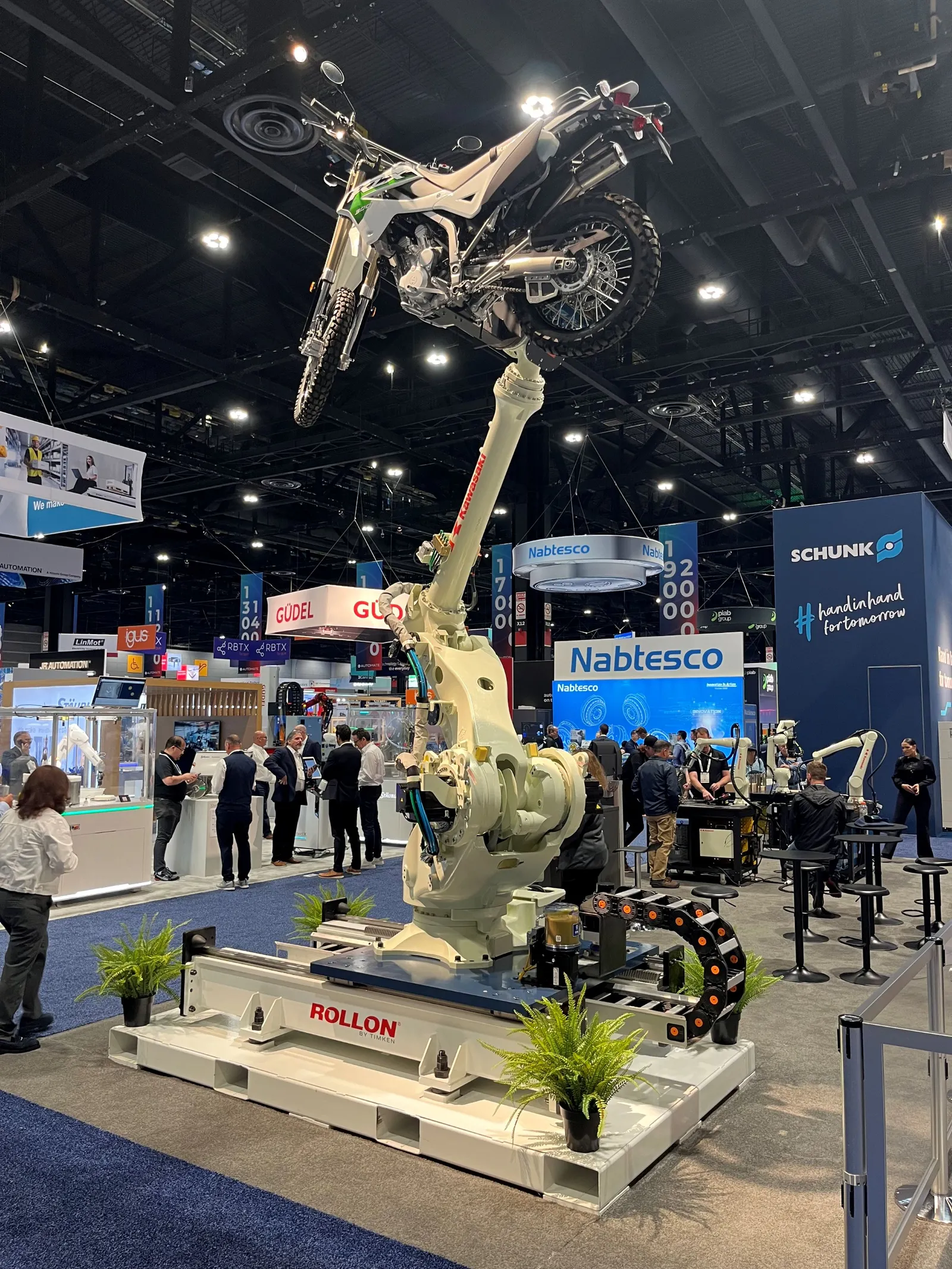
Looking ahead, executives on the panel highlighted various pros and cons regarding the future of industrial robotics.
As AI and advanced technologies develop, Brown said that is expected to “democratize robotics” for all sizes of manufacturers. There is also a younger workforce coming that will be more comfortable with the idea and use of robotics, he said.
Participants also raised concerns. Little said workforce and skills gaps are still a problem, and there needs to be initiatives and training programs in place that encourage people to want to work in manufacturing.
From a robotics perspective, Jan Louwen, the global head of AGV at Stäubli Robotics, said that there needs to be more clarity around what companies can truly deliver to customers today versus what they cannot in terms of physical AI and emerging technologies.
“This can also bounce us back in the development if we are overpromising,” Louwen said.
While companies are starting to pilot physical AI in test areas of the warehouse or factory, “I don’t think anyone has deployed it,” said Mikell Taylor, the director of robotics strategy at General Motors’ Autonomous Robotics Center. In the same way that large language models can hallucinate, she said AI-driven robots can make “silly choices about how to pick up a package.”
“Something that is 80% successful in the lab is amazing, and those teams should be super proud,” Taylor said. “But 80% success is failure in production, so I think that gap has a long way to go in the industry.”