

Dive Brief:
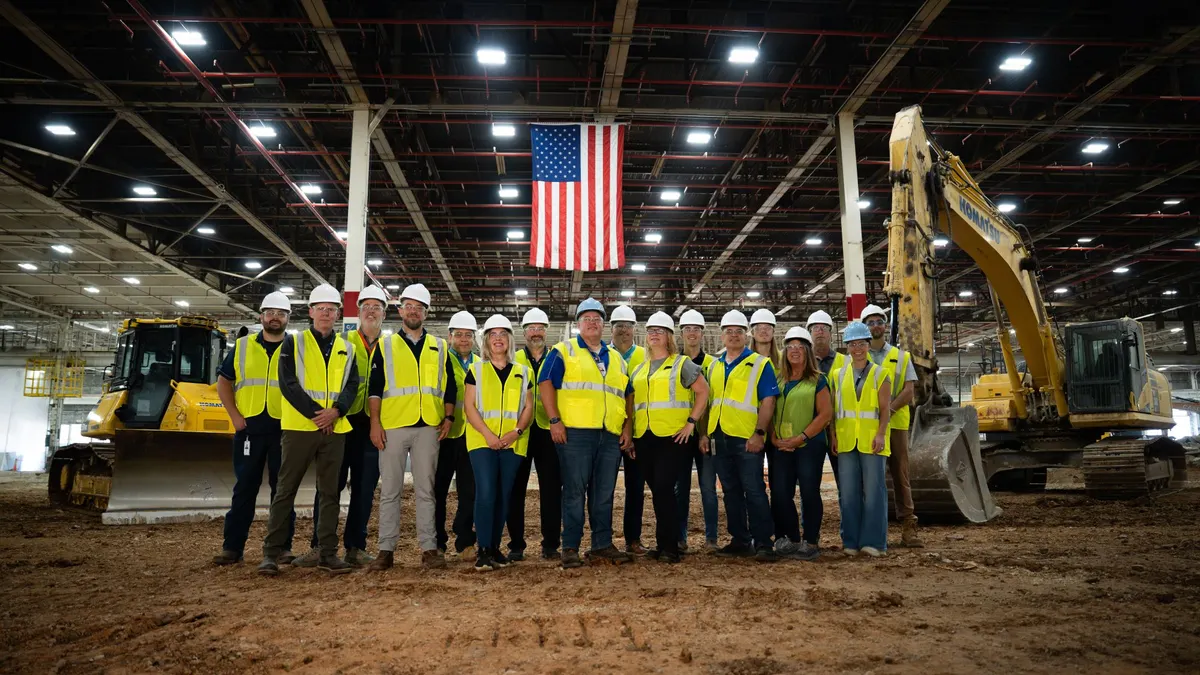
- GE Appliances said it will invest $1 billion at its largest manufacturing campus in Louisville, Kentucky, to expand high-output production of laundry products. The move is part of a $3 billion commitment to U.S. manufacturing announced last year.
- The new investment includes $400 million to repurpose Building 5 from producing refrigerators to high-output dryers, bringing production from Mexico to Kentucky. GE Appliances also plans to spend $112 million on new equipment and designs for existing washer and dryer platforms in Building 1.
- Once completed, the upgraded facilities will “help secure” 4,700 production jobs at the site, the company said.
Dive Insight:
GE Appliances, owned by Haier, said it has committed $6.5 billion to U.S. manufacturing since 2016. It has already spent more than $3.5 billion of that as it works to reshore production.
The company completed a $180 million expansion of its subsidiary Roper Corp.’s cooking products manufacturing facility in LaFayette, Georgia, in June 2025. The expansion created more than 600 jobs and installed automated technology such as robotic cells to its production lines, assembling glass cooktops, program control boards and rotate units.
The latest plans for Appliance Park will focus on long-term growth “by concentrating investment in high-output dryer production that can be produced competitively in the United States,” according to the company. It will continue its previously announced $490 million investment in Building 2 to produce frontload washers and combo washer/dryers by 2027.
“The success of laundry production in Building 1 in Louisville gave us the confidence to continue to transform Appliance Park and build out a comprehensive cleaning ecosystem where the entire cross-functional team can work closely together,” Senior Director of Corporate Communications Julie Wood said in an email.
She added that locating the company’s other laundry operations at Appliance Park “will give us the scale and expertise in one location, and we believe that will be a competitive advantage.” It also will help transition to new U.S. Department of Energy efficiency standards for residential washers and dryers set to take effect March 1, 2028.
Building 5 will transition from refrigerator to dryer production by 2027, although refrigerators will still be made at the company’s facilities in Alabama and Tennessee. Employees will remain on the payroll in Louisville during the transition, which is expected to take nine to 12 months.
Wood said the Appliance Park investment is based on the company’s long-term strategy to strengthen its laundry business and manufacturing in the U.S., rather than a specific administration’s trade policies.
“We remain interested and supportive of trade agreements with Mexico and Canada because an integrated supply chain is important to making North America competitive globally,” she said. “As we continue to invest billions to strengthen American manufacturing, expand domestic capacity, and create good American jobs, it is important that the trade policy environment does not inadvertently diminish the economic benefits of these investments.”
She also said GE Appliances has adjusted its supply chain strategy to cope with recent geopolitical events, such as the closing of the Strait of Hormuz. These include becoming more vertically integrated and buying more parts from U.S. suppliers.
Since 2018, the appliance maker’s annual U.S. supply chain spending has grown from $2 billion to more than $4.6 billion and its U.S. supplier network from 1,700 to more than 6,500, Wood said.