Unlike a lot of her record-making colleagues, Ali Miller doesn’t have a background in performing music or touring.
She got into the vinyl record industry by accident while working at CD and DVD maker Oasis Disc Manufacturing after graduating from college. What started out as a summer job turned into several years.
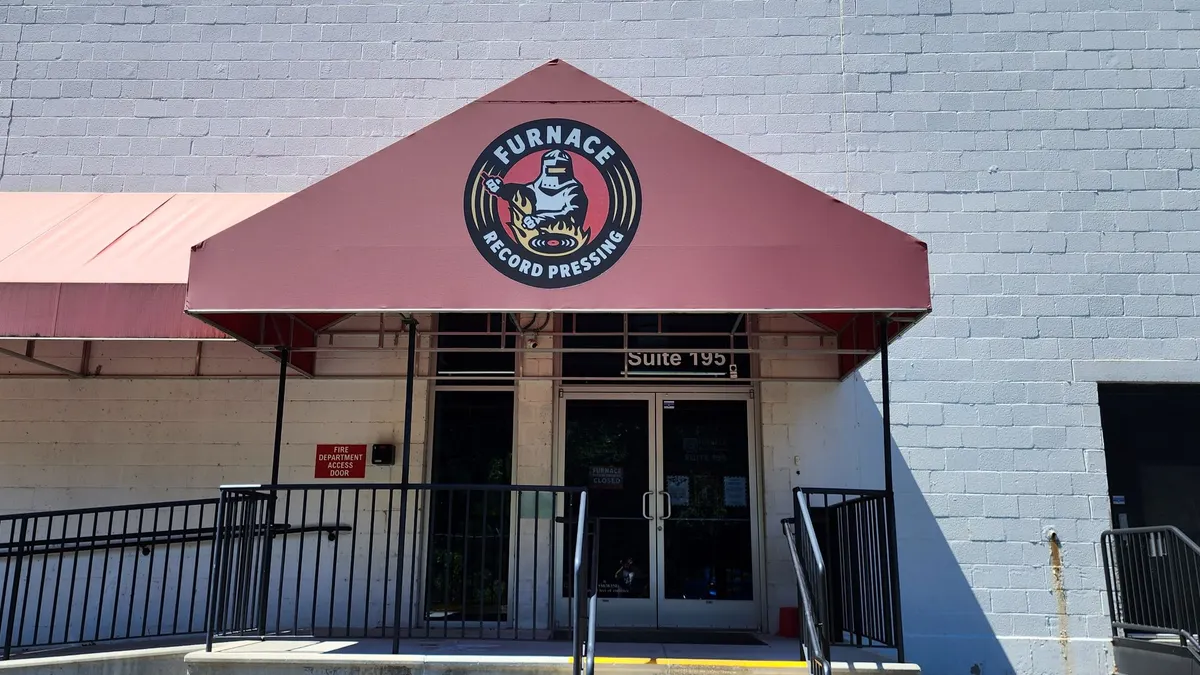
She later took jobs working in a corporate environment and discovered it wasn’t for her. An opportunity arose to return to the physical media business when an Oasis coworker told her about Furnace Record Pressing in Alexandria, Virginia.
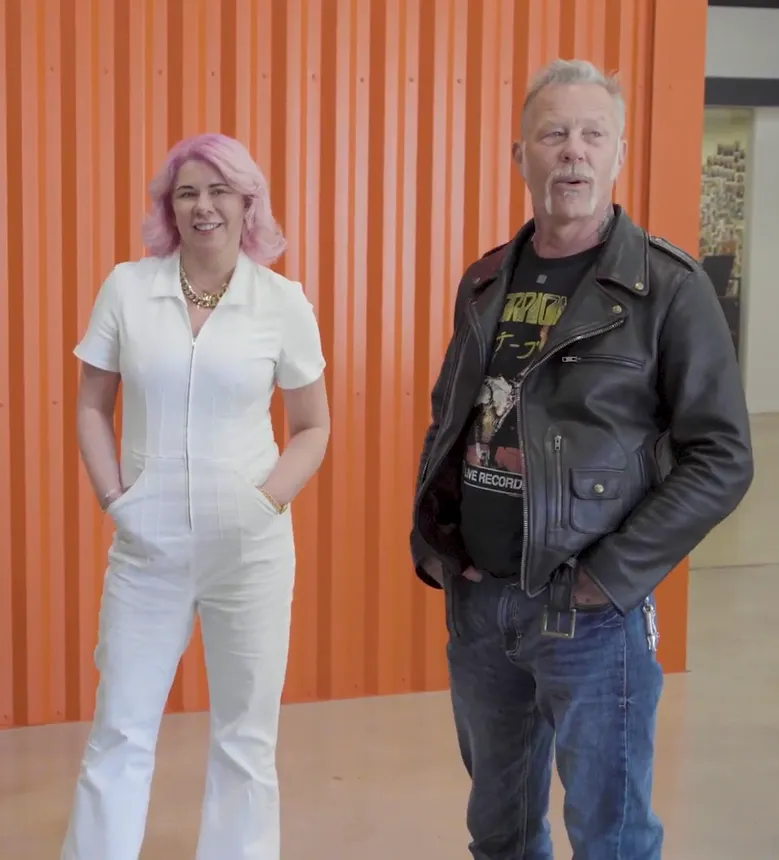
Nineteen years later, Miller climbed up the ranks, including vice president and COO. She became CEO shortly after rock band Metallica, through its investment firm Black Squirrel Partners, became a majority owner of the vinyl record manufacturer in 2023.
“Knowing our long-term future is secured while also being better able to take advantage of growth opportunities is really exciting for every member of the Furnace staff,” Miller said in a statement at the time. “We have found ideal partners in Metallica. They want us to continue our customer-driven focus. To that end, we look forward to providing even greater capacity and service to each of our customers in the future.”
In the age of streaming, digital media and a volatile global trade environment, the vinyl record market has grown over the past 19 years, according to the Recording Industry Association of America’s 2025 music revenue report. Sales rose to more than $1 billion, up 9.3% compared to $954.4 million in 2024. This was driven in part by indie artists' releases and limited-edition vinyl. The United States accounts for nearly 50% of global vinyl revenue.
Manufacturing Dive spoke with Miller about Furnace’s beginnings and how it works through an unstable manufacturing market.
The following interview has been edited for clarity and brevity.
MANUFACTURING DIVE: With Metallica now a majority owner, how did their involvement help Furnace Record Pressing with its growth strategy and operations?
ALI MILLER: We've worked with Metallica for a long time, since the very beginning, so we’re very close to the organization and the band. We always have been, and they've been great partners, very supportive.
But one of the reasons that our previous owner, Eric [Astor], went with Metallica as the buyers is because, for them, it was really important. What they always say is, they didn’t buy machines, they kind of bought the people. They had no interest in figuring out how to run a pressing plant or change anything that we did. So, really, since the sale, nothing has changed day-to-day in terms of how we do things or the kinds of customers we have.
We added a plating lab last year, so that was, you know, something that we’ve done expansion-wise. But when you do something like that, of course, it’s a discussion at the board level, which is new. We didn’t use to have a board, but all those decisions are generally made and introduced and handled by management within a company.
So Metallica, the band, and also their investment arm, are not involved in any of that at all. They’re great supportive partners, but day to day, the way we run the business, the way we make decisions, is absolutely still the same.
When did Furnace’s transition from CDs to vinyl happen, and why make the change?
We started off importing vinyl from Europe, from Germany and the Netherlands, and that was, I want to say, like 2007. There was not a lot of capacity in the U.S. at the time, and we had a relationship with Warner Bros., which was looking for high-quality vinyl.
So we developed a relationship with these European companies and started importing it and really getting good at the assembly and finishing and packaging and shipping, which is kind of an overlooked part of the process, but it’s really important and it really contributes to a quality product. So, for us, it's really important to nail that, and we've been doing that forever. So, we’ve had systems in place for that part of the process for a long time.
We were kind of like a broker. A customer [would] come to us and say, “We’d like 1,000 records,” or “We’d like 10,000 records.” We would have those pressed in Germany via that relationship, then come over on a boat, and then we would procure the printed parts and put them all together. Collate them here and send them out to their final destinations.
We did that until we started building the facility [and] started pressing here in 2017, so we were kind of bringing in the vinyl for a long time before that.
Of course, at the time, [companies] weren’t really making new vinyl pressing machines when we started building the plant, so that all took a very long time. We were doing both for a while, and then eventually transitioned to just pressing records here in Virginia.
You mentioned during a Making Vinyl panel that you have to be comfortable with the instability. Can you go into that more and explain how that has helped Furnace?
For us, I think that being comfortable with instability means just really honing in on what we do well, and what we do well is make good records and be good partners to our customers and to our vendors.
Manufacturing is sort of an instinct. There’s a lot of instability in manufacturing by its nature, and when you add in musicians and artists, there’s a lot of instability that is inherent to that too. A band could have a release plan, and it could be a huge release, and maybe they don’t make it to the studio for reasons that are completely out of everyone’s control. So, there’s a lot of factors we can’t control in our line of work.
Then when Covid happened, that was a huge spike in the vinyl industry. And then when things normalized in the country and in the world, there was a huge downturn, subsequently. Now things are sort of at a new level. “Is this a new normal? Is it stable?” but we really don’t know. We didn’t know what Covid was going to do. We don’t know what's going to happen with current world conditions that might affect what we do, or how people spend their money, or how artists make music.
There are so many things that we can’t control that directly affect us and a lot of businesses. So, I think what I was talking about there is just sort of becoming comfortable, knowing that a lot of it is out of your control, and at Furnace we really pride ourselves on being really nimble and agile. When Covid happened, there were a lot more records to press than anyone could make, so demand was so high, and a lot of plants added equipment to press more records.
We decided not to do that. We’re really comfortable with the size we are. We’re big enough that we can do huge runs, but we're small enough that we can still be really nimble and adjust to changing conditions and needs of our customers and partners.
So, if someone said, “Hey, I really need 500 hot pink records and I need it kind of fast,” that’s something we can do as well as we could do 50,000 black heavyweight records. They're both comfortable for us.
The manufacturing industry at large has been facing tariff and trade challenges. Has Furnace been impacted by the duties?
[Polyvinyl chloride] is imported. That’s the compound that makes the records, from Asia and from Europe, so there have been some tariffs associated with those imports. Our partners, who we get [PVC] from, have not raised their prices. [They] are taking it under their control for now.
Freight costs have gone up significantly, not so much because of tariffs, but because of oil and all that sort of stuff. So we’ve seen freight, and that will be from shipping finished goods to customers or getting things that we need to make the records here, so that's something we're seeing across the supply chain, for sure.
Cardboard has also been affected a bit. We use a lot of cardboard, but for us we haven't raised our prices. We're not intending to. As I said, you can't predict what the future is going to be like. If a huge tariff is imposed, with the efficiencies we've added with plating and getting more things under our roof, we're actually able to stay steady with our pricing, even as things are a little bit volatile in the market in terms of the supplies and commodities we use.
Manufacturing is in need of workers, and there are initiatives or programs in place to address shortages, but they are largely focused on sectors such as semiconductors or steel. When it comes to vinyl records, how does Furnace train people to work with pressing and related processes? How long does it take?
There's no vinyl record pressing trade school we can tap. It’d be cool if there were, but we find that people who do well here, who enjoy working here, are people who are really self-motivated and are interested in learning and interested in getting better.
It takes a long time to train someone to run a press independently, probably a year until they're 100% on their own.
There are stages through that. Some people take to it really quickly, some people need more time, like with anything.
It's training. It's like shadowing people, and people already know how to do it, and it's just repetition. They're complicated machines, for sure, and it's not like just pressing a copy button. There's a lot that the operator does in terms of making sure the records are quality, so the actual mechanics of running the machine is maybe not the hardest thing to learn, but how to run the machine and make a record that is great and that meets the front standards, that's the part that takes a lot longer.
It's really the people that make the records so good, and whether that's in the press room or in the sleeving department, we look at every record that we press, we physically inspect it, so those things do take time to train, but it's really just having a staff that’s really dedicated and comes to work every day to do it, and training each other and supporting each other.
I know there was a lot of talk at the conference about people struggling with staffing. It's not something we've struggled with. We've never had trouble staffing up or keeping staff on hand. We take it really seriously to make sure that this is a great place to work, and that there are career paths for people, even in an industry where, as you said, it's not like you graduate from trade school and think, “I'm going to be a press operator.” For us, it's really important to lay out career pathing and give people goals, and that's part of the training process too.
Has Furnace ever invested or plan to invest in robotics or automation?
No, I don't think so. I think final record pressing is one of those trades that you're not too worried about [artificial intelligence] is going to come and take your job, which is a lucky place to be in, I guess, in the modern world.
I know that there are some plants that certainly use robotics or automation, in terms of [sleeving] a record on press, so it presses and it goes into a sleeve via metal arm. For us, it's really important to look at every record. It's part of our quality standard. And for us, we really stand strongly behind the idea that great records are made by great people, so not great robots.
It's an art, it's a craft, and that requires people.
What advice would you give to people who want to get into vinyl pressing?
I'd say there's a lot of opportunity right now all across the country. There's so many pressing plants at this point, and there's a lot of capacity, and there's a lot of need for people who really care and want to do a good job and are excited about it. So my advice would be, network, see what's in your area, see what you can do, see who's hiring. Really, to succeed in manufacturing or to succeed in any job, if you come to it with an open mind and you're willing to learn and you're excited to be part of something bigger than yourself and to make something great, then it's a great career.