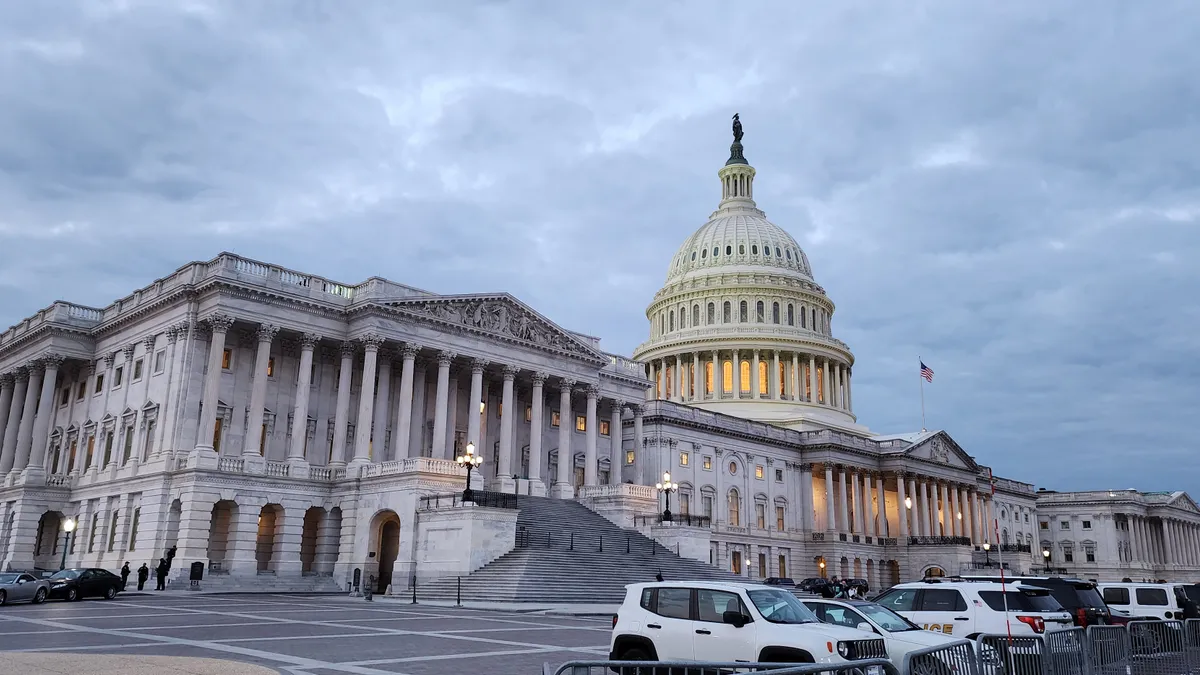
Chemical trade groups and companies, such as the American Chemistry Council and the National Association of Manufacturers, are urging Congress to reform the chemical safety amendment to the Toxic Substances Control Act, as they are aggravated by the EPA’s regulation oversight.
The amendment, titled the Frank R. Lautenberg Chemical Safety for the 21st Century Act and passed in 2016, authorized the U.S. EPA to test and review new chemicals or new uses of existing substances submitted to the agency and measure their impact on public health and natural resources.
Since the amendment was implemented, however, support for the safety regulation from trade groups and entities has disappeared. Chemical manufacturers have experienced delays in the EPA’s new substances review process, which they say has taken longer than the allotted 90 days and impacted their businesses. Moreover, chemical stakeholders said the EPA’s guidelines are inconsistent and that the risks are not science-based.
“It should be pointed out that the chemical companies are legitimately concerned about the time it takes to approve a new chemical, and what's needed is not a reduction in the regulations, but rather adequate funding of a needed regulatory mechanism, and that funding is being taken away, which will just make the situation worse,” said Martin Wolf, senior advisor of safer chemicals and circular economy at the American Sustainable Business Network.
The amendment also established a TSCA service fee fund, which charges chemical, petroleum and coal producers and distributors for the EPA to review submitted pre-manufacturing notices for new substances or new uses for existing chemicals. Twenty-five percent of the fees go to the EPA to cover the costs associated with TSCA implementation efforts, according to the agency’s website.
The TSCA fees are set to expire on Sept. 30, and Congress will have to renew them before the deadline. However, this prompts a “re-review” of what is and isn’t working in the statute, said Karyn Schmidt, a public policy attorney at Squire Patton Boggs.
“Congress has several options here,” Schmidt said. “One of them is just to reauthorize the fees authority and nothing more. But this also creates an opportunity for Congress to make some additional changes, improvements, tweaks, as it sees fit, and as stakeholders air those areas and potential suggestions.”
Wolf inquired whether lawmakers should not give regulations to the chemical industry, which he added is what they’re pushing for, or protect the community.
“Do we want reasonable regulation that will protect the health of Americans and funding appropriate for the implementation of those regulations, adequate numbers of people, rather than the sort of slash and burn approach that's been taken by this administration so far?” Wolf said.
Congress’ suggested tweaks
U.S. House and Senate Republicans each released differing discussion drafts that would reform TSCA
The House draft, released in January, targets definitions, revising EPA’s findings and methodologies before it can request testing, and modifies the agency’s review of new chemicals and management of existing substances, according to a March 24 blog post by law firm Wiley Rein. The draft would also address TSCA inventory determinations of unknown or variable composition, complex reaction products and biological materials.
Moreover, the House draft would eliminate citizens’ ability to use TSCA section 21, or citizens’ petition. Under this statute, citizens can petition the EPA to initiate a course of action for the issuance, amendment or repeal of a rule or order under TSCA regulations regarding chemical testing, regulatory compliance, information or new substances, according to the agency’s website.
“That is important for a variety of reasons, but how section 21 petitions are used does directly relate to the question of whether TSCA is intended to address catastrophic releases,” Schmidt said.
The Senate draft discussion, released in February, would target reforming the EPA’s new chemical approval process, including establishing clarifying rules to make the review process safe and efficient, according to a one-page summary.
The Senate draft rundown would also prioritize resources to create review tiers for existing, new and unique chemistries, make the review process more predictable and allow critical substances to compete in the global marketplace.
“There’s much that struck me that is common to both bills, and these are things that are truly concerning,” Wolf said. “Both bills specifically eliminate consideration for children, pregnant women, the elderly people living in fenceline communities were already burdened by these chemicals.”
Wolf also said that the drafts would make it more difficult for the EPA to get the data needed to make assessments.
“EPA can request the data, but they can’t demand it, and if the company doesn't provide the data in ... 90 days, then the chemical automatically becomes registered,” Wolf said. “So it creates a pathway with virtually no review of the chemical, which is not only as bad as the original TSCA, but worse than what was addressed in the Lautenberg Chemical Safety Act of 2016.”
Kegan Brown, an attorney at Lowenstein Sandler, said that he does not think the drafts, in their current form, would pass Congress.
“I think there’s going to be considerable pushback and negotiation, and perhaps you'll see some TSCA reform that is much more focused and around the margins,” Brown said. “I don’t think you’re going to see TSCA reform that go to critical aspects of the statute, so I don't think that's likely at all.”
He added that there were “pretty significant changes” from the chemical safety amendment regarding how chemical uses would be approved, the review of new chemicals, and how citizens’ petitions would be handled and challenged.
“Given the partisanship we see in Congress today, I just don't think it's likely that that type of proposal is going to garner the necessary support,” Brown said.
What manufacturers can do while Congress works
TSCA legislation needs to be completed in a matter of months to meet the Sept. 30 deadline, Schmidt said.
“You can expect this process to move extremely quickly, and it will be important for the companies, groups, different stakeholders, to make sure that they have clearly articulated what the difficulty areas are, or areas for improvement are, what they think the appropriate solution is, and then to be weighing in with the appropriate staff on the relevant committees,” Schmidt said.
She expects discussions to continue for the next several months on whether there’s a path forward to make some of the changes lawmakers have suggested.
“I also want to note that in both of those discussion drafts, neither one of the discussion drafts is truly bipartisan at this point,” Schmidt said. “So other stakeholders will need to voice their viewpoints as well.”
For manufacturers to “voice their viewpoints,” Schmidt said it’s “always a great idea” to participate in a coalition. She recommended that manufacturers participate in a trade association and check the industry sector’s standing position on some of the suggested changes, even if they do not have an idea of what the changes should be.
“Most of the associations that are engaged in this space and are regulated under tax code likely already know from their membership what’s working and not working because that’s been getting reported into them,” Schmidt said. “It will help a company understand what other issues have other companies raised? Does the group have a joint opinion, and is the group expressing that view to Congress?”
Wolf recommends that companies should first speak to their customers, whether it’s business-to-consumer or business-to-business, and ask their customers to protect their health by writing to their representatives and senators in opposing the changes.
Additionally, companies should speak to their employees, since they will be exposed to the toxic substances, and ask them to write to Congress to oppose the changes, Wolf added.
“I think it’s important to point out where we are and how much it’s costing us to fail to regulate these chemicals, and note that it's going to cost even more if we allow more of these chemicals into the environment,” Wolf said.**