This week, manufacturers including Caterpillar, Ultium Cells and others announced facility investments, advanced their expansions or broke ground on projects to meet growing demand for their products.
Here are some of the major updates happening across the sector.
Caterpillar
Caterpillar will invest about $1 billion to build a manufacturing facility in Sanford, North Carolina, allowing it to expand production of compact construction equipment for small contractors and growing businesses, the company said Wednesday.
The investment will allow Caterpillar to develop a “modern, technology-enabled” factory with advanced manufacturing, automation, digital production systems and integrated logistics capabilities, according to a news release.
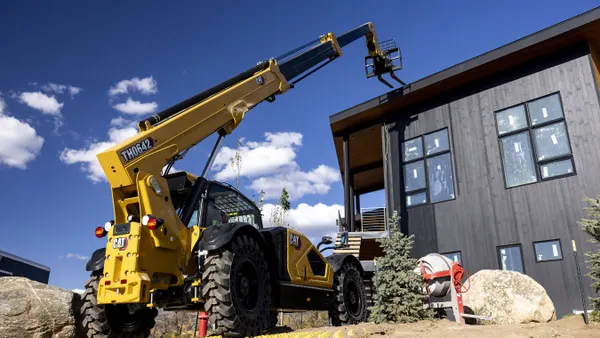
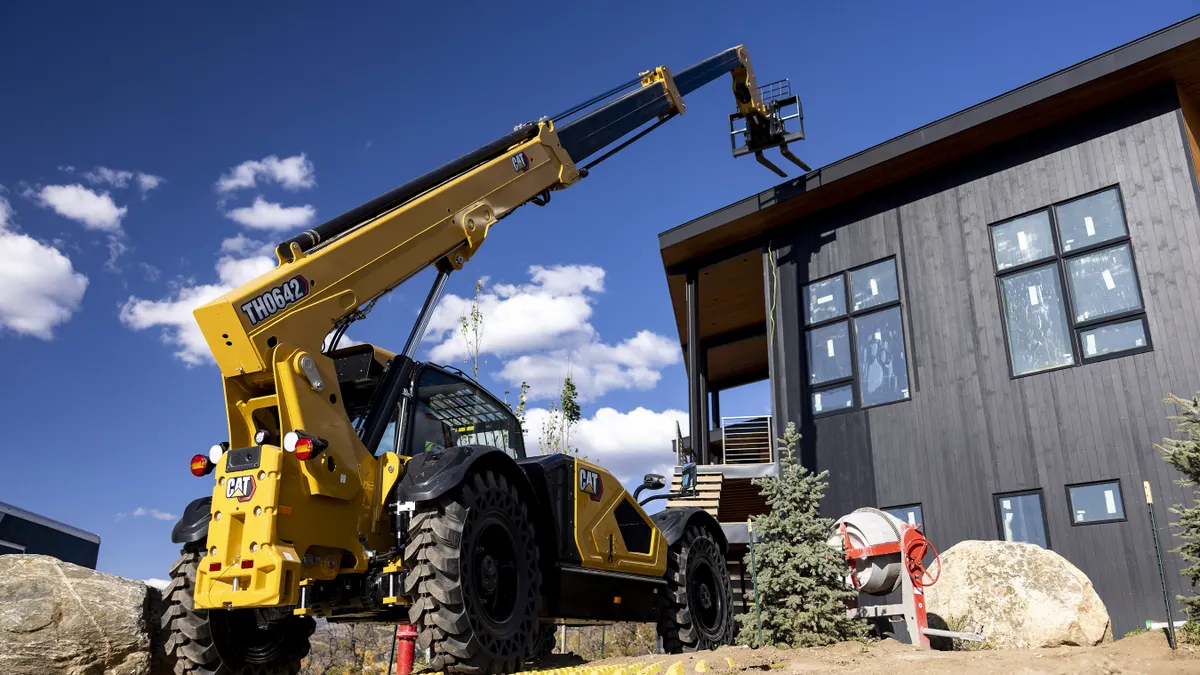
The company plans to produce compact track loaders and telehandlers at the upcoming facility to meet growing customer demand. These machines are used across construction, landscaping and agriculture to move materials and manage job sites.
No job creation, construction or incentives details were disclosed.
Ultium Cells
Ultium Cells, a joint venture between LG Energy Solution and General Motors, plans to invest $1 billion retooling its battery cell manufacturing operations in Spring Hill, Tennessee.
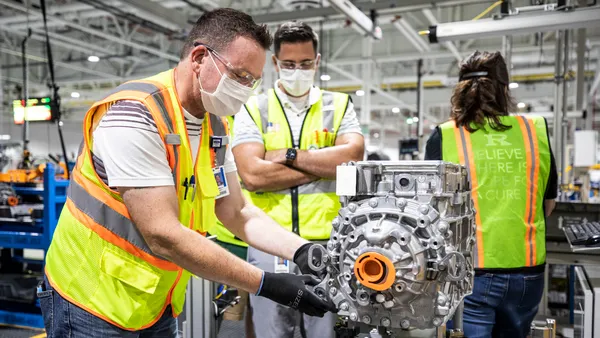
The modifications will allow Ultium to produce lithium manganese-rich prismatic battery cells, which offer energy density 33% greater than lithium iron phosphate, but at a comparable cost, according to a news release. This change would make Ultium the first manufacturer to produce the technology commercially.
GM and LG Energy Solution formed their joint venture in late 2019 to support electric vehicle battery demand. The companies initially invested more than $2.3 billion on Spring Hill, their second facility. They then made a $275 million expansion in 2022.
In August, Ultium restarted battery cell production at its Ohio plant, which had been shut down for seven months due to a drop in consumer demand, Reuters reported.
GM said the Spring Hill location will continue to produce high-nickel batteries. The expansion is expected to create 500 jobs. Factory modifications are scheduled to begin later this year, with completion set for 2028.
Genentech
Genentech, a maker of biopharmaceuticals and drug delivery systems, broke ground on a $750 million expansion of its fill-finish operations in Hillsboro, Oregon, on Monday.
The expansion will add 211,000 square feet of space, doubling the size of the existing site, according to a news release. It is also expected to create 250 jobs, including roles that pair manufacturing expertise with digital skills in artificial intelligence, automation and robotics.
The expanded facility will add device fill-finish capabilities that enhance manufacturing of medicines across oncology, neurology and immunology, Genentech said. Operations are set to begin in 2031.
Genentech established its 75-acre Hillsboro campus in 2006. The expansion is part of a broader $50 billion commitment by Genentech and its parent company Roche Group to increase its U.S. manufacturing and research and development footprint.
Avio USA
Avio USA, a subsidiary of Italy-based aerospace company Avio, on Tuesday broke ground on a $500 million solid rocket motor manufacturing facility in Hurt, Virginia, adding capacity for U.S. missile and munitions production.
The 900,000-square-foot plant will produce thousands of solid rocket motors per year to support the U.S. defense industry, including programs for Lockheed Martin and Raytheon, according to a news release. It is expected to create about 1,500 jobs in Southern Virginia.
Gov. Abigail Spanberger first announced the project in February. The state had said Avio will be eligible for a special incentive of up to $97.7 million based on the investment size and job creation potential.
Construction is scheduled to wrap by late 2028, with production to begin in early 2029.