

Dive Brief:
- ABM, a facility management company, recently announced the opening of its ABM Technical Training Center in Boise, Idaho.
- The center “draws on the specialized semiconductor expertise ABM added through its acquisition of Wgnstar earlier this year,” the company said in a news release. Wgnstar was a provider of managed workforce solutions and equipment support services for the semiconductor and high-technology industries.
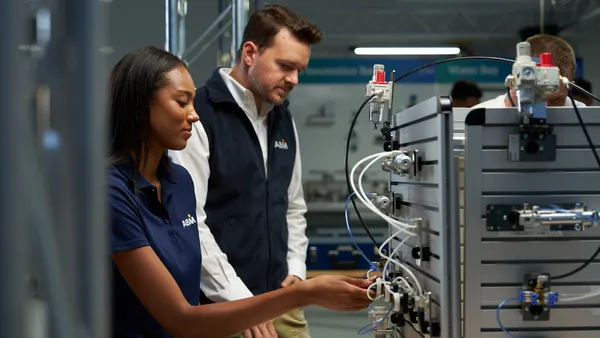
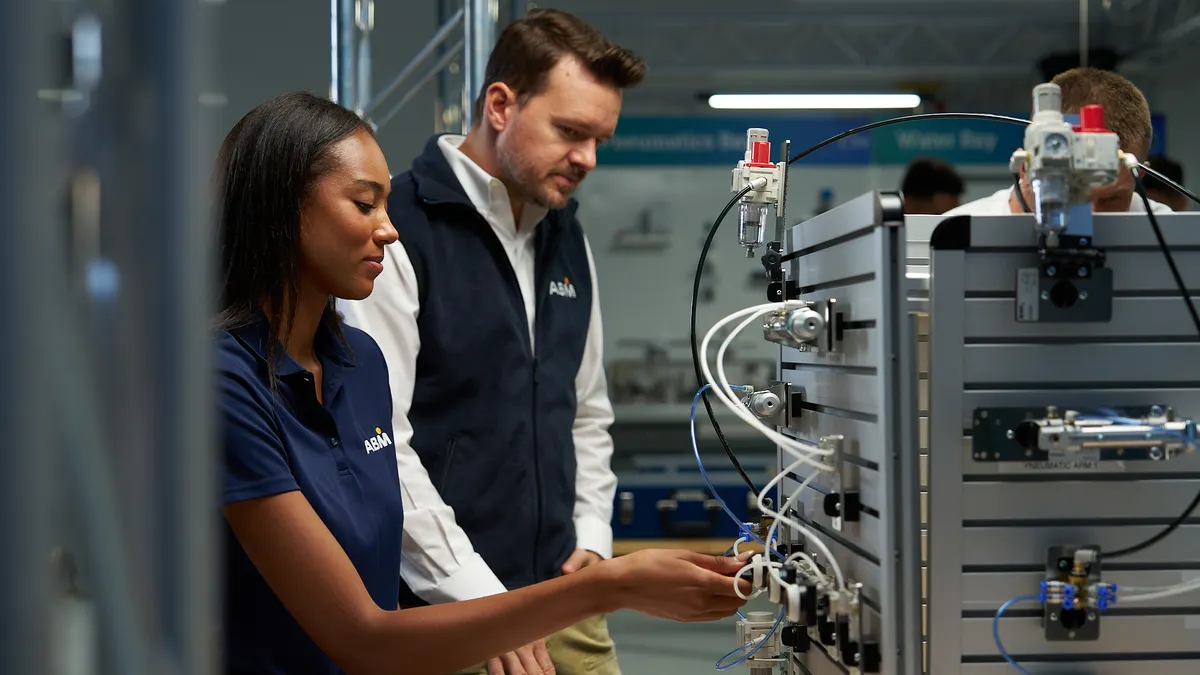
- The Boise training center is expected to host about 500 participants annually, ABM said. It features a “comprehensive, industry-aligned program” that includes classroom training, technical labs for hands-on work and virtual reality simulations “covering the core systems that support semiconductor manufacturing.”
Dive Insight:
The announcement adds to Boise’s long run as a semiconductor hub in the United States, primarily due to investments by Micron.
In August, Micron announced it was building on its Idaho fab investment plans with Micron Research Labs, which will focus on critical memory technologies, advanced memory and compute architectures, packaging, future semiconductor manufacturing and other key areas.
In June, the company announced an approximately $200 billion investment in semiconductor manufacturing and research and development in Idaho, New York and Virginia. Part of that investment included a second memory fab in Boise.
ABM said its new training center was created by subject-matter experts who will provide instruction geared toward entry-level technical roles supporting semiconductor manufacturers, equipment suppliers and facilities operators. Graduates will earn certifications from Swagelok, AMB and the Semi Foundation.
“The center was developed in response to the semiconductor industry's growing need for skilled technical talent and feedback from employers about the importance of better preparing new workers before they enter fab environments,” Darrell McDaniel, ABM’s vice president of technical training and asset relocation, said in an email. “With semiconductor activity continuing to expand in Idaho, ABM saw an opportunity to bring its hands-on training model to Boise and help strengthen the region's workforce pipeline.”
The program complements existing college courses, career and technical education programs, registered apprenticeships and employer-led training, according to McDaniel. “It provides a practical layer of foundational semiconductor preparation, so participants can enter employer-specific onboarding with greater familiarity and confidence,” he said.
About 40 hours of instruction will be provided in areas such as semiconductor safety, clean room and subfab familiarity, hand and calibrated tools, basic electrical systems, pneumatics, vacuum and water systems, robotics and preventive maintenance, McDaniel said.
The current cost is $5,000 per student, although the tuition could be subsidized with grants from the federal and/or state governments in the future, he said.
ABM’s fiscal third quarter saw quarterly record revenue of $2.3 billion, a 4.2% increase year over year. Revenue growth was led by the company’s manufacturing and distribution sector, which grew 18% year over year, driven in part by the Wgnstar acquisition.
The semiconductor industry in the U.S. has undergone significant expansion in recent years, with announced investments exceeding $390 billion in 16 states, according to a recent report by McKinsey & Co. This has created a “clear and persistent workforce challenge,” the report said, as the U.S. does not produce enough engineers, technicians or computer scientists to support further planned expansion.
“Addressing these constraints requires coordinated action across education, industry, and government, aligned to both regional needs and a national semiconductor workforce strategy,” the report said.