NEW YORK — As U.S. manufacturers look to implement artificial intelligence and robotics on their shop floors, they are being held back by issues related to workforce, systems and leadership, not the technology itself, experts said.
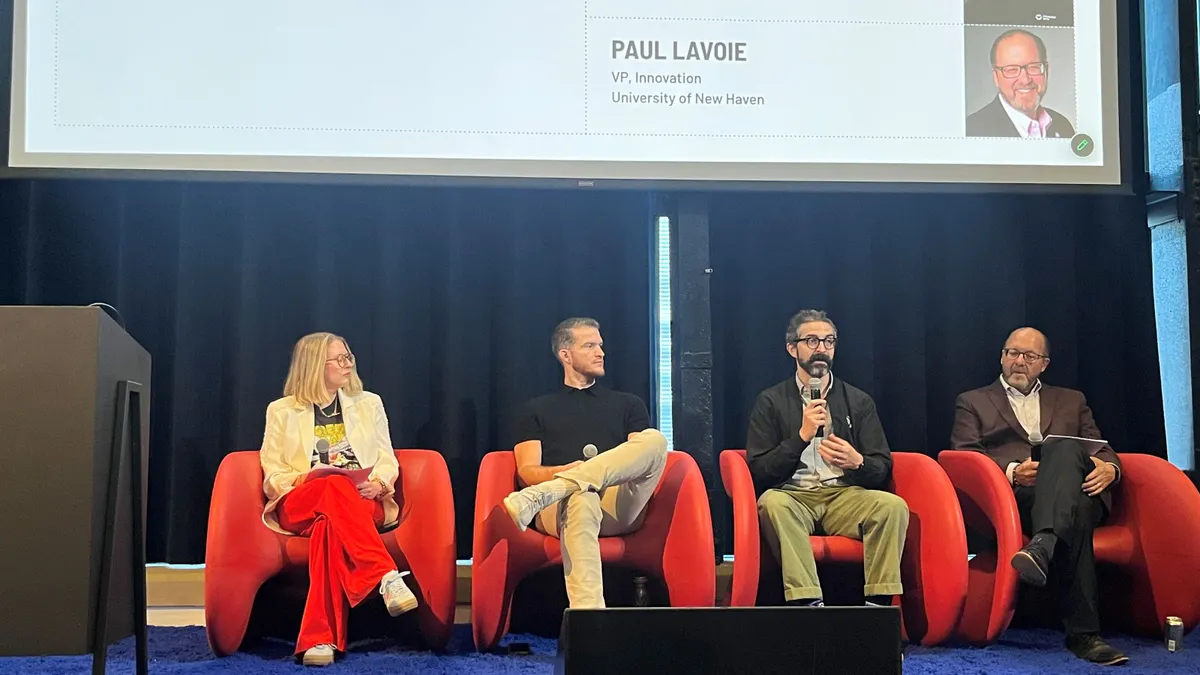
“We don’t have a technology problem in the United States,” said Paul Lavoie, vice president of innovation and applied technology at the University of New Haven. “We have a technology adoption problem. We don’t know how to get things done quickly and how to get things done well in America.”
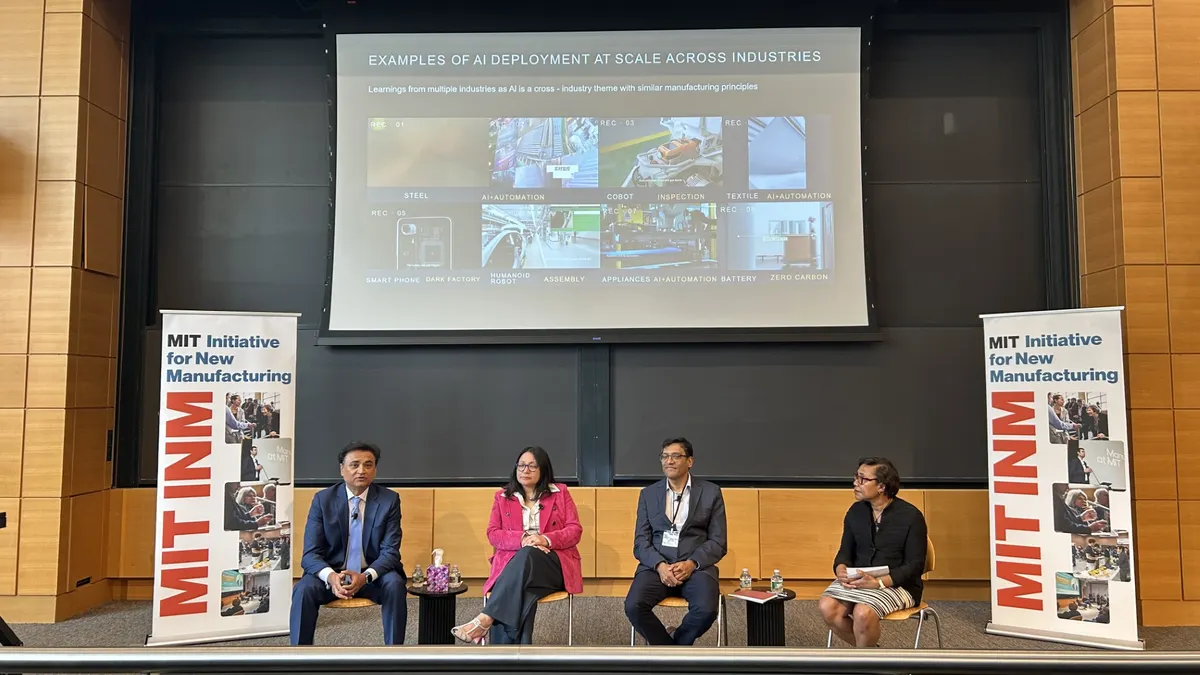
Lavoie and robotics startup executives discussed during a roundtable at New York City’s Tech Week on June 2 some of the challenges facing manufacturers as they look to automate operations and overcome certain barriers to adoption.
Other countries, such as China and South Korea, are ahead of the United States when it comes to automation, driven partially by their national robotics strategies, speakers said. They also have more mature service provider and integrator markets that can help manufacturers deploy robotics quickly and successfully.
“The gap in the market is not more robot hardware, the gap in the market is not robot software,” said Michael Perry, head of commercial strategy at Persona AI. “The gap in the market is sustained specialized deployment talent. And that type of gap in the market is not understood very well.”
In the U.S., integrators and service providers sell what Lavoie calls “science projects” that may look good to manufacturers on paper, but fail to work the way they are supposed to. There is also a shortage of domestic integrators whose role is to help install robots on the factory floor.
“That’s the number one shortage slowing us down from deployments,” said Zach Tomkinson, chief commercial officer at Standard Bots.
Last year, China installed nearly 10 times more robots compared to the U.S., he said. To bridge the gap, startups and others across the industry have pushed for a national strategy that could influence state and local governments. Bills have recently been introduced at the federal level to establish a robotics commission tasked with making a plan to strengthen U.S. leadership in robotics.
In the meantime, robotics startups must rely on federal and state grants, as well as corporate and private funding, for commercial deployment and research and development. Over the past year, the Small Business Administration has created or expanded its loan programs for manufacturers as part of President Donald Trump’s reshoring initiative.
Still, Lavoie said the public sector needs to “step up and put catalyst capital in the marketplace.” The government should be making capital more available to manufacturers to invest in automation and technology to derisk millions of dollars in equipment costs, he said.
Changes to speed up robotics adoption
To make adoption more successful, Lavoie said the C-suite must have an “automation mindset” that will permeate the organization and begin to change the company culture. Lavoie also urged more investment in the workers themselves, including education and upskilling efforts.
“If I empower and train my people, they will solve problems in ways that I could never possibly imagine,” Lavoie said.
Additionally, Perry said the industry needs to increase its education efforts at the top level. Many of the talks he has with executives start with the unit economics of labor, such as paying someone a certain percentage less money to justify automation.
“That’s bad,” he said. “Maybe as a point solution we’re able to make those economics work, but we start thinking about the total cost of ownership, including upfit, training, then you start getting thinner and thinner margins there. The real opportunity is not labor replacement, it’s labor augmentation.”
Employers will need up to 3.8 million additional workers by 2033, but about half of these jobs — 1.9 million — could go unfilled if skills and applicant gaps are not addressed, according to a recent study from Deloitte and the Manufacturing Institute. As of April, there were 474,000 job openings across the industry, a 26% increase from last year, shows data from the U.S. Bureau of Labor Statistics.
“This is a persistent structural capacity constraint,” Lavoie said. “We are never hiring our way out of the problem.”
Humans and robots work together
Robots have the potential to reduce physically demanding work, improve employee safety and allow manufacturers to reallocate existing labor to higher-skilled roles, Lavoie said.
While touring a cardboard manufacturing company, Lavoie saw a worker whose only job was to manually “punch out forms,” or die-cut the material into custom designs. The worker was paid minimum wage until the company bought a machine to automate their actions, he said. The return on investment was three months, and the company gave the affected worker a 25% pay raise to run a machine on the shop floor.
“The future of automation is not lights-out manufacturing, it’s human-centered, machine augmented,” Lavoie said.
Last year, Persona AI partnered with HD Hyundai and the American Bureau of Shipping to deploy humanoid robots in shipyard environments. Perry joined the Houston-based company in March after previously working at DJI, Boston Dynamics and Dexterity AI.
Perry said companies should think in terms of systems when adopting technology, rather than how to quickly implement the latest hardware or software. In addition to safety, power and networking systems, they must also ask themselves “do we have the right business case” and “are we targeting the right challenges” through robotics, he added.
“Even if we had the perfect, walking, healthy robot that was able to do all the different things that a customer wants, it would still take two years to deploy those robots at scale,” Perry said.
During the discovery phase of partnerships, he said Persona AI looks for production gaps where a robot could be beneficial, not just a quick fix. For example, the company found that about 20-30% of a shipbuilder’s time is spent waiting for a welding inspector to show, which translates to idle capacity in the ship production yard.
If Persona AI can develop a custom weld inspection model and make it so the robot can weld, inspect the weld, then move on to the next thing, “that’s 20% extra production capacity,” Perry said.
“We as an industry need to find those levers to tell that story,” he said. “To educate the top [and] not think about labor unit economics as the driver of automation, but thinking about expanding our capacity.”