UPDATE: May 19, 2026: The Senate took a final vote to confirm Arvind Raman as the next director of the National Institute of Standards and Technology on Monday.
Raman’s confirmation was part of a broader package of nominees that was approved by a vote of 46-43. The group also included Steven Haines, who will now serve as assistant secretary for industry and analysis at the U.S. Department of Commerce.
March 20: The U.S. Senate Committee on Commerce, Science, and Transportation recently advanced Arvind Raman’s nomination to be director of the National Institute of Standards and Technology.
Raman advanced on a vote of 16-12 at a March 12 meeting, largely along party lines with all committee Republicans voting in favor and most Democrats voting against. If confirmed by Congress, Raman would take over for Craig Burkhardt, who has served as acting director of NIST since January 2025.
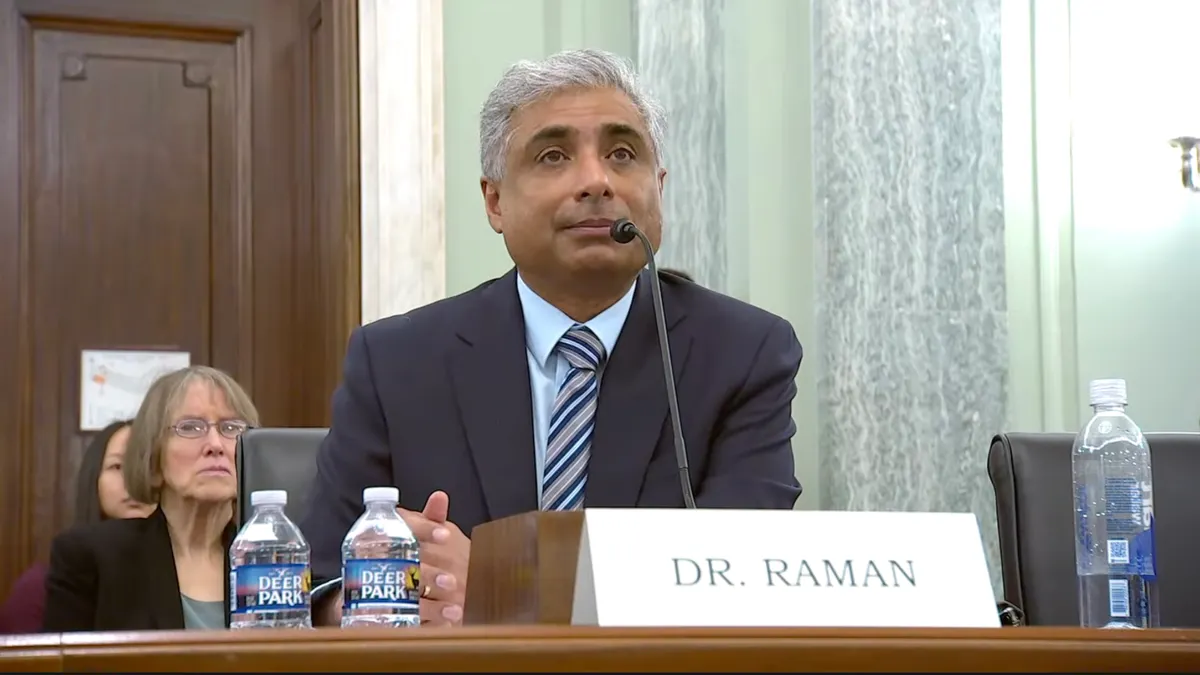
During a prior Senate confirmation hearing in early March, Raman testified that he would maximize American technological innovation, particularly in areas such as semiconductors, quantum industrial and advanced manufacturing. He also said he’d work to enable American technologies to scale and reach a broader array of markets.
“I'm very supportive of whatever we can do to make sure advanced manufacturing moves ahead here in America in whatever way possible,” Raman said.
NIST, which sits under the U.S. Department of Commerce, focuses on measurement science, standards and technology innovation. The agency was formed in 1901 to promote U.S. industrial competitiveness and improve its measurement infrastructure, which at the time lagged behind other countries.
Today, NIST plays a role in managing and administering funds under the CHIPS and Science Act of 2022, among other initiatives. It announced plans late last year to invest $20 million to advance artificial intelligence solutions that strengthen manufacturing and cybersecurity. The institute has committed to a strategy that positions the U.S. as a leader in critical and emerging technologies, such as AI, quantum computing, biotechnology and semiconductors.
Raman said America’s leadership in AI technology and the next generation of semiconductors “will be a high priority for us.” Repeatedly throughout the hearing, he emphasized his commitment to advancing manufacturing in the states.
Raman has served as a faculty member at Purdue University in Indiana for 25 years, where he’s also collaborated with and conducted research alongside NIST. He’s currently dean of engineering at the university. During the hearing, he pointed out that Indiana is the state with the highest concentration of manufacturing jobs. Indeed, the Indiana Economic Development Corporation boasts 9,000 manufacturing operations in the state, with the auto industry alone employing 116,000 workers.
“This is very near and dear to us,” Raman said.
Not all senators were convinced by his testimony, however. Ranking Member Sen. Maria Cantwell, D-Wash, said Raman was “refusing to directly answer if he would support” the Hollings Manufacturing Extension Partnership, a program that assists small- and medium-sized manufacturers with workforce training and advanced technology adoption.
During an exchange when Raman was asked if he supports MEP, he said, “I don’t know the specifics.”
Cantwell replied, “Read a little bit more about that, and give us an answer. … We want to hear your views about those policies, because they're pretty big policies.”
Similarly, Sen. Bernie Moreno, R-Ohio, asked for a yes or no answer to whether Raman supports the MEP model, to which Raman said, “I think a lot of MEP programs have done a lot of good work.“
Moreno replied, “I'm not sure that that's a yes.” The senator, however, did vote in favor of advancing Raman to be NIST director.
At the end of last year, the DOC abruptly paused Ohio’s MEP program funds. The decision was made “after careful consideration of serious issues that were brought to our attention,” a NIST spokesperson said at the time, without sharing specifics.
MEP funding also had been a point of contention between the executive and legislative branches earlier in 2025.
In April 2025, DOC halted funding for 10 MEP programs as part of the Trump administration’s plan to reduce federal spending, only to reverse course weeks later.
Then in June, the DOC proposed NIST budget cuts of $325 million, which included funding for the MEP program. Lawmakers advocated for the program, while Commerce Secretary Howard Lutnick said MEP needed to be modernized and rid of fraud and abuse. The final NIST budget for 2026 ended up increasing about 2% year over year.
Raman’s final Senate confirmation votes have not yet been scheduled.
Editor’s note: This story has been updated with final confirmation details for Arvind Raman.
Cole Rosengren contributed reporting to this story.