Nonprofit Goodwill South Florida has implemented software maker Lectra’s platform at its U.S. military apparel manufacturing facility in Miami that aims to accelerate production, the company announced Tuesday.
Dubbed Valia Manufacturing, the cloud-based platform intends to upgrade and automate fabric and textile cutting operations, reducing Goodwill’s two-day process down to 15 minutes at its James A. Ryder facility, according to the press release.
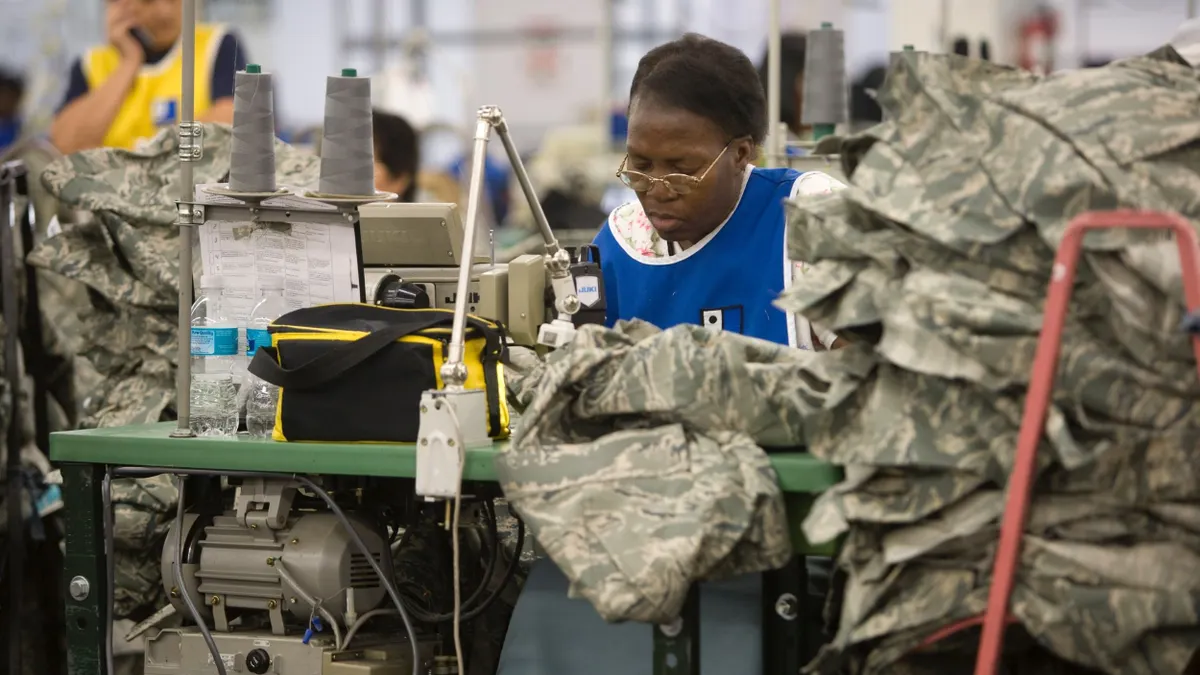
Goodwill’s manufacturing division produces over 1 million garments for the Defense Logistics Agency, U.S. Air Force and Army annually, including two styles of the combat uniform and the women’s Air Force dress uniform.
Goodwill’s manufacturing division in Miami employs over 700 people, comprising three buildings that span 170,000 square feet, according to the nonprofit’s website. The manufacturing facility was named after James Ryder, one of Goodwill’s co-founders and the founder of the transportation and logistics company, Ryder.
The nonprofit has contracts with the DLA, including a five-year contract awarded in March worth about $103 million to make various combat uniform styles for the Army, Air Force and U.S. Space Force.
DLA also awarded another five-year contract in April with a maximum award of $69.7 million to produce women’s combat uniform trousers for the three military services.
With production demand growing, Goodwill realized it needed to expedite its workflows.
“We set out to fundamentally rethink how our cutting room operates,” Eduardo Dominguez, vice president of manufacturing at Goodwill South Florida, said in a statement. “Valia Manufacturing allows us to replace manual planning with intelligent automation to build a smarter, more connected cutting room. The speed, visibility, and control we gain across our entire workflow will have a lasting impact on how we produce and scale moving forward.”
Additionally, Goodwill expects Lectra’s Valia to bring about 1% in material savings and $400,000 in net savings in the first two years, reducing manual intervention and improving production control at the Ryder apparel manufacturing facility.
Moreover, it would take about five months for a return of investment, according to the press release.
“In today’s fast-paced manufacturing landscape, the ability to accelerate operations and adapt to shifting market demands is a critical competitive advantage,” John Brearley, president, Americas at Lectra, said in a statement. “This collaboration demonstrates how intelligent automation can deliver rapid, measurable impact in high-volume production environments.”
In addition to military uniforms, workers at the facility also make U.S. interment flags for the Department of Veterans Affairs, which are presented to the families of veterans with honorable discharges. The burial flags are also given to the Gold Star families of active-duty service members who died while serving.