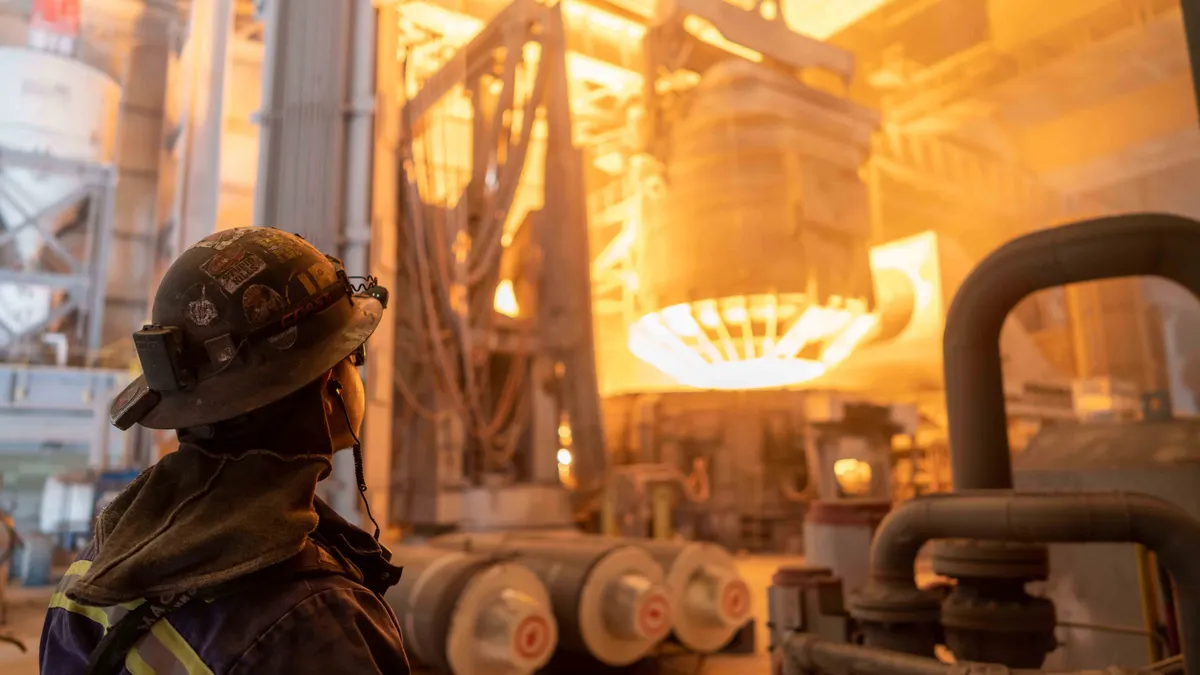
After a relatively slow year for mergers and acquisitions in the metals industry, experts expect an uptick in activity during 2026. Foreign metals manufacturers investing in U.S. companies, aiming to shore up their stateside footprints, circumvent tariffs and situate themselves closer to high-growth end markets could dominate the scene.
The trend kicked off with a mammoth deal from Japan-based Nippon Steel, which acquired U.S. Steel for $14 billion last June. Ian Myers, managing partner at Kalibr Partners, said the acquisition spurred discussions at other companies about nearshoring and domestic production.
“That was the catalyst to say, ‘How do we get back into the U.S. in strategic ways?’” Myers said.
Since then, other metals manufacturers have followed a similar playbook. Last September, South Korea-based steel manufacturer Posco inked a memorandum of understanding with Cleveland-Cliffs. While the two companies haven’t disclosed the full terms of their agreement, Posco is reportedly expected to invest more than $700 million to acquire at least a 10% stake in the U.S. steelmaker this year. Posco also recently took a 20% stake in Hyundai Steel’s electric arc furnace steel mill in Louisiana, with plans to invest $582 million through 2027.
The interest in nearshoring and domestic production appears to be building. Vince Pappalardo, managing director and leader of the metals and advanced metals manufacturing group at Brown Gibbons Lang & Co., has fielded inquiries from companies in Japan and Korea seeking U.S. manufacturing assets.
The motivation is twofold, Pappalardo said. “Part of it is to get around tariffs. Part of it is because they expect growth.”
Behind the tariff wall
Since June 2025, imports of steel and aluminum from nearly all trading partners have faced tariff rates of 50%. The Trump administration in August expanded the list of goods subject to tariffs to include items such as motorcycles, truck trailers, microwaves and dishwashers.
The shifts and increases in tariffs “created a new degree of ambiguity and economic uncertainty,” leaving many companies taking a “wait-and-see” approach to M&A, said Brad Serlin, president of United Scrap Metal.
In fact, as of August 2025, M&A activity in metals manufacturing was down 30% compared to the same timeframe in 2024, according to Capstone Partners. At the time, there were just 62 deals announced or completed, although valuations remained steady or even increased.
At the same time, metal tariffs hiked costs throughout the supply chain, and many companies looked at investments and M&A to mitigate tariff-related cost increases, said Randy Heisler, vice president of chemicals, oil and gas, and metals for consulting firm Life Cycle Engineering.
“International players recognize that to compete in the lucrative U.S. market, they must be physically present behind the tariff wall,” Heisler said.
Posco called out tariffs as one of its reasons for working with Hyundai Steel, noting that its minority stake would secure local production and help it circumvent tariffs. But metals manufacturers are also cognizant of a longer-term strategy.
Global corporations foresee strong and growing demand for metals in the U.S. as steel demand simultaneously is declining in China and Japan. While U.S. manufacturing output rose just 0.2% year over year in December, primary metals increased 2.4%, according to the Federal Reserve.
“We’re one of the biggest markets to serve in the world,” Pappalardo said.
This factor is a big reason why Nippon-backed U.S. Steel committed to spend $14 billion on U.S. growth projects, such as new slag recycler and iron plants, improvements to strip mills and blast furnaces, and installation of a premium thread line.
M&A up and down the supply chain
Metals giants’ M&A strategies are also about more than location. Experts spotted two standout trends in terms of the types of acquisitions manufacturers are pursuing: vertical integration and specialized markets.
The first involves buying companies upstream or downstream within the supply chain, providing greater control over inputs, outputs and costs. Myers said some manufacturers are buying scrap recycling facilities to vertically integrate their feedstock supply.
One example is Germany-based copper and brass producer Wieland, which has undertaken “an aggressive acquisition strategy over the past three years” to expand its U.S. presence, Serlin said. During that time, Wieland acquired a scrap recycling facility, purchased multiple brass and copper mills, and built a greenfield copper smelter in the U.S.
Last year, Toyota Tsusho America, part of the Toyota Group, acquired Radius Recycling, the second largest independent recycler in the U.S. Oregon-based Radius operated more than 100 sites across 25 states, Puerto Rico and parts of Western Canada at the time.
Metal service centers are aiming to vertically integrate by purchasing fabrication and manufacturing companies, which gets them closer to their customers and can help boost margins, Pappalardo said.
The other big strategy is to go after lucrative and specialized end markets.
“The more specialty you are providing, the more valuable you are, and it makes you more attractive to acquirers,” said Michael Rosendahl, managing director and leader of the M&A practice at PCE Investment Bankers. He cited aerospace and defense as one such industry.
Metals are in demand from industries such as automotive, electrical and electronics, spurred in part by a boom in data center construction, Serlin said. Posco’s deals with Hyundai Steel and Cleveland-Cliffs are focused on automotive steel production. Pappalardo has also seen increased interest in battery and electronics recycling.
As a whole, industry advisors hope for more momentum in 2026 after a sluggish 2025. Myers foresees more joint ventures in which large companies fund capacity and local production. Rosendahl especially anticipates several smaller or medium-sized transactions, with larger companies scooping up small family-owned or founder-led businesses.
“Buyers are out there, and they’re pretty active,” Rosendahl said. “I think everyone has expectations that M&A activity should be high.”