Dive Brief:
- Cleveland-Cliffs has fully complied with national agreements connected to its acquisition of subsidiary Stelco made in 2024, the steelmaker said in an updated report to Canada’s Minister of Industry Mélanie Joly.
- Following a review with its legal team, Cleveland-Cliffs has either met or exceeded all 34 undertakings required as part of its deal under the Investment Canada Act, including target employment commitments, the company sent in a letter to Joly last week.
- Cleveland-Cliffs CEO Lourenco Goncalves plans to have a meeting with Joly to discuss a path toward resuming full employment of the 175 workers at Stelco’s Hamilton Works facility who have been temporarily laid off.
Dive Insight:
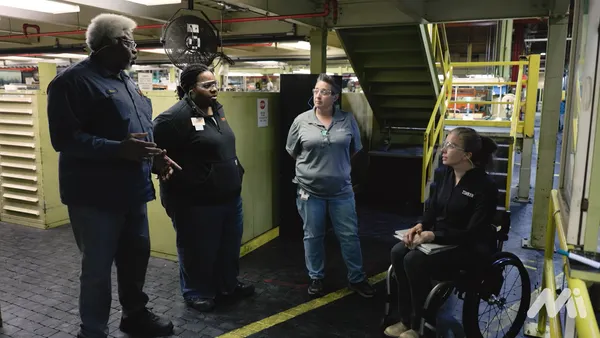
Cleveland-Cliffs is facing a major dispute and legal pressure from Canada’s government over temporary layoffs and idling of Stelco’s cold-rolled and coated finishing operations in Hamilton, Ontario, in late September.
Currently, up to 500 workers at the plant are at risk of losing their jobs, Joly posted Oct. 22 on social media platform X. She argued that Cleveland-Cliffs has “repeatedly failed” to demonstrate that it remains compliant with legally binding commitments tied to the Stelco acquisition.
Non-compliance could result in penalties, a court order “requiring the company to comply with its commitments, or forced divestiture of its Canadian assets,” Joly added.
More recently, Cleveland-Cliffs said that it was in compliance with all undertakings, including employment levels.
Stelco expects average annual employment of at least 1,879 full-time workers, which is 113 more than the required 1,766, according to a news release. It also expects at least 627 salaried workers for the current reporting period, up from the required 603.
“Stelco is in full compliance with all undertakings, and in several important areas we have gone beyond what we committed to do,” Goncalves said in a statement Oct. 26.
Cleveland-Cliffs moved to idle Stelco’s operations and lay off workers after the United States escalated a trade war with Canada.
Each country enacted opposing tariffs in early September, with Canada imposing up to 50% on many U.S. goods, including hundreds of steel and aluminum products. While tensions remain elevated, President Donald Trump and Canadian Prime Minister Mark Carney have resumed negotiations toward an amicable trade deal, Reuters reported Nov. 3.
Goncalves, who has advocated for the U.S.’ Section 232 policy, said he believes a “Fortress North America solution” that would lower tariffs bewteen the U.S. and Canada, while retaining an external trade wall, would be in the neighboring countries’ best interest.
In an earnings call Oct. 19, he blamed Canada’s government for hurting the country’s domestic market for galvanized steel, which is a type of steel coated with zinc to prevent rust and corrosion. Goncalves also said Canada’s trade policies have failed to address the “avalanche of imports” coming into the country.
“For galvanized products, the imports of non-automotive galvanized steel that continue to flood the Canadian market remain problematic,” he said Oct. 26. “We want to find a solution for Hamilton and its workers as soon as possible and believe common sense trade policy will make this a reality.”
Meanwhile, the United Steelworkers have called out Cleveland-Cliffs and its CEO for recent comments regarding their intention to buy Stelco as a defensive strategy to keep it out of the U.S. market.
The steelmaker has ruled out selling Stelco until the business improves production and all laid-off workers return to their jobs, which could be before Christmas, the Wall Street Journal reported.