Dive Brief:
- Applied Materials, an equipment, services and software supplier for chipmakers, said it has partnered with South Korea-based SK Hynix to accelerate memory innovation and address semiconductor-related challenges.
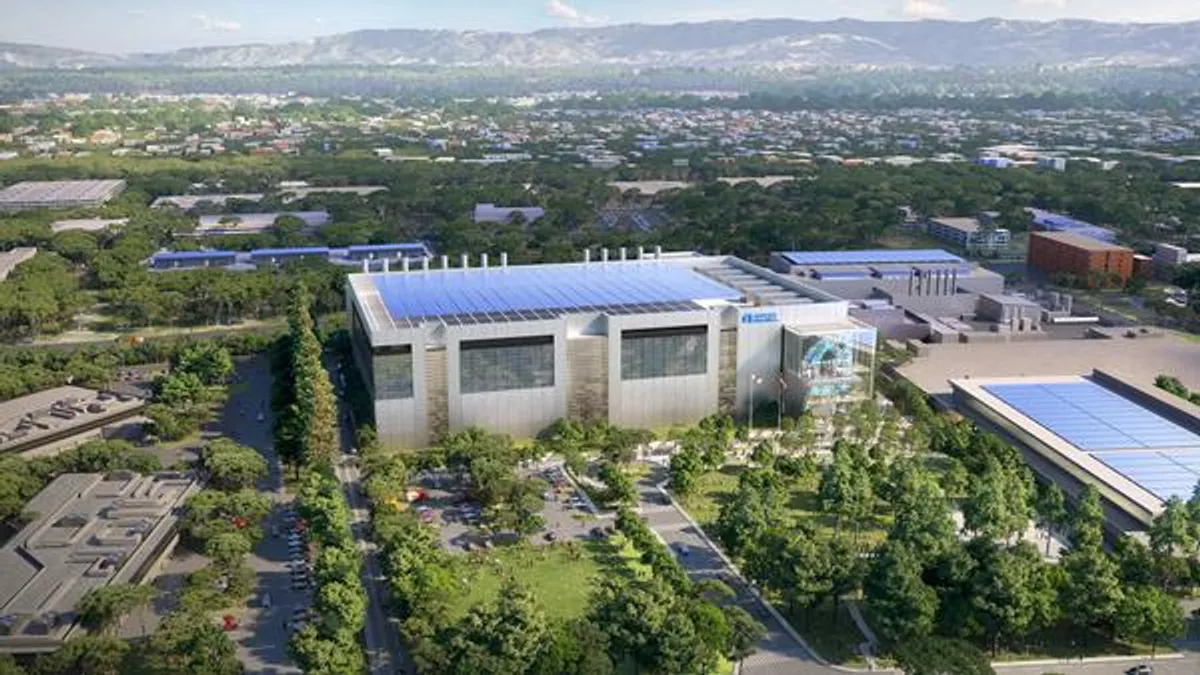
- Engineers from both companies will work together at Applied Materials’ Equipment and Process Innovation and Commercialization (EPIC) Center, a $5 billion research and development facility expected to open in Silicon Valley later this year, as part of a long-term agreement.
- The companies look to advance the performance of memory chips through innovation in materials, process integration and advanced packaging, according to a news release. This effort comes as technology firms navigate a global shortage of memory chips driven by surging artificial intelligence demand.
Dive Insight:
The agreement adds another member to Applied Materials’ EPIC Center, designed to be the largest and most advanced U.S. facility for collaborative semiconductor process technology and manufacturing equipment R&D. Samsung Electronics and Micron have also become partners on the project in recent weeks.
SK Hynix’s initial collaborative programs will focus on exploring new materials and complex integration schemes, as well as enabling high bandwidth memory-class advanced packaging, according to a news release. The company also plans to leverage Applied Materials’ R&D capabilities in Singapore to address emerging challenges in 3D advanced packaging.
“Advancing memory technology for the AI era requires new approaches to developing wafer fab equipment,” SK Hynix CTO Seon Yong Cha said in a statement. “Working alongside Applied engineers at the EPIC Center gives our teams faster learning cycles and manufacturing‑relevant validation for next‑generation AI memories.”
AI workloads require large amounts of memory, and the global supply shortage is driven in part by manufacturers reallocating capacity away from consumer electronics toward high-margin products used in data centers, according to International Data Corporation research. This has raised general-purpose memory prices, largely affecting the automotive and personal electronics industries.
The EPIC Center will provide earlier access to Applied Materials’ R&D portfolio, allowing for faster cycles of learning to advance high-volume manufacturing, according to the company. The project has been in the works for the past three years. Applied Materials applied for CHIPS Act funding to support construction of the EPIC Center, but the bid was ultimately denied, Bloomberg reported in July 2024.