Dive Brief:
- Silicon Valley startup XLight announced on Monday that it has signed a letter of intent with the U.S. Department of Commerce for $150 million in proposed federal incentives under the CHIPS and Science Act.
- The incentives would go toward construction, expansion and demonstration of a free-electron laser, or FEL, prototype as an alternative light source for extreme ultraviolet lithography, according to the National Institute of Standards and Technology’s press release.
- Additionally, the Commerce Department would receive $150 million of equity in XLight, making the agency one of the semiconductor startup’s stakeholders.
Dive Insight:
XLight is the latest company in which the U.S. government will have equity. In August, the federal government agreed to purchase an $8.9 billion ownership stake in Intel to support the semiconductor company’s manufacturing and expansion plans. Intel has also received $5.7 billion of CHIPS funds in 2024.
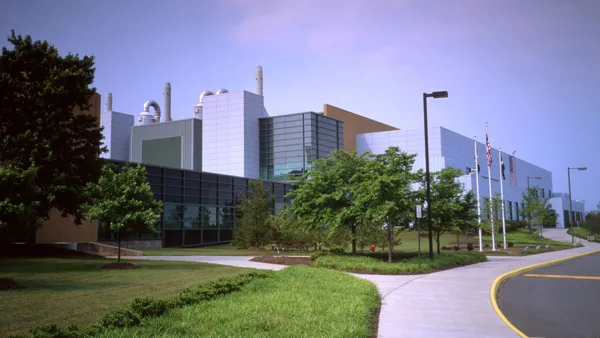
XLight will build its first FEL system at the NY Creates’ Albany NanoTech Complex, CEO and CTO Nicholas Kelez said.
He added that the facility’s “lithography capabilities will enable the research and development that will define the future of chip manufacturing.”
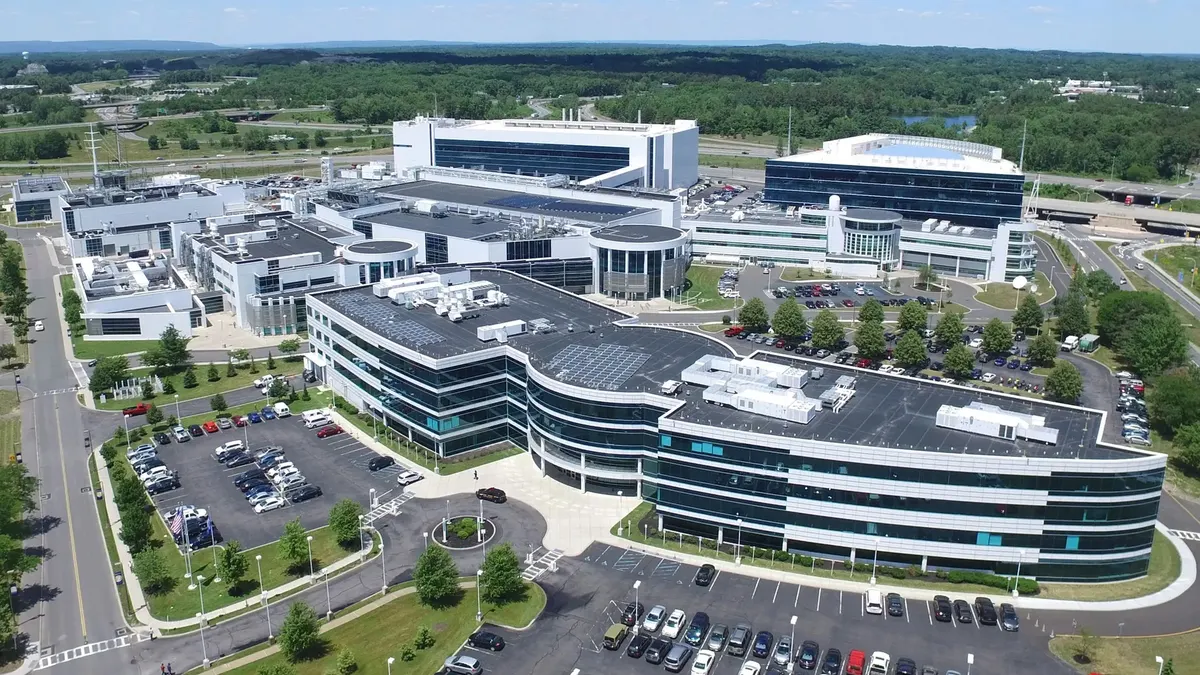
The Albany NanoTech Complex is one of the flagship CHIPS Act research and development facilities that the Commerce Department opened in July. Dubbed the National Semiconductor Technology Center, the facility houses the CHIPS for America Extreme Ultraviolet Accelerator that provides dedicated space and resources to enhance EUV technology and scale up chip manufacturing.
The EUV Accelerator site also provides collaborators access to lithography tools and R&D capabilities, including a standard high-numerical-aperture EUV machine. XLight aims to use the FEL prototype at the Albany Nanotech Complex in 2028. It will showcase the technology on EUV lithography machines and influence the existing ecosystem at the Nanoplex to make headway on XLight’s lithography research at shorter EUV wavelengths, which could be essential for manufacturing new, high-performing semiconductor devices, per the NIST press release.
In the meantime, XLight said it will continue to work across the Department of Energy’s national lab system to progress its mission to build “the world’s most powerful free-electron lasers.”
In addition to the pending CHPS Act funds, the startup has been raising funds. In July, XLight closed on a $40 million series B equity raise that included a potential equity component.
XLight also recruited a big name in the semiconductor industry earlier this year. In March, former Intel CEO Pat Gelsinger joined XLight’s board as executive chairman. Also in March, Gelsinger became a partner in venture capital firm Playground Global, which led the series B round.