Dive Brief:
- U.S. Steel will invest $1.9 billion to build a direct reduced iron plant at its Big River Steel Works location in Osceola, Arkansas, the company said Wednesday.
- The investment allows U.S. Steel to vertically integrate DRI production, eliminating the need to ship raw materials to the facility and creating a “competitive sourcing advantage” for Big River’s feedstock, according to a news release.
- The project is estimated to create 200 direct jobs and 35 contractor roles, as well as support 2,000 construction jobs. No construction timeline was disclosed.
Dive Insight:
U.S. Steel has spent billions of dollars expanding its Northeastern Arkansas operations in recent years. Since acquiring Big River Steel in early 2021, the company has invested more than $3 billion adding a second mill, called Big River 2, to its Osceola location.
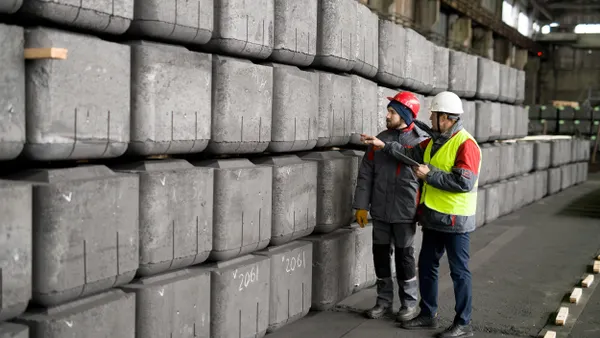
U.S. Steel said in a statement that its latest project will create a “direct link” to its Minnesota Ore Operations, where the Ketac Plant can produce DRI-grade iron ore pellets. The plant opened in 2024 as part of a $150 million expansion. The company said these recent additions will advance and enhance its domestic supply chain.
“From iron ore to steel production in Arkansas, this $1.9 billion investment strengthens our ability to create steel that is truly mined, melted, made in America, from start to finish,” U.S. Steel CEO David Burritt said.
The company’s new DRI plant will include a furnace, reformer and heat recovery facilities, as well as industrial gas compressors, a main control room and water system, according to an overview provided by U.S. Steel.
The company billed it as a “first-of-its-kind” investment in the United States. What differentiates this facility from others is its ability to hot charge DRI directly into the furnace, a spokesperson wrote in an email Thursday. Hot charging allows companies to transport metals while still hot into a reheating furnace.
“No other facility in the U.S. is co-located with a mill to enable hot charging,” the spokesperson said. “This increases efficiency and reduces electricity needs.”
DRI facilities are considered a more sustainable alternative for steelmakers looking to replace the emissions-heavy blast furnace step of the ironmaking process, according to the Ohio River Valley Institute, a nonprofit thinktank focused on clean energy. Despite the environmental benefits, these facilities account for just 9% of global ironmaking capacity today, Canary Media reported last year, with only three DRI plants operational in the U.S.
The DRI plant coming to Arkansas was first hinted at during a keynote presentation in November, but Burrit had provided few details on the project.