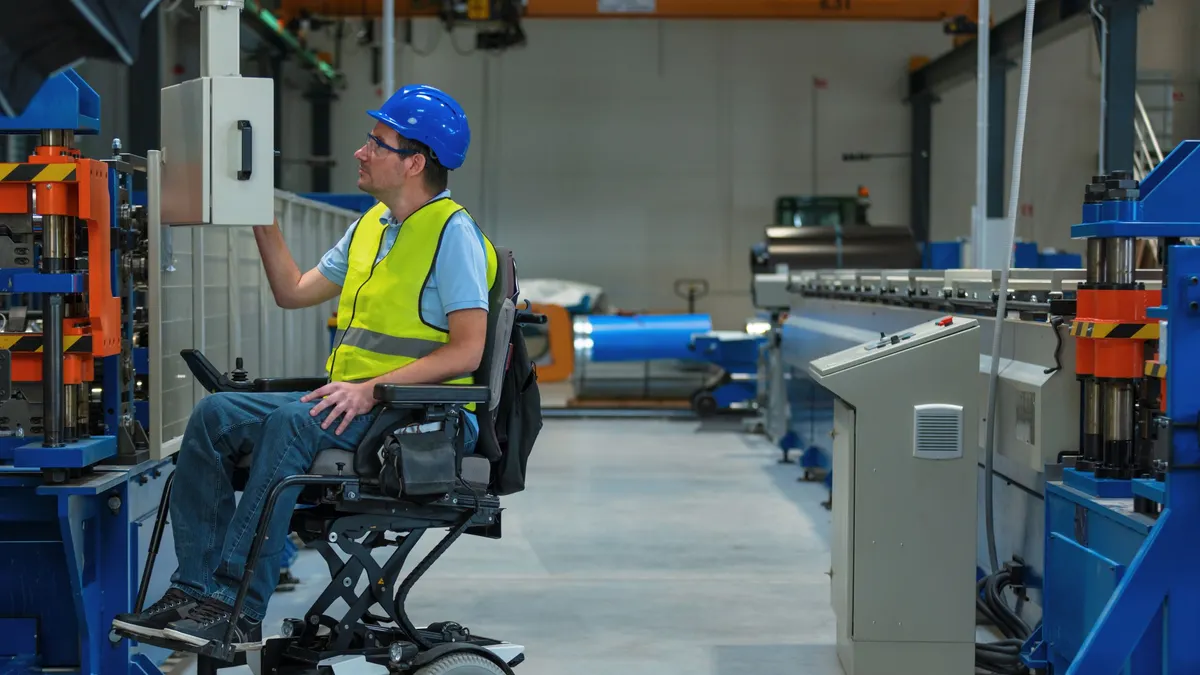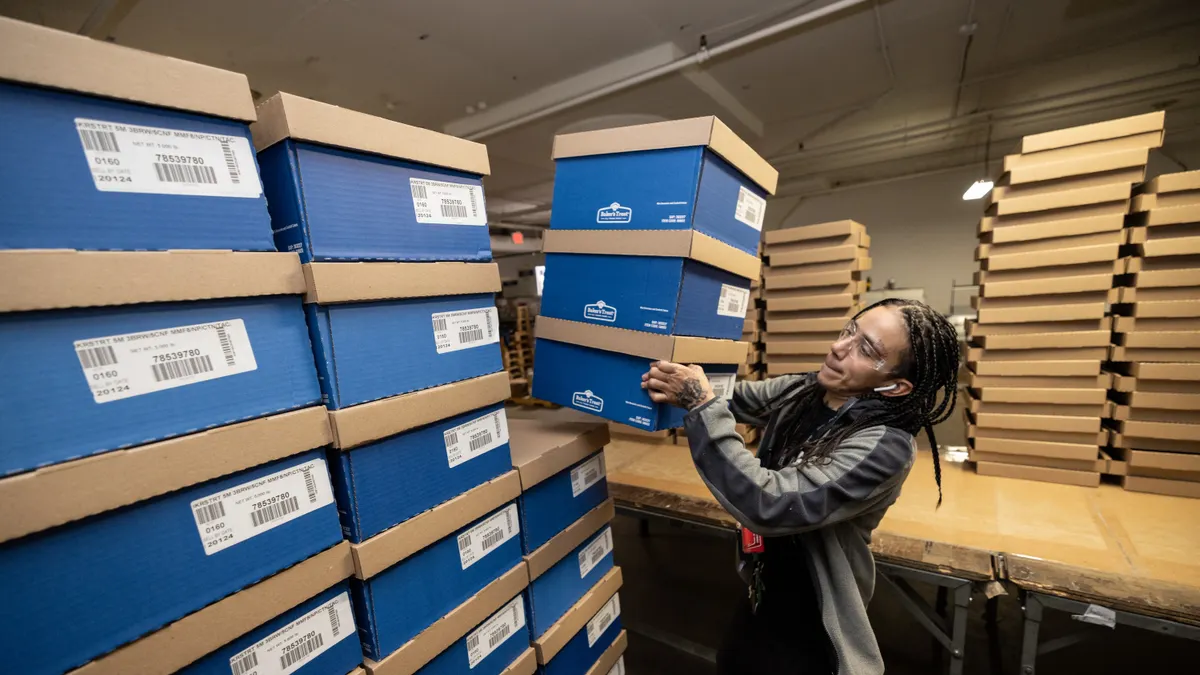


President Donald Trump’s initial budget proposal for fiscal year 2027 eliminates funding for the Manufacturing Extension Partnership, which supports small and medium-sized U.S. manufacturers looking to grow or improve their operations.
The cuts to the MEP program, which is managed by the National Institute of Standards and Technology, are part of a broader proposed $993 million NIST budget reduction that would also eliminate its Circular Economy Program.
According to the proposal, the MEP is “an underperforming and unnecessary program that has failed to accelerate America’s manufacturers’ ability to compete in the 21st Century and instead turned its attention to promoting DEI as a solution to the decline in American manufacturing.” Previously, the Trump administration has argued that the funding the MEP provides should come from private entities.
The MEP Program comprises about 1,400 advisors and experts, 475 service locations and more than 2,100 partners. It was created in 1988 and signed into law by former President Ronald Reagan as part of the Omnibus Trade and Competitiveness Act. Since then, many have seen it as critical for making supply chains more resilient and supporting manufacturers, such as in their efforts to implement automation and artificial intelligence.
The program has helped manufacturers in a variety of ways, according to NIST. For example, in fiscal year 2024, NIST said the MEP achieved $15 billion in new and retained sales, $5 billion in new client investments and $2.6 billion in cost savings, along with creating or retaining more than 108,000 jobs.
Nonetheless, President Donald Trump has targeted the MEP Program during both of his terms. Last year, the U.S. Department of Commerce stopped funding 10 state MEP programs as part of the Trump administration’s plan to reduce federal spending.
During Trump’s first term, his administration made multiple budget proposals seeking to eliminate nearly all MEP funds, which ranged between $130 million to $146 million each year, according to congressional data from fiscal years 2018 to 2021. Congress ultimately restored program funds each time.
Despite Trump’s view of the program, many lawmakers have expressed support for it.
At about the same time that Trump began imposing tariffs, he also began “quietly and illegally stealing funding from [the MEP] centers that provide invaluable support to small and medium-sized U.S. manufacturers across the country,” Rep Grace Meng, D-N.Y., said in a statement on Trump’s budget April 3.
“You can’t claim to champion American manufacturers while simultaneously dismantling the very programs that help them survive and compete,” said Meng, who is the ranking member of the House Appropriations Subcommittee on Commerce, Justice, Science, and Related Agencies.
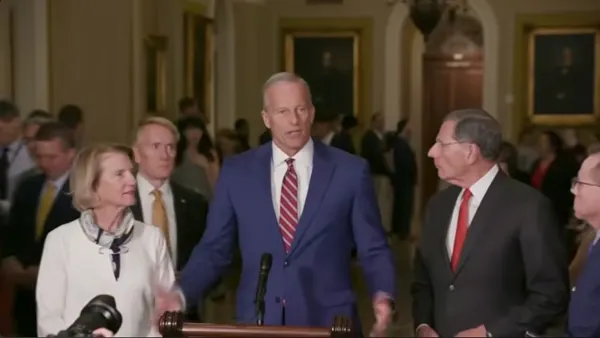
In addition, when debating Arvind Raman’s nomination to be director of NIST, several senators voiced support for the MEP and expressed doubt about whether Raman would keep it going if he were to head the agency. Questions along these lines came from both Democrats and Republicans, such as Sen. Bernie Moreno of Ohio. Nonetheless, Raman’s nomination was advanced to the full Senate March 20.
Industry and nonprofit groups have also praised the MEP. For example, the Alliance for American Manufacturing said on its website that the program is “often the first place manufacturers turn before Googling for solutions” and “centers work on improving efficiency, upgrading technology, training workers, and solving everyday business problems.”
Similarly, the Coalition for a Prosperous America called the MEP “one of the most effective and least controversial tools” for boosting domestic manufacturing.
“Strengthening MEP would directly reinforce the administration’s stated goals of supply chain resilience, domestic capacity expansion, and small-business manufacturing growth,” CPA said on its website.