Dive Brief:
- Texas Instruments has entered into an agreement to acquire integrated circuit maker Silicon Labs in an all-cash transaction valued at approximately $7.5 billion, according to a Feb. 4 press release.
- The deal would reshore Silicon Labs’ manufacturing from external foundries, providing the company with low-cost capacity in Texas Instruments’ U.S. facilities and in-house assembly and testing capabilities.
- The acquisition is expected to close in the first half of 2027. The transaction is anticipated to increase earnings per share in the first full year and generate $450 million in combined manufacturing and operations synergies within three years after closing.
Dive Insight:
Silicon Lab is based in Austin, Texas, and was founded in 1996. The company produces integrated circuits, or silicon chips, used in smart and connected devices such as phones, appliances, Bluetooth, and industrial heating, ventilation and air conditioning.
“They have done the work to build the stack of chips, software and firmware, application level, to support hundreds of end equipment, and we are very excited about that,” Chairman, President and CEO Haviv Ilan said on a call Wednesday. “This is something that would take TI, I would say, decades to replicate in order to be able to be a leader in this market. I think we could have, but it would have taken too long.”
This pending agreement represents an “important milestone” for Texas Instruments, llan said in his opening remarks to analysts on Wednesday.
While Texas Instruments’ wireless connectivity business is growing, it’s growing more slowly than Silicon Labs’, Ilan said. The integrated circuit designer’s automotive business accounts for 5% of its revenue, 85% comes from the industrial market, where analysts can see a ton of momentum, Ilan said.
“They don’t operate in wireless [battery management system], the car entry,... et cetera; but they have a very strong position in the garage door opener in the car that we don’t do,” Ilan said.
The deal would accelerate the company’s embedded processing strategy, which it has been implementing over the last few years. Between 2019 and 2025, Texas Instruments has shifted its embedded processing business toward a more mixed-signal model, Ilan said on the call.
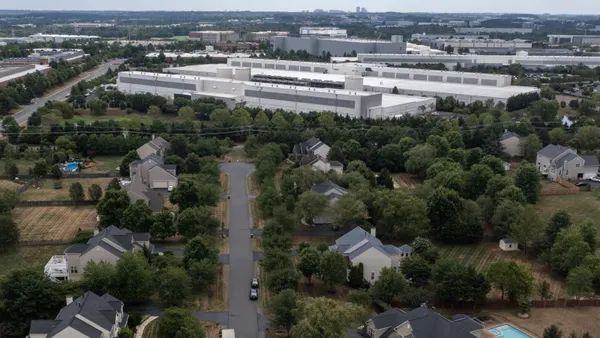
In October 2021, the Dallas-based company purchased a semiconductor fabrication facility in Lehi, Utah, from Micron. Ilan explained that Texas Instruments has transitioned the site from a memory fab into an analog mixed-signal embedded processing fab. In 2023, the manufacturer invested $11 billion and began construction of a second Lehi fab, which is still being built, according to the company’s website.
Silicon Lab designs and develops integrated circuits at its own facilities but relies on third-party vendors to manufacture its designs, according to the company’s 2024 annual securities filing.
The company has nearly 1,900 employees worldwide, of whom about 71% are in engineering roles. Ilan said Silicon Labs’ “strong engineering culture is expected to further advance TI's technology leadership.”
“Once the deal closes, I want to be a leader,” Ilan said. “TI should be a leader over the long term in all areas. We got to the conclusion that the best way to be a leader in wireless connectivity is with this asset, and I think we will certainly be once the deal closes.”
Silicon Labs also has 25 locations in 16 countries, including the U.S., for engineering, sales and marketing, administrative and manufacturing support activities, per the securities filing.
However, the company depends on subcontractors in Asia to assemble and package the silicon chips. Taiwan Semiconductor Manufacturing Co. and Shanghai-based Semiconductor Manufacturing International Corp. are the primary wafer suppliers for Silicon Labs’ integrated circuits.