Chemical companies have been frustrated with the chemical safety amendment enacted in 2016 under the Toxic Substances Control Act, panelists said at the American Chemistry Council’s 26th annual GlobalChem regulations conference last week.
The Frank R. Lautenberg Chemical Safety for the 21st Century Act authorized the U.S. Environmental Protection Agency to test and review new chemicals or new uses of existing substances submitted to the agency and measure their impact on public health and natural resources.
Since the amendment was implemented, chemical manufacturers have experienced delays in the EPA’s new chemical review process, which has taken longer than the allotted 90 days and impacted their businesses. Moreover, chemical stakeholders said the EPA’s guidelines are inconsistent and that the risks are not science-based.
Ten years later, ACC along with other chemical companies have been urging Congress to reform the law. In January, House republicans held a committee hearing to discuss a draft bill proposal to modernize TSCA.
Come Wednesday, the Senate Committee on Environment and Public Works will hold a hearing to discuss its draft reform bill, the Toxic Substances Control Act Fee Reauthorization and Improvement Act of 2026.
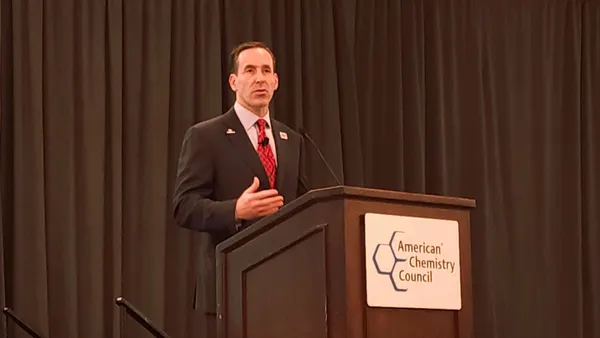
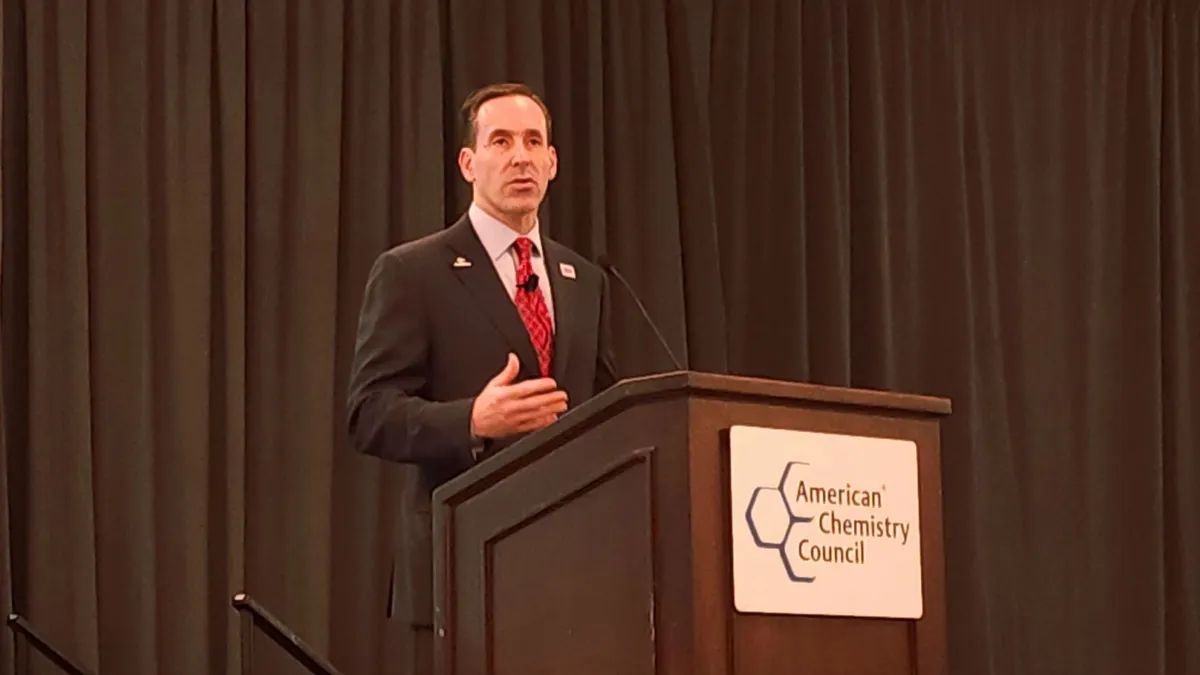
“When TSCA works, American manufacturing can thrive,” Chris Jahn, ACC’s president and CEO, said in his opening remarks. “But as we have repeatedly told lawmakers for years now, TSCA is not working as Congress intended.”
‘Gold science standard’
Panelists throughout the conference said they wanted regulators to use the “gold science standard,” which is the name of an executive order President Donald Trump signed in May 2025.
The directive aims to regain and maintain trust in science and mandates that federal agencies base their decisions on “the most credible, reliable, and impartial scientific evidence available.”
Jahn said Trump’s “gold science” order is a reminder that creating policies “must reflect objectivity, transparency and rigorous scientific integrity,” and not be political or ideological.
“A functional TSCA must be both pro-health and pro-innovation,” Jahn said. “We don't have to choose; it can be environmentally protective and globally competitive, both scientific and efficient. These are not competing priorities.”
Regulation inconsistencies and lack of transparency
When the Lautenberg Amendment was enacted in 2016, it was passed with bipartisan support, Kari Mavian, Dow’s global director of regulatory advocacy and policy, said during a TSCA panel on risk management and evaluation.
“We had expectations that implementation would also be bipartisan, but clearly, that’s not what we're seeing,” Mavian said. “We’re seeing flip-flops and policy changes, administration to administration. We’re seeing risk evaluations being redone and amended.”
With the rules always changing comes uncertainty, she added.
“Maybe Congress does need to give EPA a little more direction in terms of what they actually intend with that 2016 statute,” Mavian said.
Kelsey Hendrixson, director of the Defense Secretary’s Chemical and Material Risk Management, said the office’s “primary lesson learned” was finding it difficult to identify where they used chemicals.
DOD also needs ample time to develop alternatives since the agency has some niche critical uses that could take 15 to 20 years to develop, Hendrixson said. She added that the research, testing and writing new military specifications takes “a long time.”
While the DOD has exemptions for certain chemicals, it doesn’t solve the agency’s problems with the global chemical and supply chain chemical availability markets, she said.
“The defense and aerospace industry is actually just a very tiny segment of the chemicals market, and so the vast majority of chemical production is tied to larger commercial and consumer uses,” Hendrixson said. “So while we may have an exemption to use a chemical for a defense purpose, we may not actually be able to then procure it, or we may need to procure it from a foreign entity of concern for us, which creates national security vulnerabilities.”
EPA taking steps to reduce chemical review backlog
The EPA is committed to keeping the “gold science standard” to protect people and the environment, Doug Troutman, assistant administrator of the EPA’s Office of Chemical Safety and Pollution Prevention, said during his keynote at GlobalChem on Feb. 23. OCSPP staff members have been using the standard to assess chemical risks as they work to reduce backlogs.
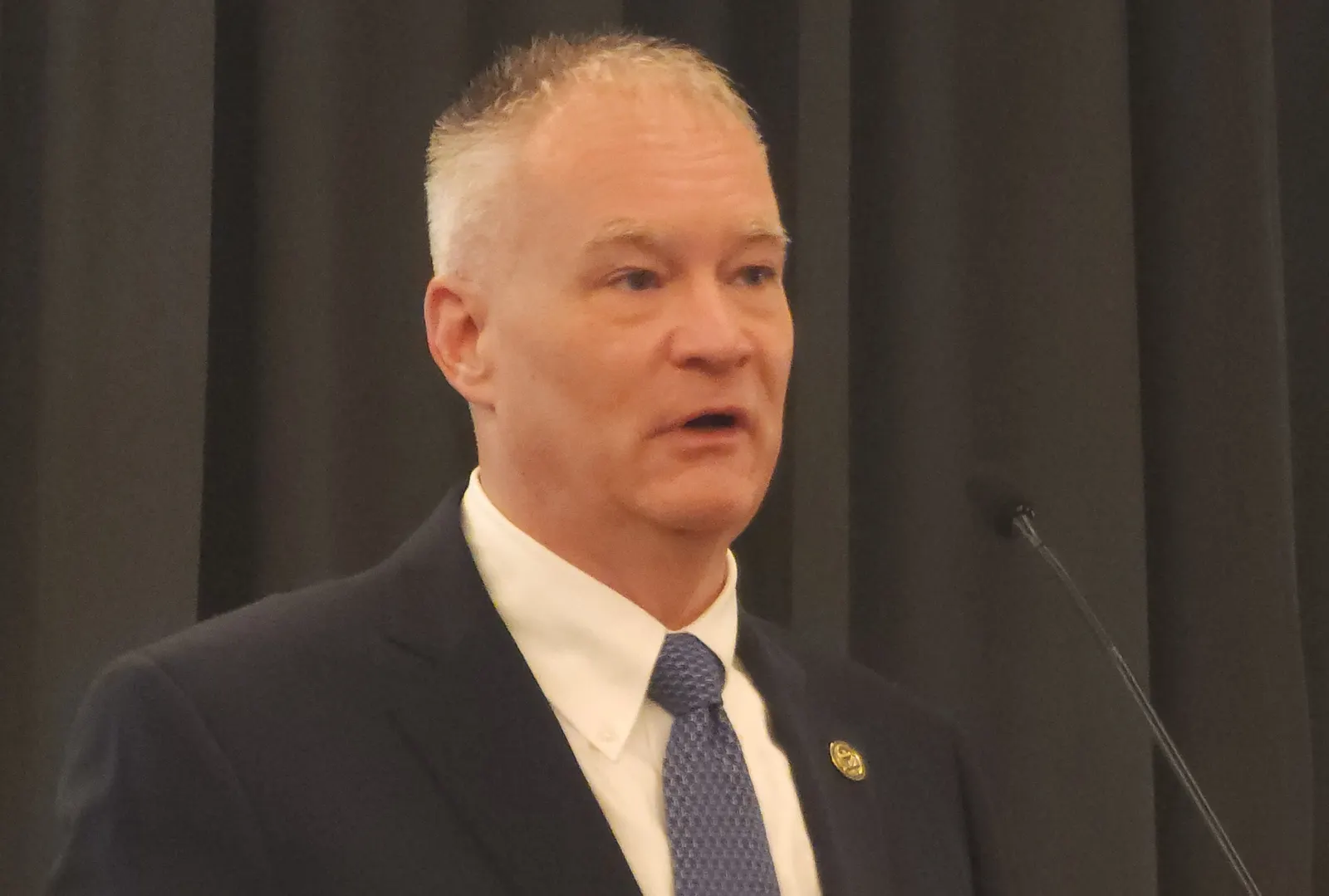
“EPA workloads are very high, and at the same time, American manufacturing, from automobile production to semiconductor fabrication to AI data center expansion, is accelerating,” Troutman said.
Last fall, the EPA reorganized its OCSPP and integrated 180 employees from its other offices across the agency to boost staff resources, Troutman said. The department also built an IT Center of Excellence to support its chemical and pesticide reviews. The EPA was funded $17 million in fiscal year 2025 to upgrade the system.
The agency also added a risk assessment support division responsible for conducting research, including scientific analysis and model development.
Additionally, Troutman said the agency has 10 risk evaluations to finalize in 2026, as well as several risk management rules to propose or finalize.
He added that multiple TSCA risk management rules are being litigated, and consent decree deadlines are driving EPA’s schedule.
“We’re committed to commonsense, practical protections that still allow your businesses to thrive,” Troutman said. “And we’re committed to listening to feedback, reading comments, and working together.”
Elissa Reaves, director of EPA’s Office of Pollution Prevention and Toxics, Immediate Office, urged manufacturers to engage early when rule proposals are released, pay attention to the comment periods, and share as much information with the agency.
“The more information and specifics that you can provide, that helps us refine our assessments,” Reaves said. “Our goal is to have this information early on in prioritization, not when we’re working to finalize, not after we’ve put out the draft risk evaluation, and especially not after we finalized it. The TSCA clock keeps ticking, so as we’re rethinking how we’re doing our work and reimagining our processes, it’s best for us to get out ahead.”