Fourteen U.S.-based chemical manufacturers landed on the International Chemical Secretariat’s annual Top 40 ChemScore report in November, with only one company cracking the top five.
Developed by the International Chemical Secretariat, or ChemSec, the rankings focus on how the world’s largest chemical producers are managing their transition to safer, more sustainable substances, according to the nonprofit’s website.
ChemSec measures a chemical company’s performance based on four metrics: transparency, phase-out of persistent chemicals, product portfolio and safer solutions.
The nonprofit changed its methodology for the latest rankings. Possible points have increased from 48 to 100 over the four metrics. Additionally, “times are changing” and ChemSec has adapted to the current chemical climate, Jerker Ligthart, senior chemicals expert at ChemSec, said in a video explaining the results.
Furthermore, ChemSec got rid of the “easy points,” which Ligthart said required very little effort to achieve and did not display differences between the entities.
“We wanted to show the difference between a good company and a not- so- good company, and that is kind of the whole point,” Ligthart said.
14 U.S.-based companies' rankings on ChemSec's 2025 ChemScore report
Ecolab
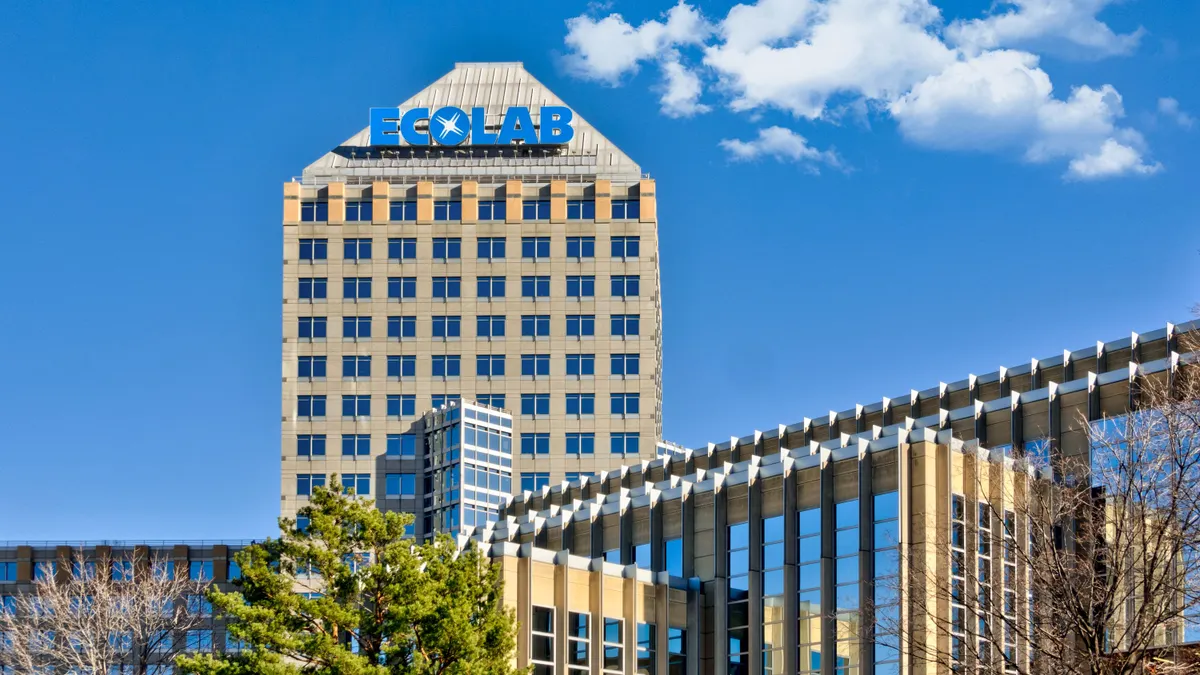
Ecolab scored high on the list at No. 4, with 35 points for its plans to phase out the use of perfluoroalkyl and polyfluoroalkyl chemicals by the end of 2026. Ecolab, which manufactures cleaning substances for industrial, food safety and healthcare settings, confirmed that it is removing all chemical products that the company makes with intentionally added PFAS from its global portfolio.
“In these times of [President Donald] Trump, this is an American company with good sustainability DNA, that is not afraid to do the right thing, is blunt and outspoken in public, and is moving forward,” Sonja Haider, head of sustainable finance at ChemSec, said in a statement.
Ecolab declined to comment on the ChemSec ranking, but it confirmed that all chemical products that the company manufactures with intentionally added PFAS will be removed from its global portfolio.
“As public health concern has grown over the use of PFAS, Ecolab is often asked questions regarding its use of these substances in our chemical products,” the company said in its PFAS position sheet. “Ecolab’s PFAS position is part of our commitment to provide clear and transparent product information to customers and stakeholders.”
Ecolab added that fluoropolymers may be present in its seals, valves and components within certain equipment or packaging that are critical for safety and chemical containment. However, the company said it will seek fluoropolymer alternatives when they become commercially available. Ecolab will also replace the materials when a “robust technical” alternative has been established and proven to meet performance requirements.
Additionally, Ecolab offers technologies that remove PFAS from water and is asking its suppliers to develop PFAS-free alternatives for its pesticides.
“Investors tell us: ‘You can’t achieve anything on sustainability in the US’. The example of Ecolab shows this is false,” Haider said.
Chemours
Chemours placed last on the ChemScore report, with zero points. ChemSec said the manufacturer has corresponded with the nonprofit regarding its chemical management system and code of conduct. Chemous offers a few safer alternatives and has worked to reduce waste, but those were “easy points” that almost all companies were awarded for.
“Now it is more apparent, from a chemical pollution perspective, that Chemours is in danger of becoming a stranded asset,” the nonprofit said in its report. “It is burdened with a legacy portfolio of hazardous substances.”
Chemours said in an email that it actively engages with rating organizations to share its sustainability progress as well as the essential role its chemistries play in industries worldwide.
“Our overall performance in sustainability rankings continues to trend positive and we continue to score well and improve in several of the most recognized ratings, including EcoVadis, MSCI, ISS, and Bloomberg,” the company said in a statement.
Chemours said its chemical products are used in industries such as energy transition, semiconductors, defense systems, aerospace, medical devices. The company added that there are “often no viable non-PFAS alternatives” offering the same performance, reliability, and safety needed for these critical applications.
“These essential chemistries can be made responsibly, which is why Chemours has made and continues to make significant capital and technological investments to reduce PFAS discharges from our sites as part of our commitment to responsible manufacturing,” the company said.
“Chemours also has a deep, longstanding commitment to innovation,” Chemours added. “While there aren’t suitable replacements or alternatives for many of the critical applications of the chemistries we supply right now, we are constantly innovating to improve our chemistries and uncover potential alternatives that don’t compromise quality or performance for our customers.”
Other companies
Other companies on the list of those phasing out PFAS include 3M, which was set to sunset the forever chemicals by the end of 2025. However, the company ranked No. 32 with only eight points. ChemSec gave the chemical manufacturer no points for transparency, its product portfolio and lack of safer solutions, according to the nonprofit’s report.
3M did not immediately respond to a request for comment.
Honeywell placed 36th with only six points for its product portfolio. Honeywell said in an email that it completed its chemicals business spinoff in October, which is now called Solstice Advanced Materials.
DuPont ranked at No. 21 with 13 points.
“We will let the ranking/score speak for itself and do not have any additional comment,” the company said in an email.
PPG Industries placed 30th with nine points.
“PPG remains committed to reducing our environmental footprint to better serve the evolving needs of our customers and improve operational efficiency,” the company said in an email statement. “As part of this, we recognize the importance of chemical safety and transparency. PPG remains in compliance with chemical disclosures within all regions where we operate.”
The other U.S.-based chemical companies on the ChemScore did not immediately respond to a request for comment.
Other companies on the ChemScore outside the United States have made plans to sunset PFAS in its production. Germany-based BASF ranked at No. 8 with 23 points, as it’s also phasing out PFAS use.
“Considering the need to maintain high safety and environmental standards, BASF calls for substituting the use of PFAS in industrial equipment,” the company said in a statement regarding its PFAS position.
BASF did not disclose a date by when it will sunset its forever chemicals use.