This week, manufacturers including Blue Origin, Cleveland-Cliffs and others announced facility investments or advanced their expansions to meet growing demand for their products.
Here are some of the major updates happening across the sector.
Blue Origin
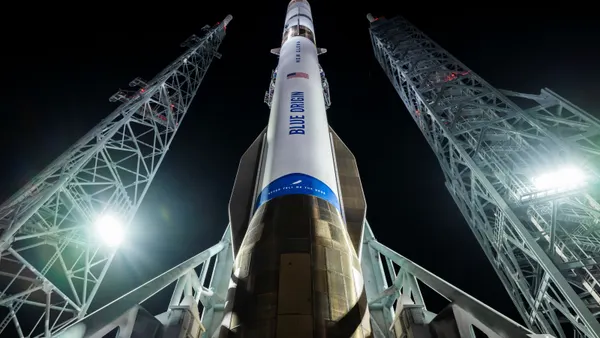
Blue Origin, a maker of rocket engines, spacecraft and satellite systems, will invest more than $550 million to establish a manufacturing campus in Hutto, Texas, Gov. Greg Abbot announced Thursday.
The 1.3-million-square-foot site, dubbed Constellation Park, will be the central production hub for Blue Origin’s satellite and communications programs, according to a news release. It is expected to create more than 2,000 jobs.
Texas approved a deal-closing grant of $18.2 million for the project, as well as a $10,000 incentive tied to hiring veterans.
Constellation Park will support manufacturing of TeraWave and Quartz communications networks, as well as solar arrays, avionics, telecommunications and other satellite hardware, according to the release.
No construction timeline was disclosed.
Cleveland-Cliffs
Steel producer Cleveland-Cliffs on Tuesday updated U.S. Secretary of Energy Chris Wright on the progress of a $200 million expansion at its Butler Works facility in Lyndora, Pennsylvania, that was partially funded by the Department of Energy.
The project, initially approved under the Biden administration in 2024, survived a review by the Trump administration earlier this year, the Pittsburgh Business Times reported in April. The project is on track to be ready in early 2028.
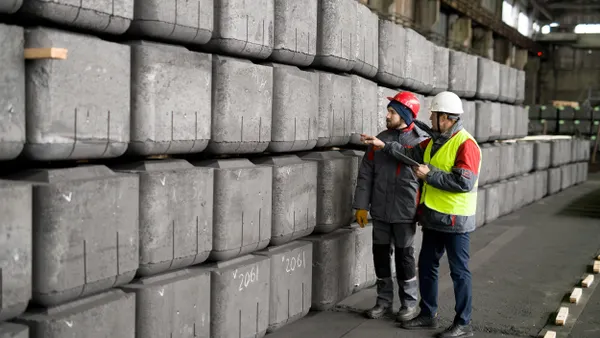
The expansion will increase grain-oriented electrical steel production volume by up to 25% and support growing demand for transformers as utilities invest in power generation, grid updates and electrical infrastructure projects, according to a news release.
Cleveland-Cliffs plans to install new induction reheat furnaces and other infrastructure to improve production quality, reduce steel slab losses and lower emissions from the hot-rolling process.
The steelmaker employs 1,200 union-backed workers at the facility, according to a release. DOE approved a $75 million grant for the expansion.
As part of the visit, Cleveland-Cliffs highlighted Butler as the only grain-oriented electrical steel producer in the United States and its role in supporting the nation’s electrical grid. In addition to Wright, Assistant Secretary of Energy Audrey Robertson and Under Secretary of Commerce William Kimmitt were in attendance.
PPG
PPG, a maker of paints, coating and other products, said it will invest $70 million to expand its aerospace transparencies operations in Huntsville, Alabama.
The expansion is part of a series of multiyear projects that support the company’s efforts to increase production of aircraft cockpit windows and passenger windows for the commercial, military and general aviation industries.
“This expansion increases our operational efficiency, provides room for future equipment investments and reinforces our long-term commitment to serving customers and investing in Huntsville,” Francois Buehlmann, PPG general manager of global transparencies and aviation, said in a statement Wednesday.
As part of the expansion, PPG plans to lease and outfit a new 112,000-square-foot facility with production support functions, allowing for additional manufacturing space at its existing aerospace transparencies facility.
It has operated in Huntsville for more than 55 years, according to the company. No job creation or incentive details were disclosed.
Accu-Precision
Accu-Precision, a maker of aerospace parts, sheet metal and assemblies, will invest more than $68 million to build a manufacturing facility in Colorado Springs, Colorado, Gov. Jared Polis and the state’s economic development and trade group announced Tuesday.
The 110,000-square-foot facility will be constructed in three phases and cost more than $45 million, according to a news release. It is expected to create up to 133 jobs, including technician, operator, engineer and supervisor roles.
Accu-Precision said it moved forward with the project to support new contracts from an undisclosed aerospace customer. The Littleton, Colorado-based company has 70 employees, all of whom live in the state.
The Colorado Economic Development Commission approved a job creation tax credit valued at $1.7 million over an eight-year period. The project is also expected to qualify for El Paso County’s 1.23% sales and use tax exemption for certain manufacturing machinery, according to the release.
Xingyu
China-based Xingyu Automotive Lighting Systems plans to invest $50 million establishing its first U.S. manufacturing facility in Landis, North Carolina, according to a recent Facebook post from the Rowan Economic Development Council.
The site, once completed, will produce plastic injection molding for headlight and taillight components used by automotive manufacturers, the council said. The project, located at the Landis Ridge Industrial Park, is expected to create between 300 and 500 jobs over the next several years.
No incentive or square footage details were disclosed.
Re:Build
Precision manufacturer Re:Build will invest $20 million to build an advanced facility in Rock Hill, South Carolina, tripling its production footprint in the area, the company said Tuesday.
The 130,000-square-foot facility, once completed, will increase Re:Build’s capacity and product mix to meet growing demand across aerospace, defense, energy, robotics and other industries, according to a news release. It is expected to create 150 jobs by 2028.
Re:Build plans to outfit the facility with a clean room for precision composite fabrication, additional cold storage and an enhanced quality lab. It also plans to add a vertical machine mill, a heat-treat oven for thermal processing and an expanded paint booth.
“By investing in these capabilities, we're giving our customers the capacity, speed and consistency they need to move complex programs from development into full-rate production at unmatched scale,” Miles Arnone, Re:Build’s co-founder and CEO, said in a statement.
The South Carolina Department of Commerce approved a $100,000 grant for the project.