Dive Brief:
- Global biotech firm UCB on Tuesday said it will build a large manufacturing facility in Gwinnett County, Georgia, expanding its U.S. production capacity and creating 330 jobs.
- UCB plans to invest more than $2 billion on the project, establishing its first biologics factory in the United States, Georgia Gov. Brian Kemp announced. The Belgium-based company develops medicines for people living with immune system and central nervous system diseases.
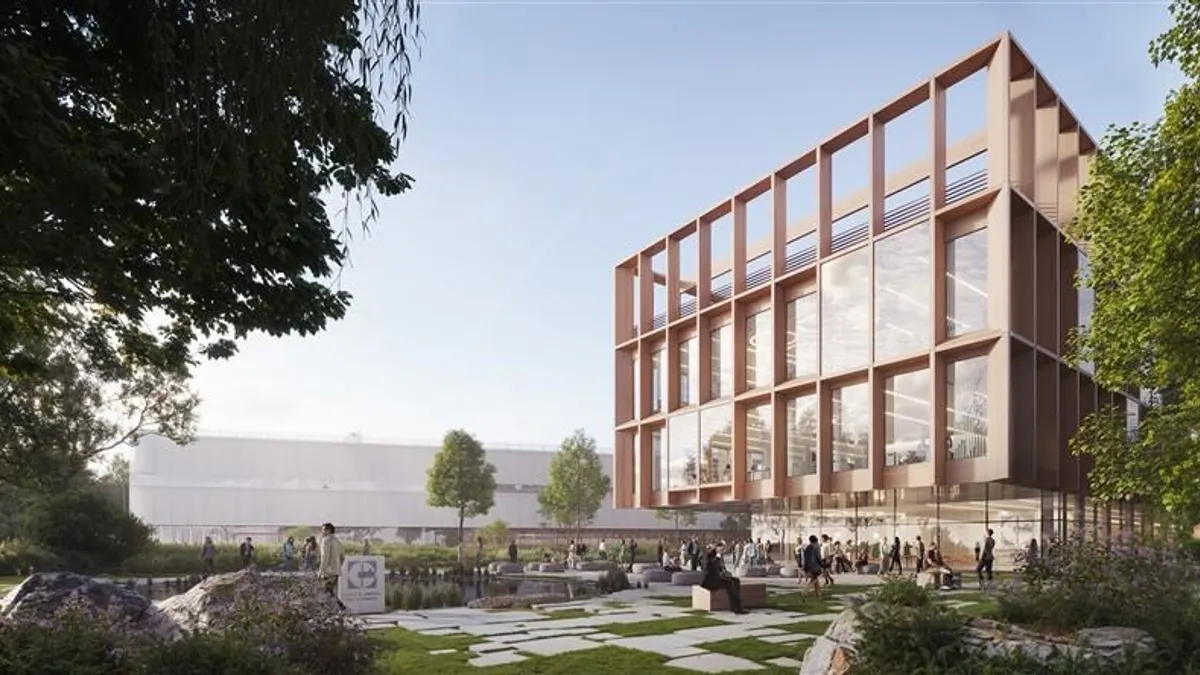
- The 460,000-square-foot site will be an anchor tenant for the Rowen Foundation’s science and learning campus and a hub for UCB’s U.S. manufacturing operations, according to the real estate nonprofit. It will feature advanced technologies such as robotics, automation and artificial intelligence.
Dive Insight:
UCB initially announced its U.S. expansion plans in June to be closer to one of its fastest-growing markets. It landed on investing in the Atlanta metropolitan area after conducting a comprehensive feasibility study, considering factors such as access to talent and innovation ecosystems.
“This decision reflects our confidence in UCB’s long-term growth and our deep-rooted commitment to the United States,” UCB CEO Jean-Christophe Tellier said in a statement.
UCB’s investment is estimated to have a $5 billion economic impact on the Atlanta metropolitan area, according to multiple news releases. The project will support more than 1,000 construction jobs, as well as growing demand for UCB’s biologics portfolio and future product pipeline, the company said.
Gwinnett County has pledged $174 million in incentives and infrastructure investments for UCB’s project, according to the Rowen Foundation, including property tax abatements, fee waivers and utility improvements.
The biotech company said the site’s location allows it to draw from science, engineering and advanced manufacturing talent pools at the Georgia Institute of Technology and the University of Georgia.
UCB established its U.S. headquarters in Atlanta in 1993, which serves as a central hub for its commercial, research and corporate operations. The company’s U.S. workforce has since grown by 73% to nearly 2,000.