Dive Brief:
- Aluminum producer Alcoa has reduced its production guidance for the raw material alumina by 200,000 to 300,000 metric tons for 2026, citing challenges at its Pinjarra refinery in Western Australia.
- The Pittsburgh-based company on Thursday updated its full-year expectations to be between 9.5 million and 9.6 million metric tons of alumina, after its Pinjarra refinery saw “instability in late March [that] was further exacerbated by gas supply disruptions” from Cyclone Narelle.
- Alcoa also lowered its alumina shipment expectations and increased its corporate expenses for the year. Pinjarra has since returned to “stable operating rates” as alumina prices remain solid despite ongoing geopolitical disruptions in the Middle East, CEO William Oplinger said on an earnings call Thursday.
Dive Insight:
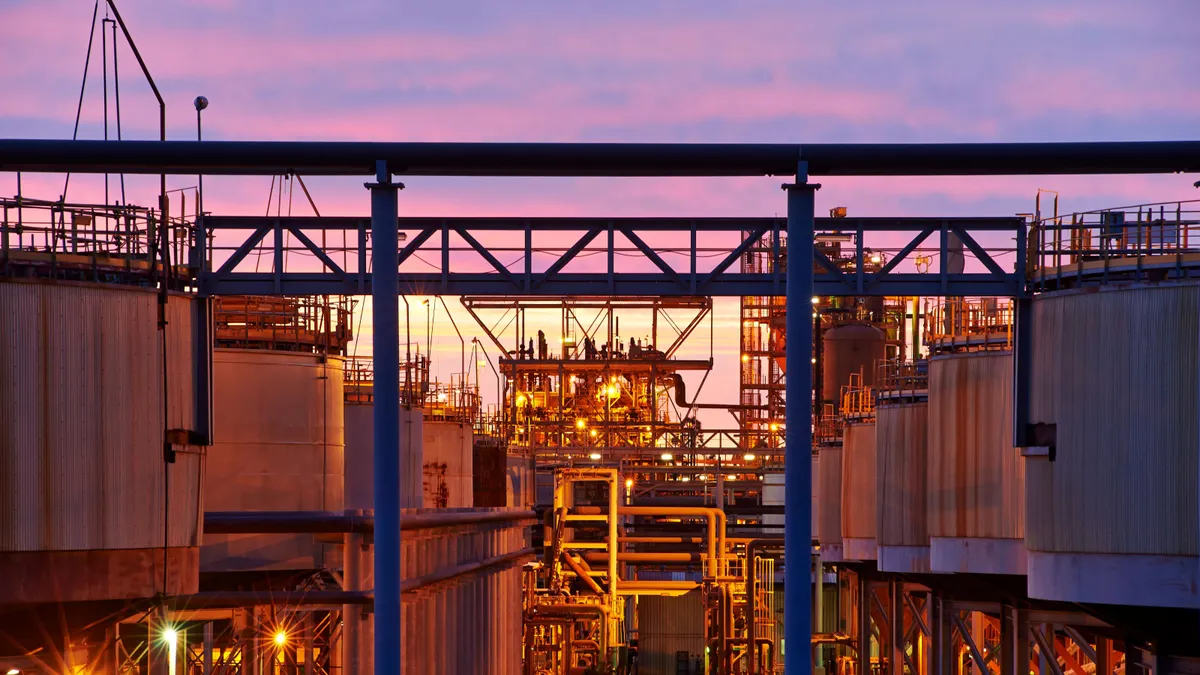
As a result of operational disruptions, Alcoa revised its full-year alumina production outlook down from a previously set range of 9.7 million to 9.9 million metric tons. The Pinjarra facility is one of the world’s largest alumina refineries, producing about 4.7 million metric tons each year, according to a company fact sheet. Alumina, a fine white powder extracted from bauxite, is a critical raw material used to make aluminum.
For its alumina segment, Alcoa reported a negative adjusted EBITDA of $96 million during the second quarter, driven by $45 million in energy contract losses and $30 million in higher production costs at Pinjarra.
The company has six alumina refineries across Australia, Brazil and Spain and sells roughly half of its production to outside customers, according to its website. Its three-refinery operation in Western Australia, including Pinjarra, Wagerup and Kwinana Beach, is the world’s largest source of alumina and supplies 8% of the global market.
During the second quarter, Alcoa’s alumina production declined 6% sequentially to 2.2 million metric tons. Third-party alumina sales declined 3.6% sequentially to $552 million for the period ending June 30. That is down 34.5% from a year ago.
Alcoa also lowered its alumina shipments outlook to between 11.5 million and 11.6 million metric tons, down from a previously set range of 11.8 million and 12 million. The company said the overall difference between its production and shipment revisions reflect trading volumes and external sourcing to fulfill customer contracts.
The production outlook weighed on an otherwise positive quarter for the aluminum giant. Alcoa reported revenue of nearly $4 billion, up 24% from the previous quarter and 31% from the same period last year. At the same time, net income totaled $407 million. That was down 4% sequentially, but more than double its results from a year ago.
“We executed well across the business, and those efforts translate directly into stronger operational and financial results,” Oplinger said. “We have momentum entering the second half of the year [and] we remain focused on the things we can control: safety, operational stability, cost discipline and execution.”
Alcoa recently agreed to acquire mining and metal assets from South32 valued at $5.6 billion. Oplinger said the deal allows Alcoa to participate more fully in long-term growth by targeting additional aluminum capacity through restarts and expansions of assets that would otherwise be “difficult, time-consuming and more costly to replicate today.”
Looking ahead to the third quarter, CFO Molly Beerman said the alumina segment should be favorable by an estimated $10 million from the Pinjarra recovery, compared to a $55 million impact in the second quarter.
Aluminum segment production and shipments for the full year remain unchanged from its previous projection range of 2.4 million and 2.6 million metric tons, and 2.6 million and 2.8 million metric tons, respectively.